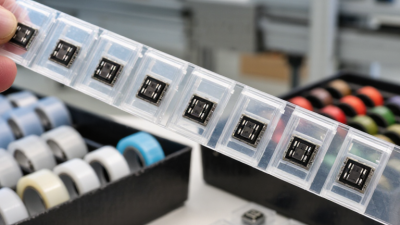
China Top Transformer Carrier Tape Suppliers for Global Buyers
Global buyers comparing China’s Transformer Carrier Tape suppliers need more than a low price and a polished catalog. The tape must match the component, feeder, and packaging line. A pocket that looks close can still let a part tilt or jam. Small details matter: pocket dimensions, pitch, material thickness, cover-tape adhesion, and reel condition. Ask for technical drawings, sample reels, inspection records, and clear lot traceability. Then test samples on the actual feeding equipment. It takes time. It can prevent a costly surprise.
Quality-management expert W. Edwards Deming offered a useful principle: “Quality comes not from inspection, but from improvement of the production process.” He was not a Transformer Carrier Tape specialist, but the idea applies to supplier evaluation. Look beyond a final inspection report. Ask how the supplier controls tooling, measurements, material changes, and corrective actions. A responsive technical team is valuable, especially when specifications need clarification. Still, no supplier should be judged by promises alone. Verify performance with evidence.
This guide examines China-based suppliers through practical questions about product range, customization, quality systems, communication, and delivery reliability. It also considers what global buyers should confirm before placing an order. One limitation deserves attention: published capabilities do not always reflect the consistency of every production lot. The sensible approach is to compare documented specifications, request representative samples, and keep expectations realistic. Good sourcing is careful work.

Transformer Carrier Tape: EIA-481 Standard Widths from 8 to 56 mm
For transformer packaging, tape width is a fit requirement, not a cosmetic choice.
EIA-481 specifies carrier-tape dimensions, including standard widths from 8 to 56 mm. Common options include 8, 12, 16, 24, 32, 44, and 56 mm. That range lets packaging engineers match the tape to component size and handling equipment. Small transformers may sit securely in narrower pockets; larger bodies need room for leads and protective clearance. A tape that is too tight can stress terminals. Too much space can allow parts to shift.
Width alone does not guarantee a reliable feed. EIA-481 also defines details such as pocket geometry, sprocket-hole positioning, and tape pitch. These dimensions matter when reels run through automated pick-and-place lines at speed. Check the actual transformer outline, lead orientation, and cover-tape seal before approving a sample. Then test a full reel, not just a short strip. Practical checks often reveal small issues that drawings miss. This is not always convenient, but it can prevent jams and component damage. When comparing suppliers, request dimensional inspection records against the applicable EIA-481 requirements, plus samples for line trials. A stated width is useful; verified fit is better.
Pocket Design for Transformers: Component Size, Pitch, and Reel Fit
A transformer pocket should match the component body, not just its catalog dimensions. Measure length, width, and height across several samples, including any uneven edges or protruding pins. Leave enough clearance for loading, but not so much that the part can rotate during feeding. Small gaps matter. Pocket depth also needs attention: a tall transformer may touch the cover tape if the cavity is too shallow.
Set carrier tape pitch from the required component spacing and the feeder’s indexing system. Pitch means the distance between pocket centers, and even a small mismatch can cause pick-and-place errors. Check the component’s orientation before finalizing the pocket shape. Bobbins, terminals, and winding features can make two transformers with similar outlines behave differently in tape. A drawing can miss these small differences.
Reel fit is part of the design, not an afterthought. Confirm tape width, flange clearance, winding direction, and the finished reel’s outer diameter against the buyer’s feeder requirements. Then test a short production run: inspect pocket seating, cover-tape sealing, and feeding after winding and unwinding. Fit is not guesswork. Still, a prototype that works by hand may fail at line speed, so sample validation matters.
Engineering note: These are indicative starting dimensions for surface-mount transformer packaging, not universal package specifications. Actual pocket dimensions, pitch, tape width, sprocket-hole layout, cover-tape requirements, and reel limits must be checked against the component drawing, applicable carrier-tape requirements (such as EIA-481 where applicable), and the target pick-and-place feeder. Include component tolerances and validate feeding and pickup performance before production.
Materials and Production: Conductive, Antistatic, and Insulating Tapes
WSTS’s Autumn 2024 forecast projected global semiconductor sales of US$626 billion for 2024, a 19% year-on-year increase. More components moving through automated lines make packaging choices consequential. For transformer parts, select carrier tape by ESD sensitivity, geometry, and feeder speed—not color alone. A loose pocket or inconsistent pitch can interrupt placement.
Conductive grades move charge quickly, but poor grounding can put sensitive components at risk. Antistatic or dissipative grades reduce charge generation and release accumulated charge more gradually. Insulating grades provide electrical separation; they do not automatically prevent static buildup. Small distinctions matter. Production checks should cover surface resistance, pocket dimensions, cover-tape peel force, and winding tension at real line speeds. A tape that passes a bench test may still jam on a fast feeder.
IEC 61340-5-1 outlines an ESD control program, but tape performance still needs product-specific verification. Record test results by production lot and recheck them after material or process changes. One caveat: WSTS figures are forecasts, not evidence that every packaging segment grows at the same rate. Supplier comparisons should include traceable test methods and sample reels. Labels alone are not enough.
China Top Transformer Carrier Tape Suppliers for Global Buyers — Materials and Production
Surface resistance is one factor buyers can use to compare carrier tape materials. The ranges shown are illustrative engineering bands, not supplier specifications; actual values vary with material formulation, humidity, test method, and product requirements. Confirm measurements and application suitability with the manufacturer.
How to Evaluate China Suppliers: Tooling, Tolerances, and Quality Control
When assessing China-based transformer carrier tape suppliers, look beyond a neat sample. Ask how tooling is designed for your component’s dimensions, weight, and loading direction. Pocket depth, corner radius, and cover-tape sealing can affect stability during handling. Fit matters. Request a drawing with agreed tolerances, not just a verbal promise. Small shifts count.
Review the supplier’s measurement method as carefully as the tolerance itself. A pocket width measured at one point may miss variation across a production roll. Ask for inspection records covering several cavities and positions, plus clear criteria for rejecting defects. Tooling maintenance also matters: worn inserts can gradually change pocket shape. A polished sample may not represent a long production run.
Quality control should include incoming material checks, first-piece approval, and routine dimensional inspection. For a trial order, compare samples from the start, middle, and end of the roll. Check sealing strength and whether parts stay seated after ordinary handling. Keep the results tied to a dated drawing and batch record. Not every supplier will have identical inspection equipment, so clarify measurement limits before approval. I would still allow a small pilot run; paperwork alone cannot reveal every production issue.
Global Sourcing Checklist: Samples, Lead Times, Packaging, and Compliance
When evaluating transformer carrier tape suppliers, request samples made with the intended component dimensions, not a generic substitute. Check pocket width, depth, pitch, cover-tape adhesion, and component movement after sealing. A sample should run through your feeder at normal operating speed. Watch for tilted parts, tape curling, or pockets that release unevenly. Small details matter.
Discuss lead times in writing, including sample approval, tooling, production, and shipping. Ask how the supplier handles a sudden forecast change; a confident estimate is not the same as reserved capacity. Packaging needs equal attention. Specify reel dimensions, moisture protection where appropriate, labels, and carton strength. Then inspect a trial shipment for crushed edges or loose winding. It can be easy to overlook.
For compliance, request current material declarations and test documents relevant to your destination markets and internal requirements. Confirm that documents match the supplied tape grade, rather than a similar product. Keep revision dates and lot details with your purchasing records. A checklist helps, but it cannot replace a real production trial. Even experienced buyers sometimes approve samples before checking feeder compatibility, and that mistake can cost time. Test before scaling.