China’s electronics supply chain is moving toward tighter component control, faster automation, and lower packaging waste. Transformer Carrier Tape has become a small but important link in that process. It protects transformers during transport, supports high-speed placement, and helps maintain consistent component orientation.
Market research from Grand View Research identifies rising demand for electronic packaging and automated assembly as major growth drivers. SEMI’s industry outlook also highlights China’s expanding semiconductor and electronics manufacturing capacity. These trends create stronger demand for carrier tapes with accurate pockets, stable dimensions, clean surfaces, and dependable cover-tape sealing. Small deviations can still cause large production losses.
Quality matters more than low price.
As John W. Mitchell, IPC president and CEO, has emphasized, “Standards are the foundation of reliable electronics manufacturing.” This principle applies directly to Transformer Carrier Tape. Manufacturers must demonstrate material control, dimensional inspection, sealing performance, and traceable quality systems. IPC packaging standards and customer-specific specifications remain useful reference points, although they do not replace real production evidence.
This overview examines China’s top ten Transformer Carrier Tape manufacturers through practical criteria, including manufacturing capacity, engineering experience, product consistency, customization, export capability, and customer support. The ranking should not be treated as absolute. Public data is uneven, and some companies disclose more than others. That limitation deserves attention. A supplier with impressive equipment may still lack stable batch performance. Conversely, a smaller manufacturer may offer stronger technical service and faster tooling response. Careful verification remains essential before qualification.
China Top 10 Transformer Carrier Tape Manufacturers
Transformer Carrier Tape: Definition, Uses, and Market Role
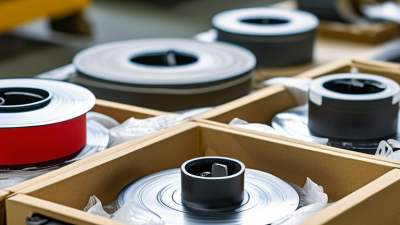
Transformer carrier tape is a structured packaging strip for transporting electronic transformers and related components. It uses formed pockets to hold each part in a fixed position. A cover tape seals the pockets during storage and shipment. This design reduces movement, dust exposure, and damage from manual handling.
In production, automated pick-and-place machines remove components from the tape at high speed. Pocket depth, pitch, material strength, and surface resistance must match the transformer design. Poor dimensions can cause feeding errors or tilted components. Anti-static materials are often important near sensitive electronic assemblies. A practical inspection should check pocket consistency, sealing force, and reel winding. Small details matter.
The Chinese carrier tape market supports transformer, sensor, relay, and power component supply chains. Manufacturers compete through tooling accuracy, rapid customization, stable output, and export packaging. Buyers often compare sample performance before approving mass production. That approach is sensible, but not perfect. A sample may perform well while long production runs reveal uneven forming or weak seals. Factory audits, batch records, and incoming quality checks provide stronger evidence. Environmental storage conditions also deserve attention, since heat and humidity can change material behavior. A lower price may look attractive, yet unstable feeding can increase labor and production losses.
Ranking China’s leading transformer carrier tape manufacturers requires more than comparing quoted prices. The 2024 Grand View Research semiconductor packaging report valued the global market at roughly USD 39 billion in 2023, with continued annual growth forecast through 2030. This demand raises standards for dimensional control, material consistency, and delivery reliability. We examine stable tape thickness, pocket geometry, tensile strength, and anti-static performance across repeated production lots.
Factory evidence matters. We check quality systems, material records, mold maintenance, and sampling plans. IEC 61340-5-1 provides a recognized framework for electrostatic control, while ISO 9001 supports process traceability. Certification alone is insufficient. Trial orders should confirm pocket fit, cover-tape sealing, reel winding, and transport performance. SEMI’s 2024 World Fab Forecast placed global semiconductor manufacturing equipment spending near USD 109 billion, highlighting the need for flexible capacity without weaker quality control.
Our ranking also weighs production capacity, tooling response, export experience, defect handling, and transparent lead times. Technical support deserves a measurable score. Can the supplier adjust pocket dimensions quickly? Can it provide inspection data before shipment? The model is imperfect. Public factory data may be incomplete, and audits can miss seasonal bottlenecks. Therefore, customer references, recent sample results, and three-month delivery records receive more weight than marketing claims.
China’s leading transformer carrier tape manufacturers serve different production realities. One focuses on heat-resistant PET tapes for automated winding lines. Another develops narrow-width tapes for compact power transformers. A third emphasizes high-speed punching and stable dimensional control. These differences matter during feeding, sealing, and component placement.
Several top manufacturers combine in-house tooling with clean production rooms. Their profiles often include custom molds, antistatic materials, and batch traceability. One supplier is known for deep cavities that protect larger transformer bodies. Another supports thin-wall designs, reducing material use but increasing forming risk. A few manufacturers provide rapid sampling, usually within one to two weeks. That sounds efficient. It can still fail when drawings lack tolerance details.
Quality-focused producers inspect cavity depth, pitch accuracy, surface resistance, and sealing performance. Some use optical inspection beside the forming line. Others depend more heavily on manual checks. The second approach costs less, yet it may miss small deformation during long production runs. Reliable manufacturers provide inspection records, material certificates, and storage guidance. They also discuss humidity, reel tension, and compatibility with customer equipment. In practice, the strongest profiles are not always the largest. They are the suppliers that respond clearly when a trial batch shows uneven feeding or cracked edges. Experience is visible in those conversations. Industry rankings also change as capacity, tooling skill, and delivery consistency develop.
China’s top ten transformer carrier tape manufacturers should be assessed through product range, materials, quality, and customization. Carrier tapes may support miniature transformers, inductors, sensors, and other wound components. Common formats include embossed pockets, punched tapes, and heat-sealed cover systems. Pocket dimensions must match component height, lead position, and automated pick-up speed.
Material selection affects handling. Polycarbonate offers stiffness and accurate pocket forming, while polystyrene can reduce cost. Conductive or dissipative grades help control electrostatic risks. IEC 60286-3 provides important guidance for tape packaging dimensions and component presentation. ISO 9001 certification also indicates controlled production, but certification alone proves little. Audit results matter more.
Market evidence supports stricter evaluation. SEMI’s 2024 World Fab Forecast reported more than 1,400 semiconductor facilities and production lines worldwide, increasing demand for reliable automated packaging. A 2024 Grand View Research report also identified electronics packaging as a major growth application for advanced materials. Yet published market figures rarely isolate transformer carrier tape. That limitation deserves attention.
Strong suppliers provide trial samples, dimensional inspection, peel-force testing, and batch traceability. Customization may include pocket pitch, tape width, anti-static performance, embossed depth, and recyclable material options. Ask for actual Cpk data, not attractive claims. A useful factory visit should examine clean storage, mold maintenance, and operator training. Small defects matter. One uneven pocket can stop a feeder.
| No. | Anonymous Manufacturer Profile | Typical Product Range | Common Carrier Tape Materials | Typical Tape Widths and Pitches | Quality and Process Controls | Applicable Standards | Customization Capability |
|---|---|---|---|---|---|---|---|
| 01 | Precision embossed-tape producer | Carrier tapes for small and medium transformers, chokes, inductors, coils, and magnetic components | Polystyrene (PS), high-impact polystyrene (HIPS), PET, and antistatic grades | 8–44 mm widths; commonly 4, 8, 12, 16, and 24 mm pitches | Dimensional inspection, cavity-depth checks, sprocket-hole measurement, visual inspection, and sample packing tests | EIA-481 and IEC 60286-3 practices; RoHS and REACH documentation commonly available on request | Custom cavity geometry, pitch, pocket depth, tape width, antistatic performance, reel size, and cover-tape matching |
| 02 | Large-component packaging specialist | Deep-pocket carrier tape for larger transformers, power inductors, ferrite assemblies, and wound coils | PET, HIPS, PP, and multilayer polymer structures selected for stiffness and impact resistance | 24–88 mm widths; 8–40 mm pitches; cavity depths designed around component height | Cavity deformation checks, load testing, component retention tests, reel-winding checks, and transit simulation | EIA-481 dimensional principles, IEC 60286-3 packaging practices, RoHS, REACH, and customer drawings | Deep and asymmetric pockets, corner reliefs, anti-rotation features, reinforced edges, and custom winding direction |
| 03 | High-volume standard-tape supplier | Standard embossed tapes for automated placement of compact magnetic and electronic components | PS and PET for general-purpose applications; antistatic and conductive versions subject to specification | 8–72 mm widths; 4–32 mm pitches; standard reel formats for high-speed feeders | In-process dimensional sampling, optical inspection, lot traceability, and feeder compatibility checks | EIA-481, IEC 60286-3, ISO 9001-based quality systems where certified, RoHS, and REACH | Pocket size adjustment, indexing changes, cover-tape selection, reel labeling, and barcode requirements |
| 04 | ESD-sensitive component packaging producer | Carrier tape systems for transformers and magnetic components requiring controlled electrostatic performance | Antistatic PS, conductive polymer compounds, PET, and antistatic cover-tape combinations | 12–56 mm widths; 8–32 mm pitches; pocket dimensions specified by component outline | Surface-resistance testing, charge-decay checks where required, humidity conditioning, and packaging audits | ANSI/ESD S20.20 program requirements where applicable, IEC 61340 practices, EIA-481, and RoHS | Specified surface resistance, controlled color, antistatic additives, custom cover-tape peel force, and ESD labeling |
| 05 | Engineering-to-order tape manufacturer | Prototype and low-to-medium-volume tapes for unusual transformer shapes and non-standard component bodies | PET, PS, PP, PC, and multilayer sheets selected according to stiffness, transparency, and temperature needs | Usually 8–88 mm widths; pitch and cavity dimensions developed from CAD files or approved samples | First-article inspection, drawing approval, dimensional reports, fit testing, and engineering change control | Customer drawings, EIA-481, IEC 60286-3, RoHS, REACH, and agreed inspection plans | CAD-based tooling, rapid prototypes, irregular pockets, special indexing, custom reels, and trial production |
| 06 | Heat-resistant material packaging supplier | Carrier tapes for components exposed to elevated storage, transport, or assembly temperatures | Heat-stabilized PET, PC, high-temperature PS grades, and selected multilayer materials | 12–72 mm widths; 8–40 mm pitches; thermal limits determined by material and forming method | Thermal aging, dimensional stability, pocket recovery, material-thickness measurement, and sealing tests | EIA-481, IEC 60286-3, RoHS, REACH, and customer-defined temperature exposure requirements | Material selection by temperature profile, thicker walls, ventilation features, custom cover tape, and heat-seal optimization |
| 07 | Sustainable-material carrier tape producer | Standard and custom tapes designed to reduce material use or support recyclable packaging programs | Recyclable PET, PP, PS, recycled-content polymers where technically suitable, and paperboard alternatives for selected uses | 8–56 mm widths; 4–32 mm pitches; exact range depends on recycled-content and forming requirements | Material identification, thickness control, recycled-content documentation where claimed, dimensional inspection, and recyclability review | RoHS, REACH, ISO 14001 where certified, customer sustainability specifications, and EIA-481 dimensions | Lightweight designs, mono-material structures, recycled-content options, low-ink labeling, and returnable reels |
| 08 | Export-oriented packaging manufacturer | Carrier tapes and reels prepared for international logistics, automated assembly, and multilingual documentation | PS, PET, PP, HIPS, antistatic grades, and standard heat-sealable cover-tape systems | 8–88 mm widths; 4–40 mm pitches; reel diameter and hub options vary by shipment and feeder requirements | Pre-shipment inspection, moisture protection, carton drop testing, barcode verification, and lot traceability | EIA-481, IEC 60286-3, RoHS, REACH, ISO 9001 where certified, and customer packaging specifications | Export cartons, palletization, multilingual labels, customer barcodes, reel dimensions, and shipping-document formats |
| 09 | Cover-tape and sealing-system specialist | Carrier tape, cover tape, and sealing parameters optimized for secure component retention and clean peel-off | PET, PE, polypropylene-based carrier materials, antistatic films, and heat-sealable or pressure-sensitive cover tapes | 8–72 mm widths; 4–32 mm pitches; cover-tape width and seal area matched to the carrier design | Peel-force testing, seal-strength checks, visual contamination inspection, component retention, and feeder trials | EIA-481, IEC 60286-3, ASTM D3330 or equivalent peel-test methods where specified, and RoHS | Peel-force range, seal temperature, seal width, transparent or opaque film, anti-fog treatment, and label printing |
| 10 | Integrated tape, reel, and automation-packaging supplier | Complete packaging solutions covering carrier tape, cover tape, reels, feeder compatibility, and packing instructions | PS, PET, PP, HIPS, PC, antistatic compounds, and matching cover-tape materials | 8–88 mm widths; 4–56 mm pitches; reel and pocket configurations developed for automated equipment | Incoming-material inspection, process capability monitoring, first-article approval, feeder testing, and corrective-action procedures | EIA-481, IEC 60286-3, ISO 9001 where certified, RoHS, REACH, and equipment-specific requirements | End-to-end packaging design, custom tooling, component orientation, reel automation, serialization, and packaging validation |
| Note: The entries are anonymous capability profiles rather than named companies or a verified ranking. Actual material grades, dimensional ranges, certifications, and customization options should be confirmed against the supplier’s current datasheet, quality certificate, and approved engineering drawing. | |||||||
China Top 10 Transformer Carrier Tape Manufacturers
How to Compare and Select a Reliable Chinese Manufacturer
Choosing among China’s top ten transformer carrier tape manufacturers requires more than comparing prices. Check material consistency, dimensional tolerance, and tooling capability. A dependable supplier should provide clear drawings, sample approvals, and batch records. Ask whether the tape suits your transformer size, winding process, and insulation requirements.
During a factory evaluation, inspect production equipment and quality procedures. Look for clean storage areas, calibrated measuring tools, and operators who understand tolerance control. Request samples from different production batches. Measure wall thickness, slot width, flatness, and fit on your assembly line. Small deviations can create feeding problems later. A polished website proves little.
Review delivery performance carefully. Ask for realistic lead times, minimum order quantities, packaging details, and replacement procedures. Reliable manufacturers explain their inspection points instead of promising zero defects. They should also provide traceability documents and consistent export paperwork. Technical communication matters. Slow replies may become costly during tooling changes or urgent adjustments.
Do not select the cheapest quote too quickly. Compare tooling charges, sample costs, material grades, and after-sales support together. A trial order can reveal more than a long presentation. Still, one successful batch is not enough evidence. Continue checking quality over several shipments, because supplier performance may change with workload, staff, or raw material sources.