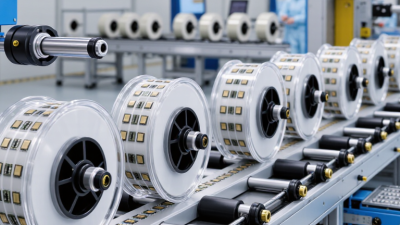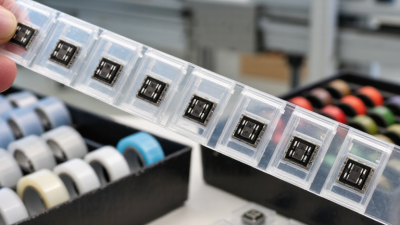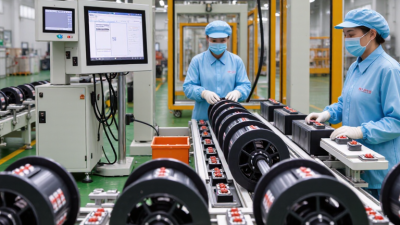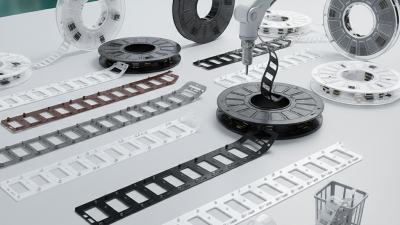
Industrial Carrier Tapes will remain essential to high-speed electronic component handling in 2026. They protect tiny parts while machines place them with remarkable speed and accuracy. The best tapes must balance dimensional stability, smooth feeding, pocket precision, and reliable cover-tape sealing. Materials such as polystyrene, polycarbonate, and PET serve different production needs. Their performance can change with humidity, temperature, component weight, and shipping distance.
Small details matter.
A practical comparison should examine pocket design, anti-static performance, peel strength, reel compatibility, and cleanroom suitability. Engineers should also review test data, production records, and supplier quality controls before choosing a product. A tape that performs well on a laboratory line may behave differently during a twelve-hour factory shift. That difference is easy to overlook. Reputable manufacturers normally provide material specifications, tolerance data, and guidance for sealing equipment. These documents support confident purchasing and help reduce feeder jams, component rotation, and costly line interruptions.
This guide explores the leading Industrial Carrier Tapes expected to attract attention in 2026. It considers real manufacturing conditions rather than relying only on marketing claims. Sustainability also deserves careful attention, including recycled content, material reduction, and responsible disposal options. However, environmental benefits should be verified through credible documentation. No ranking is perfect. Supplier capability, component geometry, and machine settings can change the final result. The strongest choice is not always the most expensive tape, but the one proven to protect parts consistently in its intended application.
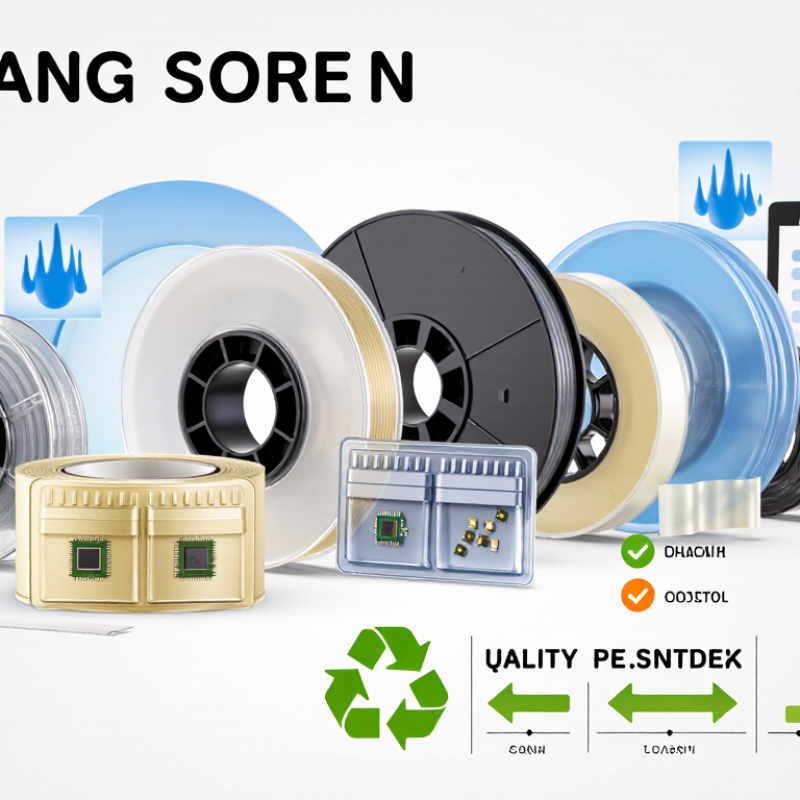
Industrial carrier tapes are structured packaging strips that hold electronic components inside individual pockets. They protect parts during feeding, inspection, storage, and automated assembly. Embossed tapes suit many surface-mount components, while antistatic and heat-resistant grades support more demanding environments. The correct tape depends on pocket geometry, material strength, component sensitivity, and sealing performance.
Demand is rising with electronics production. The World Semiconductor Trade Statistics Spring 2025 Forecast values the global semiconductor market at 697 billion dollars in 2025 and projects 772 billion dollars in 2026. That growth increases pressure on reliable component handling. SEMI’s World Fab Forecast also continues to track expanding fabrication capacity across multiple regions. More production lines mean more opportunities for misfeeds, pocket damage, and contamination.
Fit matters most. A carrier tape can look robust yet still release components poorly. Engineers should test pocket clearance, cover-tape peel force, sprocket accuracy, and dimensional stability under real humidity conditions. Small details matter. Moisture-sensitive parts may need compatible packaging and controlled storage, not just a stronger tape. A useful production check is simple: run a representative batch at normal speed, then inspect orientation, scratches, static behavior, and residue. No specification replaces testing. This is where selection often becomes less perfect than the datasheet suggests. Industry data comes from WSTS, Spring 2025 Forecast, and SEMI, World Fab Forecast.
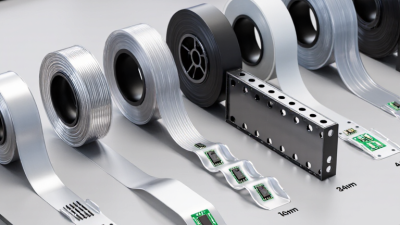
Industrial carrier tapes are precision-packaging materials that hold electronic components in pockets for automated pick-and-place handling. Paper-based tapes are commonly used for smaller, lighter parts, while embossed polymer tapes support a wider range of component sizes and pocket depths.
The chart shows nominal carrier-tape widths commonly specified in IEC 60286-3 and EIA-481-compatible component-packaging systems, ranging from 8 mm to 200 mm. Tape width is selected according to component size, pocket geometry, feeder compatibility, and the required level of mechanical protection.
What Are the Top Industrial Carrier Tapes in 2026?
Industrial carrier tapes are classified mainly by material and forming method. Material selection affects stiffness, heat resistance, transparency, and static control. Polystyrene remains common for general electronic components because it forms easily and supports stable dimensions. PET offers stronger heat resistance and better toughness during transport. Polycarbonate suits applications requiring higher impact strength and clearer inspection. Paper-based tapes may serve lighter components, but moisture control needs closer attention.
Forming methods create another important classification. Embossed carrier tapes use heated plastic sheets shaped over cavities. They provide deeper pockets for larger or irregular components. Punched tapes use flat material with mechanically cut pockets. They often support precise dimensions and efficient high-speed feeding. Thermoforming is widely used for plastic tapes, while injection molding can produce specialized structures with tight tolerances.
The choice should match the component, feeder, sealing process, and storage environment. An experienced engineer checks pocket depth, cover-tape adhesion, sprocket-hole accuracy, and material recovery after heat exposure. Static-sensitive components may require dissipative or conductive versions. Material alone cannot guarantee reliable performance. That shortcut can fail. Humidity, tooling wear, and small dimensional changes may cause feeding errors. In practice, trial runs with real components remain valuable, even when drawings appear complete. The classification looks simple, but production conditions are not.
| Material Classification | Typical Forming Method | Common Thickness Range | Key Material Characteristics | Typical Component or Industry Applications | Static-Control Options | Main Selection Considerations |
|---|---|---|---|---|---|---|
| Polystyrene (PS) | Thermoformed embossing Punched paper-style formats | Approximately 0.30–1.00 mm, depending on pocket size and load requirements | Lightweight, economical, easy to thermoform, and widely compatible with standard pick-and-place equipment. General-purpose PS has limited resistance to high heat and impact. | Small and medium-sized electronic components, passive components, connectors, sensors, and general industrial parts. | Antistatic, dissipative, and conductive grades can be produced using additives or conductive polymer blends. | Best suited to cost-sensitive, high-volume packaging where moderate mechanical strength and normal reflow exposure are sufficient. |
| Polycarbonate (PC) | Thermoformed embossing Precision pocket forming | Approximately 0.40–1.20 mm | High impact strength, good dimensional stability, and better heat resistance than standard PS. It is suitable for deeper or mechanically demanding pockets. | Large or fragile electronic components, automotive electronics, sensors, power devices, and components requiring stronger pocket retention. | Commonly available in dissipative or conductive versions for electrostatic-sensitive devices. | Choose when pocket integrity, impact resistance, or elevated process temperatures are more important than the lowest material cost. |
| Polyethylene Terephthalate (PET) | Thermoformed embossing Precision die-cutting | Approximately 0.30–1.00 mm | Good dimensional stability, surface hardness, clarity, and resistance to many common chemicals. PET can provide consistent pocket geometry for automated handling. | Electronic components, medical and laboratory parts, optical items, precision hardware, and applications needing clean, stable packaging. | Antistatic and dissipative PET grades are available; performance depends on the surface treatment and polymer formulation. | Useful when dimensional accuracy, clean appearance, and resistance to handling or chemical exposure are required. |
| Acrylonitrile Butadiene Styrene (ABS) | Thermoformed embossing Custom forming | Approximately 0.50–1.20 mm | Good toughness and rigidity with practical machinability. ABS is generally selected for specialized carrier designs rather than the highest-volume standard formats. | Robust industrial components, molded parts, electromechanical assemblies, and parts needing additional resistance to impact during transport. | Static-control performance is normally achieved through a modified resin formulation or coating. | Appropriate for custom or heavy-duty pocket designs where toughness and structural rigidity are priorities. |
| Paper or Paperboard | Punching Die-cutting Folding and laminating | Approximately 0.30–0.60 mm for common carrier constructions | Lightweight, printable, and made from fiber-based stock. Paper formats are less suitable for moisture exposure, deep pockets, and applications requiring high dimensional stability. | Axial and radial electronic components, small hardware, fasteners, and selected low-profile parts. | Static performance depends on paper treatment, coatings, humidity, and the use of conductive or dissipative layers. | Suitable when low weight, easy identification, and fiber-based packaging are more important than high moisture or impact resistance. |
| Conductive or Dissipative Polymer Composite | Thermoformed embossing Co-extrusion Surface coating | Approximately 0.30–1.20 mm, based on the base polymer and pocket design | Uses a polymer matrix such as PS, PC, or PET with conductive fillers, dissipative additives, or functional coatings. Electrical performance must remain consistent during handling and storage. | Semiconductor devices, sensors, circuit protection components, optical modules, and other electrostatic-sensitive devices. | Designed for static-dissipative or conductive performance; the required resistance range should be specified with the packaging system. | Select according to the component’s electrostatic sensitivity, grounding method, humidity conditions, and required surface-resistance stability. |
| Recycled-Content Polymer Tape | Thermoformed embossing Multi-layer forming | Approximately 0.30–1.20 mm, depending on recycled content and design requirements | Can reduce dependence on virgin resin when the recycled feedstock is properly controlled. Mechanical, optical, and static-control properties depend on the material blend and production process. | General electronic and industrial components where sustainability targets are combined with conventional automated packaging requirements. | Static-control additives or a functional outer layer may be incorporated when required. | Verify recycled-content percentage, traceability, pocket dimensional consistency, cleanliness, and compatibility with the sealing and feeding system. |
Industrial carrier tape selection in 2026 is driven by component geometry, automation speed, and protection requirements. Embossed plastic carrier tape ranks highly for heavy, tall, or irregular components. Its formed pockets provide stable walls and controlled depth. Polycarbonate and polystyrene grades remain common choices. They handle fast pick-and-place lines well.
Paper carrier tape remains competitive for small, lightweight electronic parts. It is economical, recyclable in some systems, and easy to process. Antistatic paper or plastic tape suits sensitive components during high-volume feeding. Conductive tape serves stricter electrostatic-control environments. It needs compatible grounding and packaging practices. That detail is often overlooked.
Wider embossed tape also ranks strongly for power modules, connectors, sensors, and industrial control parts. Deep pockets reduce movement during transport. Cover-tape sealing must match pocket design and peel-force targets. Too much force can disturb components. Too little can cause escapes. Engineers should test humidity exposure, pocket fit, sprocket accuracy, and reel storage conditions. I have found that laboratory results can look perfect, yet production reveals dust buildup or poor peeling. Rankings should remain flexible. There is no universal winner.
In 2026, the best industrial carrier tape is not simply the strongest or cheapest option. It must protect components, maintain pocket accuracy, and run smoothly through automated feeders. The WSTS Autumn 2024 Forecast projected the global semiconductor market would reach 687 billion dollars in 2025, an 11.2% increase. Higher production volumes make small packaging errors more expensive.
Protection begins with pocket design. Check wall thickness, pocket depth, cover-tape adhesion, and resistance to vibration. EIA-481 dimensional requirements provide a useful baseline, but real production tests matter more. Inspect parts after transport, not only before sealing. Moisture-sensitive devices may also need controlled storage and humidity checks.
Small differences matter. A loose component can tilt. A tight pocket can damage fragile edges.
Precision must support automation. Compare pitch consistency, sprocket-hole accuracy, splice quality, and peel-force stability across the full reel. SEMI reported 2024 semiconductor manufacturing equipment billings of 117.1 billion dollars, showing continued investment in automated production. That investment raises expectations for feeding reliability.
A tape that performs well at 500 cycles may fail at 50,000 cycles. This is often overlooked. Test the actual feeder, speed, temperature, and component geometry before approval. Some suppliers still rely on laboratory results alone, which may create a false sense of confidence. The better choice combines measured tolerances, clean handling, ESD control, and documented lot traceability.
The best carrier tape depends on the component, not the supplier’s catalog. SEMI’s December 2024 World Fab Forecast projects global capacity at 33.7 million eight-inch-equivalent wafers monthly in 2025. It expects 35.6 million in 2026. This growth will increase demand for stable, high-speed automated packaging. However, higher volume does not justify choosing the cheapest tape.
Start with pocket geometry. Measure component length, width, height, lead exposure, and clearance under vibration. IEC 60286-3 defines important carrier-tape dimensions and feeding requirements. A pocket should hold the part firmly, but it must not scrape fragile surfaces. Pitch must match the feeder. Small errors can create stoppages every few minutes. That detail is easy to underestimate.
Material selection follows the environment. Conductive or dissipative tape suits static-sensitive devices, while transparent materials improve camera inspection. Check surface resistance against ANSI/ESD S541 requirements. Verify cover-tape peel force, sealing temperature, tensile strength, and storage behavior. For moisture-sensitive devices, align packaging with IPC/JEDEC J-STD-033 controls. Experienced engineers also test tape after heat, humidity, and transport vibration. Laboratory results can look perfect, yet production dust may expose weak sealing. That is an uncomfortable but useful lesson. Traceability, dimensional inspection, and sample-based feeder trials should support every purchase decision.