Why Are Industrial Carrier Tapes Used in Packaging?
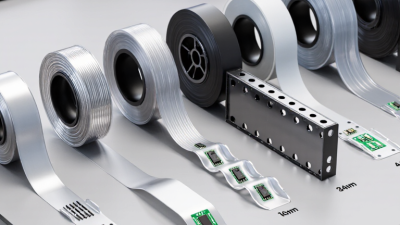
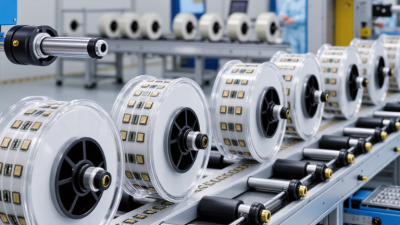
Industrial Carrier Tapes are designed to hold small components in an orderly, protected format during packaging and automated handling. Their molded pockets keep parts separated, while cover tape helps secure them on a reel. Sprocket holes allow compatible equipment to advance the tape at a steady pace. That matters.
On a production line, a misplaced component can interrupt a pick-and-place process or require extra inspection. A well-matched carrier tape can reduce movement, shield delicate parts from contact, and make feeding more consistent. The details are tangible: pocket depth, tape width, reel size, and how firmly the cover seals. Small differences can affect whether a component sits flat or shifts during transport.
This article explores why manufacturers use carrier tapes, how they support efficient packaging, and what to consider when selecting a format. Material choice may depend on component shape, handling conditions, and equipment requirements. Some applications may also call for static-dissipative materials, but that should be verified against the component and process specifications. One tape does not fit every line. Not always.
Even a carefully specified tape may need testing with actual parts and machinery. That practical step is easy to overlook when attention stays on the product sheet. We will look at the benefits, limitations, and selection factors behind Industrial Carrier Tapes, with a focus on reliable handling rather than treating packaging as a one-size-fits-all solution.
What Industrial Carrier Tapes Are and How They Work
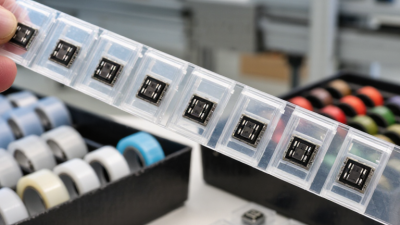
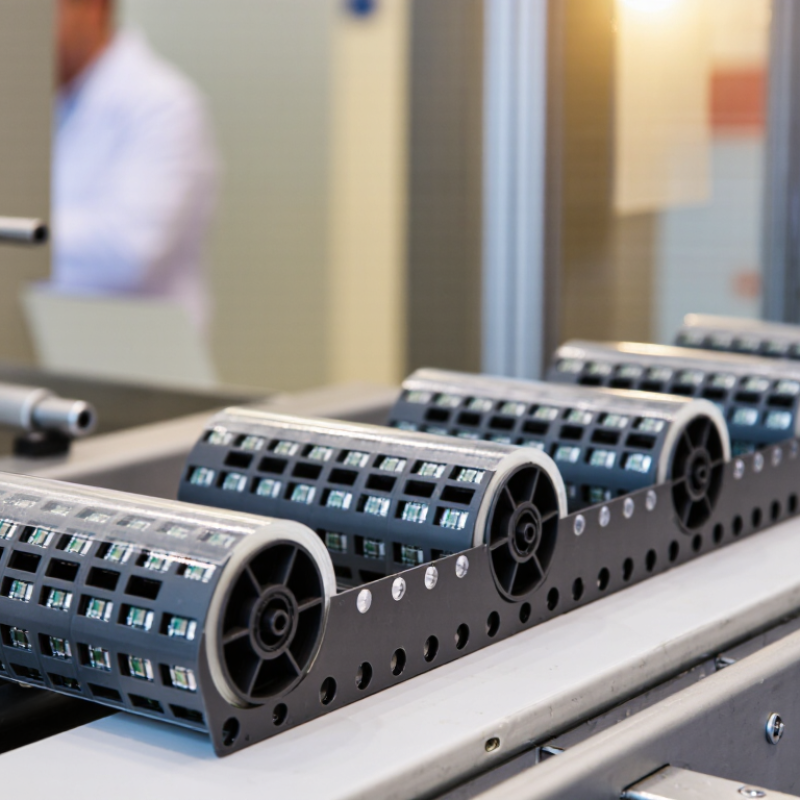
An industrial carrier tape is an indexed strip that holds small components in individual pockets. A cover tape seals the pockets during storage and transport. Sprocket holes along the edge let a feeder advance the strip at a controlled pitch. At the assembly machine, the cover is peeled back and a vacuum nozzle lifts each part into position. Simple in theory. Small details matter. Pocket depth, tape width, and feed pitch must match the component and feeder. EIA-481 provides dimensional requirements for electronic-component carrier tape, but it cannot prevent every handling problem.
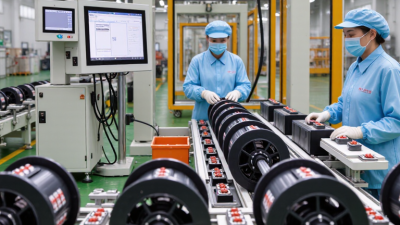
The scale of automated production makes consistent presentation important. The International Federation of Robotics reported 4,281,585 industrial robots operating worldwide in 2023 in its World Robotics 2024 report. SEMI reported global semiconductor-manufacturing equipment sales of $117.1 billion for 2024. These figures describe automation and equipment investment, not carrier-tape use specifically; they help explain the production environment where repeatable feeding matters. Carrier tape can reduce loose-part handling and support rapid, orderly placement. It is not a perfect fix. Static, moisture, damaged pockets, or a poorly matched feeder can still cause mispicks and stoppages. In practice, operators check the first few advances, inspect the seal, and adjust when parts sit unevenly. A tiny mismatch can waste a whole run.
Why Are Industrial Carrier Tapes Used in Packaging?
Carrier tape securely holds components in individual pockets and uses sprocket holes to help automated feeders position them for pick-and-place equipment.
Common nominal tape widths (mm) vary to accommodate components of different sizes. The chart shows width options, not market share or usage volume.
How Carrier Tapes Hold and Protect Components
Industrial carrier tape gives small components a defined place during handling, inspection, and automated assembly.
Each pocket is shaped to match a part’s outline, leaving enough clearance for loading without letting it turn freely. A shallow pocket may suit a flat connector; a deeper cavity can steady a taller component. The cover tape closes the pocket and helps limit movement, dust exposure, and accidental contact. Small details matter.
During transport, the tape passes through feeders and over guides, so consistent pocket spacing helps machines present parts predictably. The reel also keeps components organized in sequence, reducing loose-part handling. For sensitive surfaces, a smooth pocket and suitable cover material can reduce rubbing; however, protection depends on the component, tape design, and storage conditions. A poorly matched pocket can still allow shifting, while an overly tight one may complicate removal. Parts can shift. Engineers often check samples at operating speed, not just by reviewing a drawing, and adjust pocket dimensions or sealing strength when parts arrive tilted or marked. That extra check can catch problems before a full production run, though it cannot replace careful handling.
Where Carrier Tapes Are Used in Industrial Packaging
Why Are Industrial Carrier Tapes Used in Packaging?
Where Carrier Tapes Are Used in Industrial Packaging
Carrier tapes are common in electronics packaging, where tiny components need orderly, machine-ready handling. Resistors, capacitors, LEDs, sensors, and integrated circuits sit in formed pockets beneath a cover tape. The reel feeds into an automated pick-and-place machine, which lifts each part onto a circuit board. Small parts. Fast handling. This format also helps reduce mixing, surface contact, and damage during storage or movement between production stages.
Their use matters across a large industry. The Semiconductor Industry Association reported that worldwide semiconductor sales reached $627.6 billion in 2024, a 19.1% increase from 2023. That figure does not measure carrier-tape demand, but it signals the scale of component supply chains that depend on consistent handling. Carrier tapes also appear in automotive electronics, industrial controls, and consumer-device assembly. Pocket size, tape width, and feed pitch must match both the component and the feeder. A mismatch can cause jams or wasted parts. It is tempting to assume one tape suits every line; it does not. Sometimes the simplest packaging choice still needs careful testing.
How Materials and Design Fit Different Packaging Needs
Industrial carrier tapes protect small components while keeping them correctly spaced for automated handling. A formed pocket supports each part; a cover tape holds it in place, and sprocket holes guide the strip through feeding equipment. Pocket depth, width, and pitch should match the component and pickup nozzle. Too much clearance can let parts shift. Too little can make loading difficult. Fit matters. EIA-481 provides industry requirements for carrier tape dimensions and feeding features, but material choice still depends on real handling conditions.
Common options include polystyrene, polycarbonate, polyester, and paper. Conductive or dissipative plastics can help control static around sensitive electronics, while paper may suit some lighter components. SIA, drawing on WSTS data, reported global semiconductor sales of $627.6 billion in 2024, up 19.1% from 2023. That figure does not measure carrier-tape demand, but it shows the scale and variety of the electronics sector the packaging serves. A tiny resistor and a delicate sensor may need different pockets, stiffness, and static control. There is no perfect tape. Even a well-designed strip can be awkward if equipment settings or storage conditions are overlooked.
Benefits and Limitations of Carrier Tape Packaging
Carrier tape packaging protects small electronic components while keeping them aligned for automated pick-and-place machines. The EIA-481 standard defines tape dimensions and pocket arrangements, helping equipment feed parts consistently. In practice, a correctly sized pocket reduces movement during transport and makes components easier to present to a feeder. That matters when parts are tiny, fragile, or handled at high speed.
The benefits have limits. Tape width and pocket design must match both the component and the feeder; a poor fit can cause jams, tilt, or wasted parts. Plastic carrier tape also creates a disposal challenge. The OECD’s Global Plastics Outlook reports that only 9% of global plastic waste was recycled in 2019. That figure is not specific to carrier tape, but it puts the material trade-off in perspective. Recyclability can vary with resin, contamination, and local collection systems. And recycling is not always straightforward.
Tips: Check pocket dimensions and cover-tape adhesion with a real feeder before a production run. Ask suppliers for material details and evaluate whether used tape can be collected separately. A small trial helps, though it may not reveal every line-speed issue.