
A transformer can pass electrical testing and still reach assembly with bent leads or damaged insulation. Packaging deserves attention. For global buyers comparing Transformer Carrier Tape in 2026, pocket geometry matters as much as material choice. A pocket that looks suitable on a drawing may allow a heavier component to rotate during transport. Small movements matter. This introduction explores the main tape types, their practical differences, and the questions buyers should ask before approving production orders.
Common options include embossed polystyrene, polycarbonate, and PET tapes, with suitability depending on component weight, pocket depth, and handling conditions. Conductive or static-dissipative grades may be appropriate when the transformer assembly includes electrostatic-sensitive components. Material names alone do not establish protection. Buyers should verify electrical properties against their actual handling requirements. Embossed pockets can accommodate three-dimensional transformer bodies, while punched paper tape generally suits smaller, thinner components. Cover tape compatibility also matters because inconsistent peeling can disrupt feeder operation, expose components prematurely, or interfere with reliable pickup.
A useful comparison starts with body dimensions, terminal clearance, component mass, tape width, reel diameter, and feeder specifications. Request dimensional drawings and trial reels before committing to volume purchases. Check pocket deformation, component movement, and pickup consistency during an actual feeder trial. There is a temptation to choose tighter pockets for better restraint. That can backfire if terminals snag or unloading becomes unreliable. No single tape type wins every application, and an initially acceptable sample may still need revision after transport testing. The sections ahead examine these tradeoffs to help buyers build specifications that suppliers can measure and production teams can verify.

Transformer carrier tape holds miniature transformers in individual pockets for automated assembly. Each pocket controls orientation and limits movement before a placement nozzle lifts the component. Small gaps matter. Excess clearance can let a transformer rotate, while tight walls can catch terminals or stress delicate leads. Embossed plastic tape suits many three-dimensional transformer bodies, but pocket geometry must match the actual component drawing. Paper tape offers shallow cavities and generally suits thinner components rather than bulky transformer packages.
IEC 60286-3 specifies packaging requirements for surface-mount components supplied on continuous tapes. A common dimensional reference is 4 mm between successive sprocket holes, which helps feeders advance consistently. However, pocket pitch, tape width, and component height require separate checks. Cover tape retains components during transport and peels away at the feeder. Uneven peeling can disturb lightweight parts or interrupt pickup. Buyers should request dimensional inspection records and peel-force measurements under documented test conditions, using the applicable standard and feeder requirements.
International shipping adds another packaging challenge. UNCTAD’s Review of Maritime Transport 2024 reports that maritime transport carries over 80% of global trade volume. For overseas transformer shipments, buyers should assess moisture protection and transport vibration alongside pocket fit. Samples can mislead. A short trial may overlook dimensional variation between production lots. Testing actual transformers across several reels gives buyers better evidence, although the required sample size remains application-dependent.
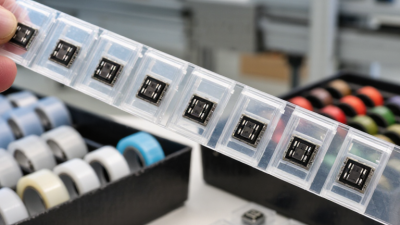
Embossed plastic carrier tape is a common packaging choice for surface-mount transformers supplied to automated assembly lines. Its formed pockets protect component bodies and help maintain orientation during feeding. Pocket geometry matters. Polystyrene tapes can suit smaller transformers when stiffness, pocket depth, and handling conditions meet the application’s requirements. Polycarbonate tapes offer an option when tougher pockets are needed for heavier components or demanding transport conditions. PET-based tapes may also be suitable, depending on forming quality and compatibility with the selected cover tape.
Conductive and static-dissipative tapes serve applications requiring controlled electrostatic discharge protection. These electrical properties are separate from the tape’s base material and pocket design. Check the specification. For transformers with exposed terminals, pockets need clearance that prevents leads from rubbing against the walls. Deep-pocket designs can accommodate taller bodies, but reel capacity may decrease as pocket spacing increases. A compact pocket initially looks economical; that assumption deserves reconsideration when components catch during pickup. Punched paper tape generally offers insufficient pocket depth for bulky transformer bodies.
Tips: Request samples loaded with your actual transformer before approving a production order. Check pocket dimensions, component movement, cover-tape peel behavior, and pickup consistency on the intended feeder. Applicable EIA-481 dimensions provide a useful reference, but they do not replace machine trials. Record any rotated parts or bent terminals during testing. Even a short trial can reveal a poor fit.
Embossed plastic carrier tape provides pockets for surface-mount transformers used in automated assembly. The chart compares selected standardized carrier tape widths that buyers can evaluate against component dimensions and packaging requirements. Values represent physical tape widths, not market share or popularity.
Main types and applications: Embossed polystyrene (PS) and polycarbonate (PC) tapes are used for pocketed electronic-component packaging, including suitable surface-mount transformers. Conductive or static-dissipative grades support applications that require electrostatic protection. Punched paper tape serves small, low-profile components and generally offers less pocket depth for bulky transformer packages.
Buyer guidance: Select the tape using pocket length, width, depth, component orientation, and pocket pitch. Overall tape width alone does not establish transformer compatibility. Confirm cover-tape performance, reel format, and feeder compatibility before ordering.
Data basis: selected nominal carrier tape widths specified within the EIA-481 and IEC 60286-3 packaging standards. This is a dimensional comparison for a 2026 buying guide, not a forecast or a ranking of tape materials.
For 2026 sourcing, transformer carrier tape selection starts with pocket geometry and material stiffness. Polystyrene (PS) often suits lightweight components, while polycarbonate (PC) can provide tougher pockets for heavier surface-mount transformers. Polyethylene terephthalate (PET) offers another option when dimensional stability and forming quality match the application. Material names alone are insufficient. Check pocket-wall thickness, corner definition, and flange flatness on actual samples. A transformer that fits tightly may still snag during automated pickup.
Conductivity needs verification. Standard plastic grades can accumulate static charge unless modified with conductive additives or suitable treatments. Conductive and static-dissipative tapes have different resistance characteristics, so request measured values and the test conditions. Humidity, handling, and surface contamination can affect some antistatic treatments. Check both surfaces. For transformers supplied alongside sensitive electronics, coordinate tape selection with the assembly’s documented electrostatic discharge controls. Black coloration alone does not establish electrical performance.
Mechanical protection depends on the complete packaging system, including cover tape, pocket clearance, and reel winding tension. Excessive clearance allows movement; insufficient clearance can load terminals or damage delicate wire connections. Deeper pockets sometimes help, but they also increase reel space requirements. That tradeoff deserves reconsideration when shipping volumes rise. Before ordering, inspect unwound samples after representative transport testing and confirm consistent cover-tape peeling on the intended feeder.
For 2026 transformer sourcing, carrier tape dimensions deserve more attention than broad packaging labels. Industry standards provide useful numerical benchmarks. EIA-481 specifies nominal tape widths including 12, 16, 24, 32, and 44 mm, with wider formats also available. Its standard sprocket-hole pitch is 4 mm. These dimensions support feeder compatibility, but tape width alone cannot confirm transformer fit. Check the pocket. A compact transformer still needs room for terminals, winding irregularities, and reliable nozzle access.
Pocket drawings typically identify A0 as pocket width, B0 as pocket length, and K0 as pocket depth. Compare these dimensions against the transformer’s maximum production envelope, including terminal projections and manufacturing tolerances.
IEC 60286-3 provides another authoritative reference for surface-mount component packaging on continuous tapes. For example, a 10 × 8 × 6 mm transformer requires clearance beyond its nominal body dimensions. Clearance needs testing. Excess space can permit rotation, while insufficient clearance can trap terminals or obstruct pickup.
Embossed plastic pockets accommodate deeper transformer bodies; shallower components may suit punched constructions when terminal protection remains adequate. Request dimensioned drawings, material specifications, and samples from the intended production tooling. During trials, inspect terminal contact, component tilt, cover-tape clearance, and pickup consistency after transport simulation. A deeper pocket may improve enclosure yet make nozzle access harder. That tradeoff is easy to underestimate. Record observed feeding failures and revise pocket geometry before approving production quantities.
For 2026, transformer carrier tape selection should begin with package geometry, mass, and placement requirements. Compare embossed plastic pockets with punched paper tape for smaller, lighter components. Deep pockets may suit taller transformers, but depth alone does not ensure stability. Check the fit. Specify pocket clearance, component orientation, and allowable movement during transport. Request dimensional inspection against the agreed drawing and applicable IEC 60286-3 requirements.
Supply planning deserves equal attention. UNCTAD’s Review of Maritime Transport 2024 reports that shipping carries over 80% of world merchandise trade by volume. The same report records 2.4% growth in maritime trade during 2023. These historical figures provide logistics context; they do not predict your supplier’s 2026 delivery performance. Ask suppliers for production lead times, tooling ownership terms, and backup manufacturing arrangements. Verify minimum order quantities separately for sample reels and recurring orders. Freight matters.
Qualification should include loaded reels, compatible cover tape, and trials on the intended feeder. Measure peel force under agreed conditions and inspect pockets after representative shipping tests. Where ESD protection is required, specify measurable electrical properties instead of accepting an “antistatic” label. One weakness remains: a small trial may miss variation between production lots. Require lot traceability and documented change notification. Compare landed cost per usable pocket, including rejected reels, freight, duties, and tooling charges.