2026 How to Choose the Best Transformer Carrier Tape?
In the evolving world of electronics, selecting the right Transformer Carrier Tape is crucial. Renowned industry expert Dr. Emily Chang once stated, “The choice of carrier tape can significantly impact the efficiency of production lines.” This highlights the need for careful consideration when choosing materials that transport transformers.
While many may overlook the importance of Transformer Carrier Tape, it plays a critical role in ensuring devices are handled correctly during manufacturing. A poorly chosen tape can lead to defects and increased costs. Factors such as tape width, thickness, and material type should be evaluated based on specific requirements and equipment.
Making an informed choice is not always straightforward. There are many options available, and each has unique advantages and limitations. It’s essential to weigh these factors carefully. Engaging with suppliers and seeking expert advice can help clarify the best choices. The journey to finding the ideal Transformer Carrier Tape might come with challenges, but the right tape can make a significant difference in production efficiency and product reliability.

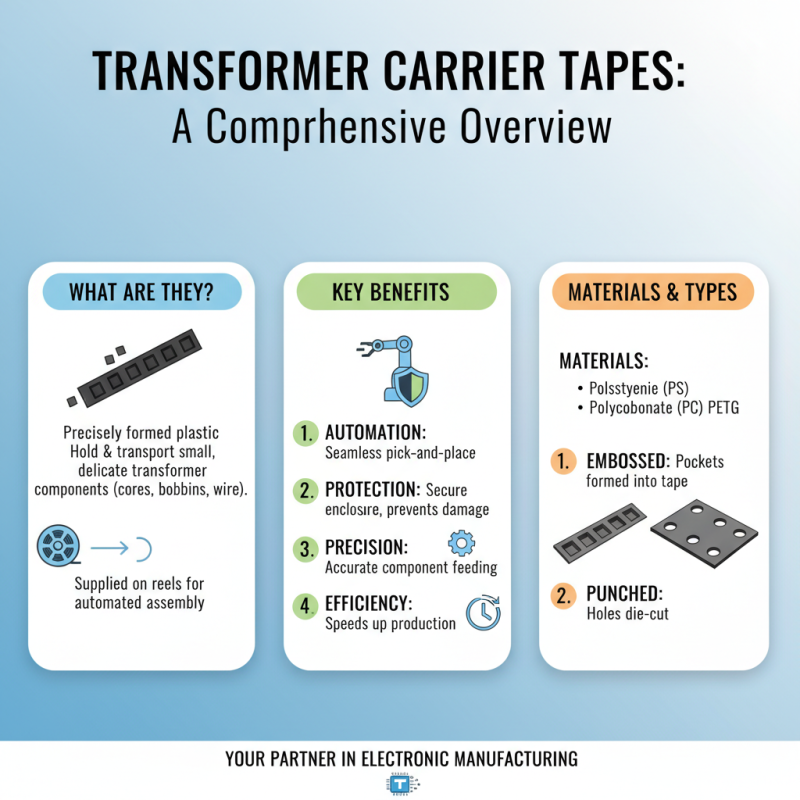
Understanding Transformer Carrier Tapes: A Comprehensive Overview
Transformer carrier tapes play a crucial role in the packaging and transportation of electronic components. Understanding their specifications is essential for making informed decisions. These tapes come in various sizes, materials, and configurations. Knowing the differences helps in selecting the right type for specific applications.
When evaluating transformer carrier tapes, consider the thickness. A correct thickness ensures proper support during transit. Too thick may cause unnecessary bulk, while too thin risks damaging the components. Check for anti-static properties too. This feature helps protect sensitive electronic chips from static electricity that can lead to failures.
Tip: Always ask for samples. Testing the tape in your assembly process can reveal any potential issues. Look for durability in various environments. The tape should withstand temperature fluctuations and humidity without degradation. Revisit your choice periodically. Materials and technology evolve, and what works today may not be the best tomorrow.
Key Factors to Consider When Selecting a Transformer Carrier Tape
When selecting a transformer carrier tape, key factors come into play. The material of the tape is crucial. It should be durable yet flexible, allowing for smooth transportation of components.
Consider the thickness and width as well. They must match the specifications of your components. This will prevent damage during transit.
Compatibility is another important aspect. Ensure that the carrier tape aligns with your transport machinery. Misalignment can lead to jams and costly downtime. Look for tapes specifically designed for the components you handle. This can enhance productivity and reduce errors.
Tips: Test different materials for durability. A stronger tape may prevent component damage but could also lead to higher costs. Balance is key. Keep in mind the storage conditions too. Some tapes may degrade over time if exposed to humidity or extreme temperatures. Regular checks can save resources in the long run.
Material Types Used in Transformer Carrier Tapes: Pros and Cons
When selecting transformer carrier tapes, material type plays a crucial role. Common materials include polyester, polypropylene, and paper. Each has unique benefits and drawbacks. For instance, polyester offers excellent durability and resistance to moisture. However, it can be more expensive than other options. Some may find this cost challenging, especially for large-scale projects.
Polypropylene is another popular choice. It is lightweight and provides decent flexibility. Its low cost makes it attractive for many manufacturers. Yet, polypropylene may not offer the same level of protection against environmental factors as polyester. It’s essential to weigh these factors against your project's specific needs.
Paper tapes are often the least expensive option. They are biodegradable and can be a more environmentally friendly choice. However, they may not perform as well in high-humidity environments. Users might find they wear out quickly in such conditions. Understanding these pros and cons will help guide your decision.
2026 How to Choose the Best Transformer Carrier Tape? - Material Types Used in Transformer Carrier Tapes: Pros and Cons
Assessing the Compatibility of Carrier Tapes with Transformer Designs
Choosing the right carrier tape for transformers requires careful evaluation. Compatibility is crucial. Engineers must consider dimensions, tolerances, and materials. A mismatch can lead to product failures. According to industry research conducted by the International Journal of Electronics, 72% of defective components stem from inappropriate carrier tape selection.
Incompatibility can cause issues during transport and assembly. The tape should accurately accommodate the transformer’s size and weight. Testing the static and dynamic properties of both the tape and transformer is essential. Data shows that improper alignment can reduce assembly efficiency by up to 25%. Even slight variations in tape width can lead to significant misalignment during the assembly process.
Understanding how materials interact is equally important. Some tapes might not provide the necessary insulation or protection. The National Institute of Standards and Technology indicates that 40% of transformer failures are linked to inadequate protection during handling. Engineers often overlook how environmental factors impact performance. A comprehensive analysis can help mitigate risks and improve overall reliability.
2026 How to Choose the Best Transformer Carrier Tape?
| Dimension |
Value |
Compatibility Range |
Material Type |
Thickness |
| Width |
8mm |
5mm - 12mm |
Polypropylene |
0.15mm |
| Pitch |
12mm |
8mm - 16mm |
Polyester |
0.20mm |
| Emboss Depth |
0.7mm |
0.5mm - 1.0mm |
PVC |
0.25mm |
| Winding Type |
Single |
Single/Dual |
Composite |
0.30mm |
Top Brands and Suppliers of Transformer Carrier Tapes in 2026
In 2026, selecting the best transformer carrier tape requires careful consideration of key suppliers and industry standards. The market for carrier tapes is forecasted to grow significantly, driven by the rising demand in electronics packaging. Research indicates that the global transformer tape market will reach $2 billion by 2026, highlighting the importance of sourcing from reputable brands.
When evaluating suppliers, consistency and quality are paramount. Leading suppliers demonstrate rigorous quality control methods. Their tapes should meet international standards, ensuring durability and reliability. Some companies focus extensively on sustainable materials. This commitment can influence a buyer's choice. Many companies report that environmental considerations are increasingly important to their customers.
It’s crucial to acknowledge that not all brands deliver on promises. Quality issues may arise, such as variations in tape thickness or adhesion levels. While some suppliers emphasize superior technology, reviews indicate mixed experiences. Therefore, it’s advisable to conduct thorough research and test samples before making bulk purchases. Engaging with industry experts can provide insights into the latest trends, helping buyers make informed decisions amidst a rapidly changing market landscape.