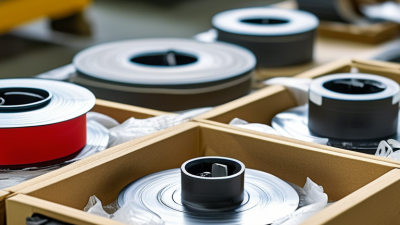
Tape Reel Packaging is a small component of a much larger electronics supply chain, yet a poor reel can disrupt automated assembly. Accurate pockets, clean edges, consistent winding, and reliable sprocket holes matter on the production line. Small details. Real consequences.
The World Semiconductor Trade Statistics (WSTS) Fall 2024 forecast projected global semiconductor sales of about $626 billion in 2024 and $697 billion in 2025. Those figures describe the chip market, not tape-and-reel packaging specifically. Still, they illustrate the scale of electronics demand that packaging suppliers serve. The distinction matters: industry growth alone does not prove that every packaging manufacturer has equal capacity or quality.
This guide to the Top 10 Tape Reel Packaging Manufacturers in China compares practical factors, including product range, material options, dimensional consistency, customization, and quality-control practices. Buyers should also check sample reels and confirm specifications before placing large orders. A polished catalogue is not enough. Supplier capabilities can vary, and public information may be incomplete. That is worth remembering when comparing companies. The list is intended as a starting point for research, not a universal ranking or a substitute for supplier audits. Readers can use it to identify manufacturers for closer evaluation and match reel formats to their components, equipment, and production needs.

Tape reel packaging holds small electronic components in a continuous pocketed carrier tape, sealed by a cover film and wound onto a reel. The pockets keep parts oriented and separated during storage, transport, and automated placement. A feeder indexes the tape forward, exposing one component at a time. Small details matter: pocket depth, cover-film peel force, and sprocket-hole alignment can affect whether a component feeds cleanly.
The scale is substantial. The World Semiconductor Trade Statistics (WSTS) reported global semiconductor sales of $627.6 billion in 2024, up 19% from 2023. That figure does not measure tape use, but it shows the size of the component supply chain that packaging must serve. In practice, a reel also needs clear labels, consistent winding, and protection from dust and static. A bent flange or loose cover tape can interrupt a production line. Not glamorous. Easy to underestimate. Reel packaging is not a cure-all, either; teams still need to verify component compatibility and feeder settings before production.

Carrier tape is available in standardized nominal widths, including the sizes shown. The appropriate width depends on the component and its pocket design; tape width alone does not indicate pocket size or component capacity.
Tape reels look simple, but material choice affects winding stability, handling, and storage. Polystyrene is common for rigid, economical reels, while polycarbonate can offer greater impact resistance. Conductive or dissipative plastics help manage electrostatic charge around sensitive components. Performance depends on formulation and measured surface resistance, not color alone. That distinction matters.
Manufacturing may include resin drying, injection molding, cooling, and assembly of the flanges and hub. Parts are checked for warpage and alignment. Flange geometry and winding tension affect how smoothly carrier tape tracks at production speed. A small burr can snag tape. It happens.
Quality checks should cover reel diameter, hub dimensions, flange flatness, balance, and fit with the specified carrier tape. Buyers can request documented sampling plans, material declarations, and batch traceability, then test samples on their own winding equipment. Applicable specifications and tolerances should be agreed in the drawing or purchase requirements, since they vary by reel size and use. A polished sample is useful, but repeatable batches matter more. Incoming inspection remains sensible, even with a trusted supplier.
Evaluating tape reel packaging manufacturers in China starts with the reel’s intended use. Check that pocket pitch, tape width, flange diameter, and winding direction match your components and feeder. Ask for current drawings and a production sample, not just catalogue images. Small details matter. Measure several pockets with suitable gauges, and inspect the reel edges for burrs or deformation. A smooth sample can still hide variation across a full production run.
Ask how the manufacturer controls material thickness, pocket dimensions, and winding tension. Request inspection records, calibration details, and batch traceability where available. For sensitive components, discuss static-control requirements and ask how performance is verified. Then run the sample through your own feeder at normal operating speed. Watch for jams, loose winding, and misaligned pockets. One successful test is not enough; repeat it with more than one reel.
Production capacity and communication also deserve a practical check. Confirm expected lead times, minimum order quantities, and how changes to drawings are approved. Ask what happens when an inspection finds an out-of-spec reel. A clear answer is useful, though paperwork alone cannot guarantee consistency. It is easy to focus on price and overlook the cost of a line stoppage. Compare suppliers using the same sample plan and acceptance criteria.
These ten profiles describe common manufacturer types in China’s tape reel packaging sector, not an audited ranking. A high-volume producer may specialize in molded carrier tape, with stable pocket spacing for automated placement. A precision converter may focus on punched tape, checking hole position and edge quality under magnification. A cover-tape supplier may offer different sealing strengths for varied components. Small details matter.
A reel specialist may supply multiple diameters and flange designs, while a semiconductor-focused factory may prioritize clean handling and dimensional records. Another manufacturer may serve passive components, adjusting pocket depth to reduce movement during transport. A prototype workshop can make short runs for fit checks. Lead times may vary. An integrated producer may coordinate carrier tape, reels, and cover tape under one quality system.
An export-oriented supplier may emphasize protective cartons and clear lot identification. A process-focused manufacturer may track dimensions, sealing performance, and material batches. These are useful points to verify, not assumptions to accept. Request samples, drawings, inspection criteria, and production records before comparing suppliers. A sample can look right, yet run poorly on a placement line. That distinction deserves attention.
Tape-and-reel packaging protects small electronic components during storage, transport, and automated assembly. It is widely used for surface-mount devices, sensors, connectors, and compact automotive electronics. Pocket dimensions and cover-tape strength matter: a slight mismatch can cause skewed parts or feeder jams. The growing market makes consistency more important. WSTS’s Fall 2024 Forecast estimated global semiconductor sales would rise 19.0% in 2024, to US$627.6 billion, followed by 11.2% growth in 2025. This forecast signals expanding demand, though it does not measure tape-reel demand directly.
Emerging designs respond to smaller components and faster pick-and-place lines. Manufacturers are refining pocket tolerances, antistatic performance, and reel handling for delicate parts. Machine-readable labels and digital traceability can also help track batches and reduce mix-ups. Material efficiency is gaining attention, with lighter reels and recyclable options under evaluation. Still, sustainability claims need careful review: recyclability depends on material composition and local collection systems. Not every upgrade pays back.
Tips: Check pocket dimensions against the actual component, then test a full reel on the intended feeder. Inspect cover-tape peel force and label readability. A short production trial can reveal problems that a sample check misses.