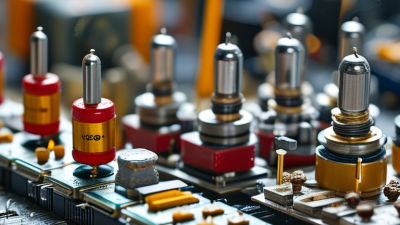
Sourcing a Touch Button Spring in 2026 requires more than comparing unit prices. This small component controls tactile feedback, electrical contact, and the perceived quality of a finished device. A spring that feels crisp in a sample may become weak after thousands of presses. That difference matters.
Reliable sourcing begins with a clear technical brief. Define the spring diameter, wire material, free height, working force, travel distance, and expected cycle life. Stainless steel may suit humid environments, while high-carbon steel can offer stronger force at lower cost. Ask suppliers for material certificates, dimensional reports, and force-displacement data. Request production samples, not only catalog photographs.
Supplier evaluation should include manufacturing experience, inspection equipment, and traceability. Review how the factory controls wire diameter, heat treatment, surface finish, and packaging. A practical test can simulate repeated button presses under realistic temperature and humidity conditions. Record force changes, deformation, and contact stability. Small details matter, such as oil residue on the spring or scratches inside a narrow housing.
No sourcing plan is perfect. Initial specifications may be incomplete, and early samples can hide long-term fatigue. That is why engineering feedback should remain open during 2026. Compare at least two qualified suppliers, document every revision, and avoid accepting vague claims such as “premium quality.” A dependable Touch Button Spring should meet measurable requirements, support consistent assembly, and remain compliant with applicable product and environmental regulations. Cost matters, but failure costs more.
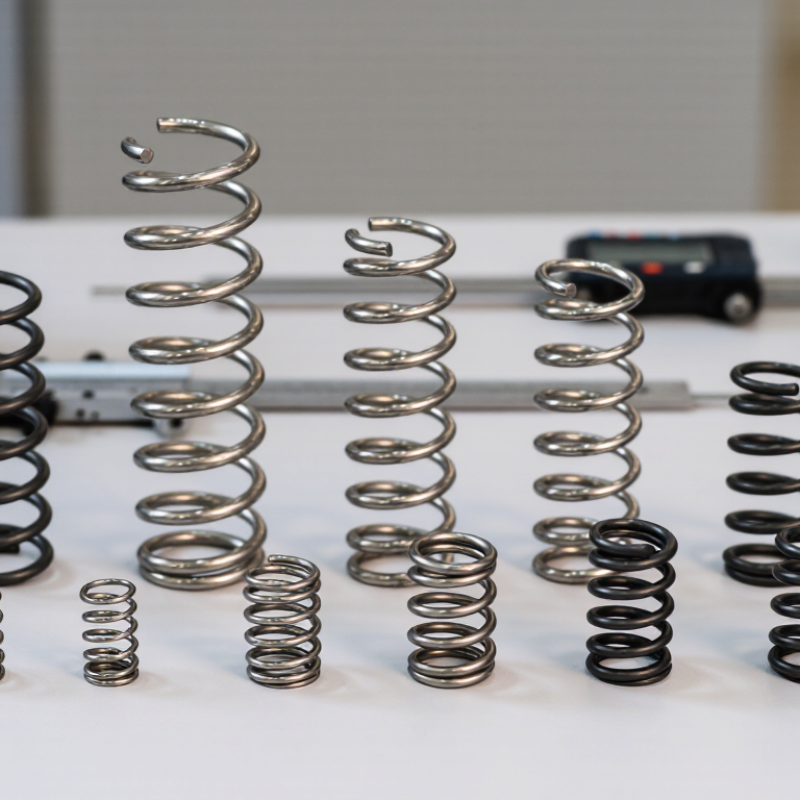
A touch button spring is a thin, formed metal dome inside a push-button assembly. It flexes under pressure, then returns to its original shape. This action creates tactile feedback, and sometimes a small clicking sound. The spring also bridges electrical contacts when pressed. It is not merely a mechanical part.
These springs appear in membrane keypads, appliance controls, industrial panels, automotive interiors, remote controls, and compact medical interfaces. Their value is clear in small spaces. They provide repeatable input without adding much height. Fortune Business Insights valued the global switches market at about USD 17.69 billion in 2023. Its forecast reaches approximately USD 21.62 billion by 2030. This growth supports demand for reliable miniature switching components, although the report covers switches broadly, not touch springs alone.
Tips: Define actuation force, travel, contact resistance, dome diameter, and cycle life before requesting samples. Confirm stainless-steel grade, surface finish, flatness, and burr control. Ask for dimensional inspection records and endurance-test conditions. A supplier’s “one million cycles” claim means little without load, speed, and failure criteria. Request samples from different production lots.
During sourcing, compare force curves rather than only unit prices. Check whether the spring suits the membrane adhesive and PCB contact layout. An overlooked tolerance can cause double-inputs or weak feedback. I would also challenge optimistic test data. Laboratory performance may not match dusty, humid field conditions. Independent sample testing remains worthwhile in 2026.
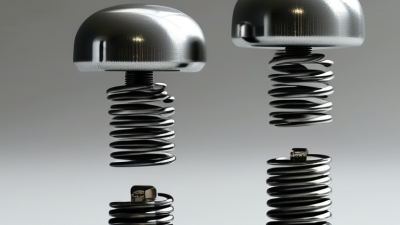
Defining the touch button spring correctly starts with the user’s finger, not the supplier’s catalog. Record the required actuation force, return force, travel, and tactile snap. A useful specification may state 180 gf actuation force, 0.35 mm travel, and ±0.05 mm dimensional tolerance. Also define the spring’s outside diameter, height, material, and contact shape. Small changes can make the button feel sharp, weak, or inconsistent.
Describe the working environment clearly. Include operating temperature, humidity, expected cycle life, and storage conditions. Specify surface treatment when corrosion or stable electrical contact matters. Ask for material certificates, dimensional reports, force-travel curves, and pre-production samples. In practice, drawings alone are not enough. I have seen a spring pass dimensional checks but feel wrong because its snap point shifted. That detail deserves testing.
Tips: Test at least three samples from each production batch. Measure force at the same speed and fixture position. Check sound, rebound, and alignment after repeated pressing. Keep a golden sample for comparison. Avoid vague terms like “good touch” or “standard size.” They create room for disagreement. A small tolerance review may prevent a large sourcing problem.
A touch button spring looks simple, yet small variations can change tactile response. Start with a controlled specification. Record wire diameter, coil diameter, free height, working height, force range, material, surface finish, and target cycle life. Include a drawing with tolerances. Photos alone are not enough.
Ask each supplier for process details, inspection records, material certificates, and recent sample data. A qualified supplier should explain coiling, heat treatment, cleaning, and packaging. Request samples from normal production equipment, not hand-finished pieces. Test force at the actual working height. Check contact stability, electrical resistance, burrs, corrosion, and recovery after repeated compression. A sample may feel excellent on day one.
Compare suppliers with the same scorecard. Weigh quality history, engineering response time, capacity, tooling control, minimum order quantity, lead time, and total landed cost. Verify whether measurements come from calibrated equipment. Ask how nonconforming parts are isolated and corrected. During one comparison, I focused too heavily on unit price. That was a mistake. The cheaper spring required extra sorting and delayed assembly. I now review packaging damage, lot traceability, and change-notification practices before approval. No comparison is perfect. Build a small pilot lot, document failures, and revisit the scorecard after production feedback.
How to Source Touch Button Spring in 2026?
How to Verify Quality, Compatibility, and Compliance
Sourcing starts with a controlled drawing, not a catalog photograph. Specify wire diameter, free height, coil count, force at operating height, preload, end geometry, and permitted set. For stainless steel, request material certificates tied to heat numbers. ASTM A313 covers stainless spring wire requirements, but it does not prove finished-part performance. Ask for force-displacement curves from three production lots. Small variations can change tactile feel.
Compatibility needs testing inside the real switch housing. Check contact travel, buckling, rubbing, corrosion exposure, and current paths. Measure force at 10%, 50%, and 90% of travel. Then repeat after temperature cycling and 100,000 actuations, when the application requires it. That test count is a practical target, not a universal rule. The 2024 Global E-waste Monitor recorded 62 million tonnes of e-waste in 2022, reinforcing the value of durable components and repairable designs. Still, durability claims need application-specific evidence.
Compliance should be documented before purchase approval. IEC 61058-1 may apply to appliance switches, while RoHS and REACH declarations address restricted substances and chemicals. Request lot traceability, dimensional inspection records, salt-spray results, and change-notification controls. ISO’s 2022 Survey reported 1,265,216 ISO 9001 certificates worldwide. Certification supports process discipline, but it cannot replace incoming inspection. A polished report can still hide a weak spring. Leave room for retesting.
When sourcing a touch button spring in 2026, separate piece price from landed cost. A low quote can hide tooling, plating, inspection, packaging, and expedited freight. Request a costed bill of materials, material grade, coil yield, and scrap allowance. The details matter. Use stable, delayed, and constrained scenarios. The 2020 Global Supply Chain Leader Survey reported that 93% of leaders planned to increase supply-chain resilience. That supports dual tooling or a qualified second source, not merely a cheaper quotation.
Lead time should run from drawing approval to accepted goods, not from purchase order alone. Ask for separate durations for material booking, tool fabrication, sample approval, mass production, and ocean transport. An eight-week promise may become twelve weeks when approval loops are ignored. In practice, schedules often fail during inspection. UNCTAD’s Review of Maritime Transport 2024 reported a 67% decline in container-ship transits through the Suez Canal by mid-2024. Route, port, and buffer assumptions belong in every quotation.
Evaluate supply risk with measurable controls: force tolerance, cycle-life samples, salt-spray results, lot traceability, and change-notification time. Require retained samples and a corrective-action deadline. Keep two approved material sources where feasible. It costs more. One weakness remains: without historical yield data, any cost model is partly guesswork. Add safety stock only after checking demand variability, inspection capacity, and line-stop costs. Price is only one risk.