Who Are the Best Spring Makers in China?
China’s Spring Makers serve industries where a small component can affect safety, durability, and production uptime. Their capabilities vary widely. Some specialize in precision compression springs; others make torsion springs, wire forms, or custom parts for vehicles and industrial equipment. Buyers should compare more than catalog breadth. Material traceability, process control, testing capacity, and delivery consistency matter on the factory floor.
Demand provides useful context, but it is not a supplier ranking. The China Association of Automobile Manufacturers reported 31.282 million vehicles produced and 31.436 million sold in China in 2024. Those figures point to a substantial automotive manufacturing base, where springs are among many essential components. The scale is real. It does not prove that every spring supplier has equal expertise, or that automotive volume represents demand across all spring applications.
A sound technical lens starts with Robert Hooke, whose foundational spring principle is summarized as “Ut tensio, sic vis”—“As the extension, so the force.” Hooke was a physicist, not a modern spring-industry executive, but the principle still frames how engineers assess spring behavior. In practice, buyers should ask how suppliers validate load, fatigue life, dimensions, and material performance. A polished sample is not enough. Test records and repeatable production matter. This comparison is imperfect: public information rarely reveals every factory’s true process capability. The guide therefore focuses on verifiable evidence, practical specialization, and questions buyers can use when evaluating China’s Spring Makers.
China’s Spring Industry: Product Types and Key End-Use Sectors
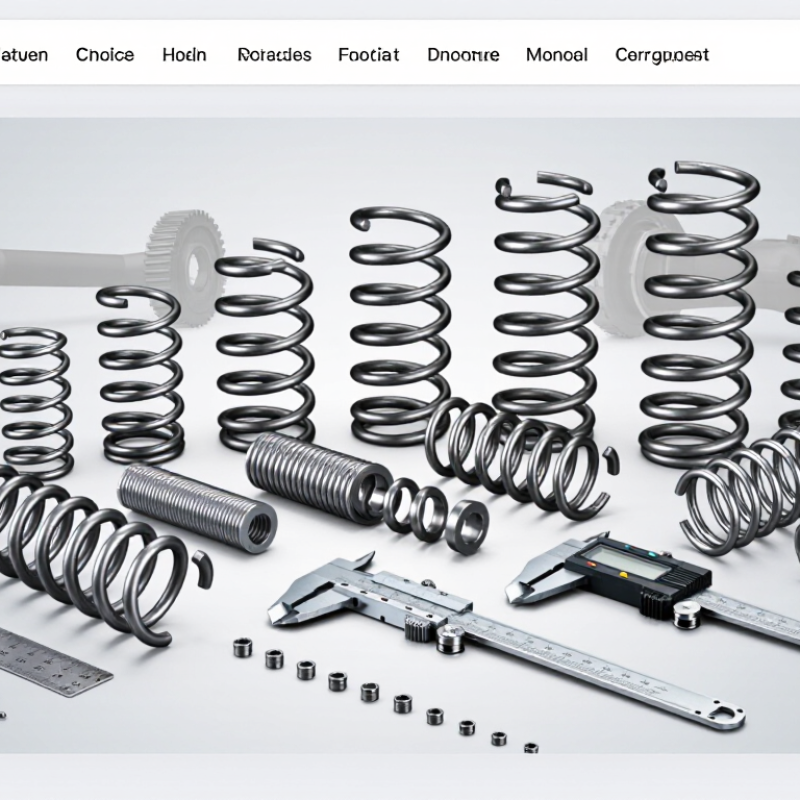
China’s spring industry supplies components for vehicles, industrial machinery, electrical equipment, rail systems, and building hardware. Product types include compression springs for valves and suspension assemblies, extension springs for doors and counterbalances, and torsion springs for hinges and clips. Leaf springs support vehicle loads; disc springs fit compact, high-force connections. Small parts. Their performance depends on material choice, heat treatment, surface finish, and fatigue testing. A spring that looks simple can still fail early if its working load is poorly specified.
End-use demand is especially visible in transport. The China Association of Automobile Manufacturers reported that China produced 30.16 million vehicles in 2023. The International Energy Agency’s Global EV Outlook 2024 estimated nearly 14 million electric car sales worldwide that year, with China accounting for about 60 percent. These figures indicate the scale of the vehicle market, not spring orders directly. EV growth does not translate one-for-one into spring demand; vehicle design and component sourcing also matter. Industrial machinery adds another steady application, from vibration control to return mechanisms, though its spring requirements vary widely by equipment and operating conditions.
How to Assess Spring Makers: ISO 9001, IATF 16949, and Traceability
Who Are the Best Spring Makers in China?
How to Assess Spring Makers: ISO 9001, IATF 16949, and Traceability
A certificate is a starting point, not proof that every spring will perform well. The ISO Survey 2022 recorded 1,265,216 valid ISO 9001 certificates worldwide. That figure shows how widely the standard is used, but it does not measure spring fatigue life or dimensional consistency. Ask a supplier to show its certificate scope, issuing body, site address, and latest audit findings. Then compare those records with actual production controls.
IATF 16949 is especially relevant to automotive supply chains. Check that the certificate covers the factory making your parts, not merely a related office or site. For traceability, request a sample record linking a finished spring lot to its wire heat number, forming settings, heat-treatment batch, and inspection results. Include shot-peening records where applicable. Can the factory retrieve this trail quickly? That simple test can reveal gaps. Also ask how it handles material changes, nonconforming parts, and measurement-gauge calibration. A polished audit file may still miss a process drift on a busy production line. I would not treat certification as a verdict; verify the evidence against a recent production lot.
How to Assess Spring Makers: ISO 9001, IATF 16949, and Traceability
Both ISO 9001:2015 and IATF 16949:2016 contain seven requirement clauses, numbered 4–10. Traceability is addressed in clause 8.5.2. When assessing a spring maker, check the validity and scope of its certificates and request records linking material batches to production and inspection results. Clause counts are not quality scores.
Material Benchmarks: ASTM A228 Music Wire at 230–399 ksi Tensile Strength
ASTM A228 music wire is valued for its high tensile strength and consistent surface, both important in tightly wound springs. A quoted range of 230–399 ksi is a benchmark, not one target for every wire diameter. The required strength depends on size and the applicable specification. Check the mill test certificate against the ordered diameter and grade.
Strength matters, but it does not tell the whole story. A spring made from overly hard wire may crack during coiling or heat treatment. Ask how the supplier controls diameter, surface defects, and batch variation. Then test samples using the intended forming process. Look closely for scratches under bright light; small flaws can become failure points under repeated loading. Keep records. One practical caution: impressive tensile figures cannot replace fatigue testing in the finished spring. A supplier’s process data should support the stated range, not merely repeat it. And sometimes the honest answer is that a sample needs another trial.
Comparing Leading Chinese Makers by Capacity, Expertise, and Market Focus
The best spring maker in China depends on your order, not a universal ranking. Compare production capacity with your required volume and delivery schedule. Ask about machine range, tooling availability, inspection steps, and recent lead-time performance. A large factory may handle repeat orders smoothly, but offer less flexibility for small custom batches. Request a sample run and documented capacity details before deciding.
Expertise matters when springs need consistent force, dimensions, and fatigue performance. Check whether the maker can explain material choices, heat treatment, tolerance control, and testing methods in clear terms. Market focus is another useful clue: a supplier serving appliance, automotive, or industrial customers may understand different specifications and documentation needs. A polished catalog is not proof of process control. I would still verify the details against a real sample; that step can feel slow, but it exposes gaps early.
Tips: Share a drawing, target quantity, operating conditions, and acceptable tolerances. Ask for inspection records and traceability options. Compare quotations on the same specification, not price alone. Look for clear answers, not just quick ones.
Supplier Due Diligence: Fatigue Testing, PPAP, and Export Performance
Who Are the Best Spring Makers in China?
A capable spring maker should show more than a polished sample. Ask how fatigue tests reflect your real operating conditions: load, stroke, temperature, and expected cycle count. Request reports linked to the spring drawing revision and material batch. Check the test method, acceptance limits, and whether failed samples are recorded. A result without traceability is hard to evaluate. It may look convincing, but it leaves important questions open.
Review PPAP evidence against the parts you will actually buy. Compare the process flow, control plan, measurement results, and material records. Confirm that production tooling and inspection methods match those used for the approved samples. Ask how changes are communicated and how nonconforming parts are contained. A clean sample is not a stable process. Export performance matters too: check quoted lead times against shipment history, packaging details, document accuracy, and the supplier’s response when delays occur. One weak shipment record deserves a closer look, not an automatic rejection.
Tips: Ask for a recent fatigue report and a sample shipment record. Verify both against the same part specification. If evidence is incomplete, agree on what must be supplied before approval.