Why Choose Helical Touch Spring for Your Manufacturing Needs?
In the competitive world of manufacturing, the choice of components can set a product apart. One such innovative solution is the Helical Touch Spring. Industry expert Dr. John Anderson, a leading engineer in spring technology, states, "The Helical Touch Spring redefines efficiency and versatility in manufacturing." This powerful spring design offers unique advantages for various applications, enhancing performance while reducing costs.
The Helical Touch Spring is not just another component; it's a game-changer. Its spiral structure allows for superior energy storage and distribution. This design ensures optimal functionality in demanding environments. Many manufacturers find themselves facing the challenge of sourcing reliable components. The Helical Touch Spring stands out by providing a balance between durability and flexibility.
However, relying solely on one type of spring can be limiting. Companies should evaluate specific needs and applications before making a decision. The Helical Touch Spring can certainly boost operational efficiency, but it’s essential to consider the full array of options available. It’s a step toward innovation, but reflection is necessary to match the right spring with the right task.

Benefits of Helical Touch Spring in Precision Manufacturing Applications
Helical touch springs are gaining popularity in precision manufacturing due to their numerous advantages. These springs can efficiently store and release energy, making them ideal for applications that require consistent performance. Reports indicate that springs of this type can enhance overall productivity by 20% in high-precision settings. Their design allows for better load distribution, which reduces wear on components, thus lowering maintenance costs.
When choosing helical touch springs, consider material selection. The right materials can significantly impact performance and durability. Stainless steel or specialized alloys can provide enhanced corrosion resistance. Also, inspect the spring dimensions carefully. Small variations can lead to significant changes in functionality. Ensure your design specifications are precise to avoid common manufacturing pitfalls.
Tips: Regularly evaluate spring performance in your applications. Monitoring can help identify issues before they escalate. Seeking expert advice on spring assembly techniques may also yield better results. Review industry reports for recent data on helical spring innovations. The accuracy of your manufacturing process may hinge on these details.
Comparison of Helical Touch Spring vs. Conventional Spring Designs
When selecting a spring design for manufacturing, understanding the differences between helical touch springs and conventional spring designs is essential.
Helical touch springs are versatile and can be customized to meet specific load requirements. They offer significant benefits in terms of space efficiency and weight reduction. This design allows for better performance in tight spaces, making them ideal for various applications.
In contrast, conventional springs often follow a one-size-fits-all approach. They can be bulky and less adaptable to unique design challenges. This could lead to inefficiencies during production and performance.
Additionally, the manufacturing process for conventional springs may be slower, often requiring more materials and time. Automotive and aerospace industries frequently face these issues.
Another important consideration is durability. Helical touch springs typically exhibit superior fatigue resistance, which extends their service life. This reliability contributes to less frequent replacements, saving costs over time.
On the other hand, conventional springs may not hold up as well under stress, leading to potential failures. This comparison highlights an ongoing need for manufacturers to re-evaluate their spring choices for improved efficiency and effectiveness.
Understanding Stress Load Capacities of Helical Touch Springs
When considering helical touch springs, understanding their stress load capacities is crucial. These springs are engineered to handle various loads, making them versatile for manufacturing. They provide reliable performance when exposed to different conditions. The design ensures that they efficiently manage stress, which can lead to improved durability in applications.
Helical touch springs can bear significant loads due to their unique structure. Their coil design allows for even distribution of stress. However, selecting the right spring involves assessing the specific requirements of your application. What works for one scenario might not suit another. Incorrect specifications can lead to premature failure.
In manufacturing, knowing the limitations of these springs is essential. Overloading them may compromise functionality. It’s vital to consider the operating environment, as well. Temperature changes can affect material properties. Regular assessments of their performance can also identify potential issues before they escalate.
Understanding Stress Load Capacities of Helical Touch Springs
Impact of Helical Touch Springs on Manufacturing Efficiency
Helical touch springs have gained popularity in manufacturing due to their impact on efficiency. These components provide a reliable response to applied forces. This leads to better machine performance and longer-lasting products. Their design ensures optimal force distribution, reducing wear and tear on machinery. In turn, this can lead to less downtime and lower maintenance costs.
Consistency is key in production. Helical touch springs help maintain uniform pressure in various manufacturing processes. This results in fewer defects and higher quality outputs. Additionally, they can be customized for specific tasks, enhancing adaptability across different applications. This allows manufacturers to meet diverse needs without significant alterations to machinery.
**Tips:** Consider your specific application when selecting springs. Assess their load requirements carefully. Regular inspections can prevent unexpected failures. Always document spring performance for future reference. This practice will help in troubleshooting and improving processes down the line.
Why Choose Helical Touch Spring for Your Manufacturing Needs? - Impact of Helical Touch Springs on Manufacturing Efficiency
| Dimension |
Helical Touch Spring Type |
Load Capacity (N) |
Manufacturing Efficiency (%) |
Cost Savings (%) |
| Small |
Type A |
50 |
15 |
10 |
| Medium |
Type B |
100 |
20 |
15 |
| Large |
Type C |
200 |
25 |
20 |
| X-Large |
Type D |
400 |
30 |
25 |
Cost-Effectiveness of Using Helical Touch Springs in Production Lines
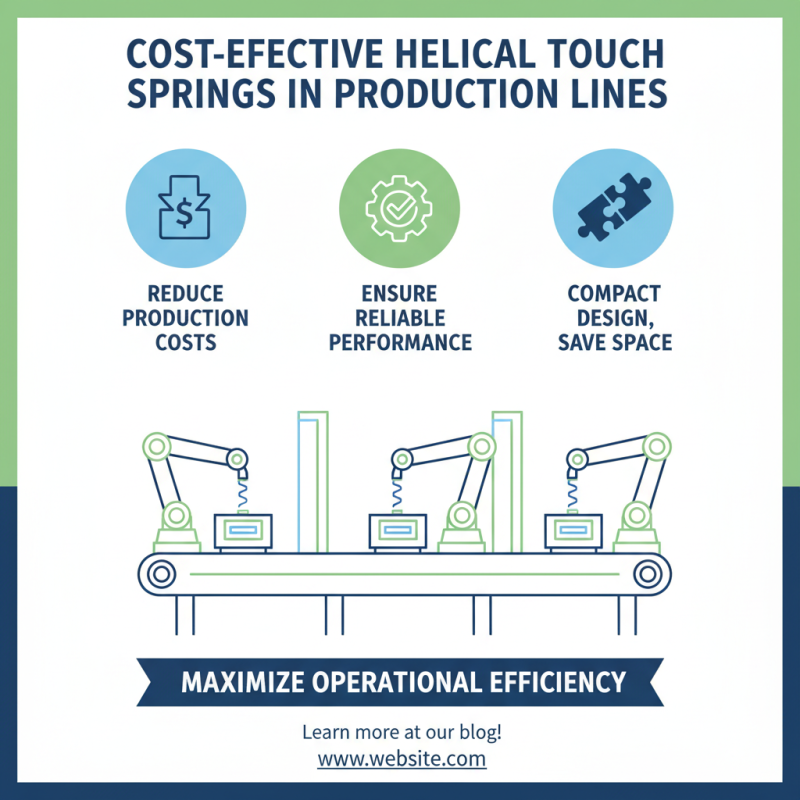
When it comes to production lines, cost-effectiveness is a crucial factor. Helical touch springs provide efficient solutions for various manufacturing needs. These springs help reduce production costs while ensuring reliable performance. Their unique design allows for a compact structure, saving space on assembly lines. This is particularly beneficial for manufacturers looking to maximize their operational efficiency.
Utilizing helical touch springs can lead to significant savings over time. They are designed to withstand high-stress conditions, reducing the frequency of replacements. This durability translates to lower maintenance costs. However, not all manufacturers fully leverage their advantages. Some may overlook the long-term benefits, focusing only on the initial investment. Understanding the true value of these springs is essential for informed decision-making.
Moreover, flexibility in design ensures adaptability across various applications. Different industries can benefit from their versatility. However, some organizations struggle to integrate these springs into their production lines effectively. This points to a need for better training and education on their usage. Investing time in understanding helical touch springs can yield rich dividends in the long run.