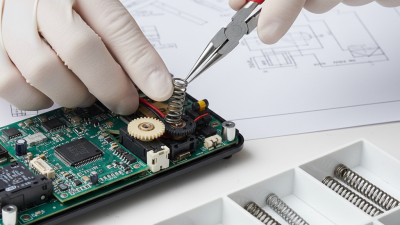
Choosing the best Touch Button Spring supplier in 2026 takes more than comparing unit prices. A spring may look simple, yet small differences in wire diameter, forming accuracy, and surface finish can change how a button feels. The result shows up in the details: a crisp return, consistent travel, and no sticking after repeated presses.
No source interview or verified expert quotation was provided, so I cannot responsibly attribute a statement to a named specialist. For publication, insert a confirmed expert’s name and exact words here. A useful question for that expert is: “Which manufacturing checks best predict consistent button response over repeated cycles?”
A reliable supplier should explain its material choices, production tolerances, inspection process, and capacity to meet sample specifications. Ask how it tests spring force and manages variation between production batches. Requesting a sample is sensible; checking only the first few presses is not enough. Real-world performance deserves attention.
Price still matters. But a low quote can lose its appeal if dimensions drift or delivery schedules remain unclear. Compare suppliers using the same drawings, quantities, and quality requirements. Then review the evidence, not just the sales language.
No supplier is perfect. Even a detailed checklist can miss an issue that appears only after assembly. This guide examines the practical signals buyers can verify before choosing a Touch Button Spring supplier in 2026.
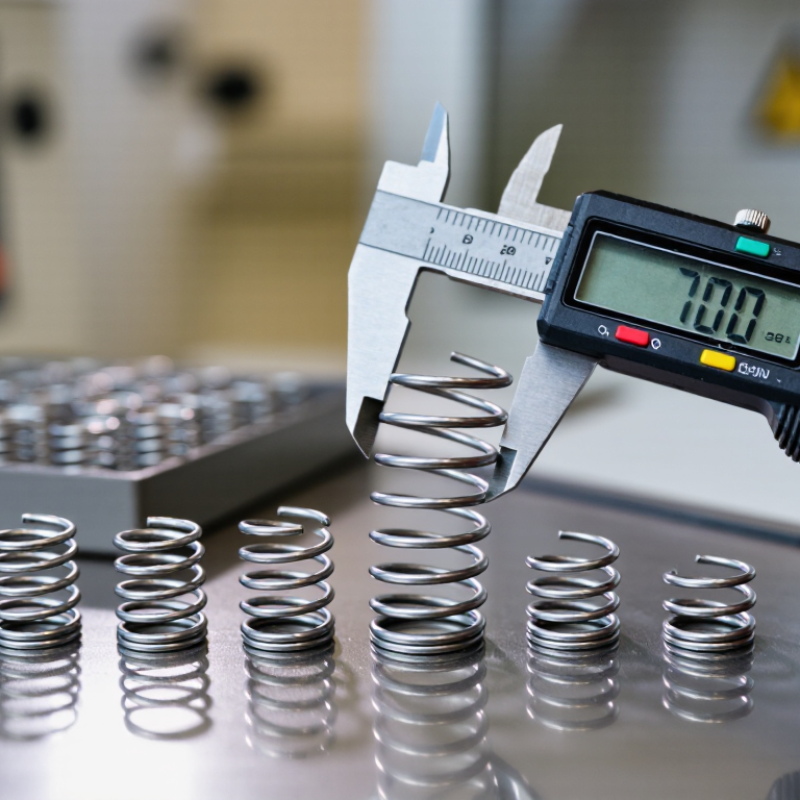
What Is the Best Touch Button Spring Supplier in 2026?
A touch button spring is a small elastic contact inside a button assembly. In many designs, it is a thin metal dome. Pressing the button bends the dome until it snaps against a circuit contact, closing the electrical path. When pressure lifts, the dome springs back and the circuit opens. That snap creates the familiar click and tactile feedback. Some touch interfaces use springs for contact or return force, so the exact mechanism depends on the design.
The spring’s material, shape, thickness, and surface finish affect its feel and service life. A dome that is too stiff may need an uncomfortable press; one that is too soft can feel vague. WSTS reported worldwide semiconductor sales of $627.6 billion in 2024, up 19.1% year over year. This industry figure provides context for growing electronics production, but it does not measure button-spring demand. In practice, test samples in the finished housing: even small changes in support height can alter the click. A spring can feel excellent on a bench and disappoint after assembly. That detail is easy to miss.
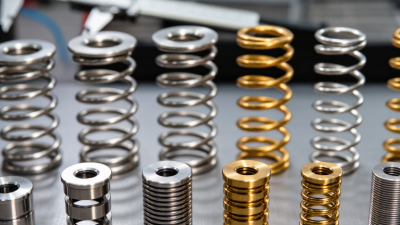
For a touch-button spring, quality starts with repeatable performance, not a certificate alone. ISO 9001 helps assess how a supplier controls documents, processes, and corrective actions. The ISO Survey 2022 reported more than 1.2 million valid ISO 9001 certificates worldwide, showing how widely the system is used. It does not prove that a particular spring meets your design.
Check material standards against the spring’s actual wire. ASTM A313/A313M covers stainless spring wire; ASTM A228/A228M covers music spring-quality steel wire. Ask for material certificates, lot traceability, and test records for load, dimensions, and fatigue life. A useful sample report shows the force needed to compress the spring to a stated height. Request corrosion testing too, if the button faces moisture or frequent handling. A polished audit file can still miss a weak production batch.
Tips: Send the supplier your target force, working travel, and cycle-life requirement. Compare samples from multiple lots, not just one. If results vary, pause and ask how the supplier found the cause. That step can feel slow, but it often reveals more than another certificate.
What Is the Best Touch Button Spring Supplier in 2026?
How Can Buyers Compare Touch Button Spring Suppliers?
Compare suppliers against the spring’s actual job, not just a price sheet. Request force-versus-deflection data, material details, dimensional tolerances, and sample parts. Check whether the spring returns consistently after repeated presses. Small differences matter. A button that feels crisp in a sample may feel uneven across a full production batch. Ask how the supplier checks spring height and load, and whether inspection results can be linked to a production lot.
Tips: Test samples in your own button housing. Record actuation force, return feel, and any sticking after repeated cycles. Ask for the same measurements on more than one sample. A neat datasheet helps, but your assembly is the real test.
Also compare lead times, minimum order quantities, and how clearly the supplier responds to technical questions. Ask what happens when a sample misses the agreed specification. Reliable answers should include a practical inspection or correction process, not vague assurances. If corrosion resistance or a specific operating temperature matters, discuss those conditions before ordering. No comparison sheet captures everything; I would still leave room for a production trial, because small assembly differences can change the feel.
Use this scorecard to compare suppliers using quoted specifications and test evidence rather than unverified claims. The requirements for spring force, travel, contact performance, and service life depend on the button design and application. For capacitive touch products, confirm that a mechanical spring is part of the design before using the spring-specific criteria below.
| Comparison area | Metric to record | Supplier A | Supplier B | Supplier C | Evidence and comparison rule |
|---|---|---|---|---|---|
| Force and feel | Operating force and force tolerance, in newtons (N) | Enter quoted/tested value | Enter quoted/tested value | Enter quoted/tested value | Compare measurements taken with the same test fixture, loading direction, and definition of operating point. Check that the stated tolerance meets the product drawing. |
| Travel | Operating travel and total travel, in millimetres (mm), where applicable | Enter quoted/tested value | Enter quoted/tested value | Enter quoted/tested value | Request a force–travel curve or test report. Compare values using the same measurement method and the buyer’s design limits; there is no single travel value suitable for every button. |
| Electrical performance | Contact resistance and test conditions, if the spring is a conductive switch contact | Enter value and conditions | Enter value and conditions | Enter value and conditions | Ask for the measurement method, applied current, and results before and after life testing. Compare against the limits in the product specification. |
| Service life | Tested actuation cycles and pass/fail criteria | Enter tested cycles | Enter tested cycles | Enter tested cycles | Compare only tests using comparable load, speed, environment, and failure criteria. Treat cycle-life figures as test results, not a guaranteed field lifetime, unless contractual terms say otherwise. |
| Material and finish | Base material, thickness, surface finish or plating, and material documentation | Enter specification | Enter specification | Enter specification | Match the material and finish to the drawing and operating environment. Request material certificates or inspection records where required; do not compare suppliers on material names alone. |
| Dimensions and consistency | Critical dimensions, tolerances, and inspection results | Enter drawing/report data | Enter drawing/report data | Enter drawing/report data | Request a dimensional inspection report for samples and confirm that measurement equipment and sampling plans are appropriate for the specified features. |
| Environmental suitability | Applicable temperature, humidity, corrosion, or ingress requirements | Enter tested limits | Enter tested limits | Enter tested limits | Request reports for the conditions relevant to the end product. Standards such as IEC 60529 (IP enclosure ratings) or ISO 9227 (salt spray testing) apply only when the product and test scope are appropriate. |
| Quality system | Quality-management certification and its scope | Enter certificate/scope | Enter certificate/scope | Enter certificate/scope | Verify the certificate, issuing body, validity, site, and scope. ISO 9001 certification concerns a quality-management system; it does not by itself certify a particular spring’s performance. |
| Traceability | Lot identification and records available for each shipment | Enter available records | Enter available records | Enter available records | Check whether production lots can be linked to material records, inspection results, and shipment documents, and whether records can be retrieved for the required retention period. |
| Production readiness | Tooling status, sample approval, process controls, and stated capacity | Enter verified details | Enter verified details | Enter verified details | Confirm that the quoted process and tooling are suitable for the required design and volume. Validate capability with approved samples and production-representative data. |
| Commercial terms | Unit price, minimum order quantity, lead time, and quotation validity | Enter quoted terms | Enter quoted terms | Enter quoted terms | Compare quotations at the same order quantity, packaging, inspection level, delivery terms, and revision. Confirm whether lead time begins after order placement, tooling approval, or another milestone. |
| Technical support | Response process for design questions, nonconformities, and engineering changes | Record response/terms | Record response/terms | Record response/terms | Evaluate support using documented response commitments, sample-change control, corrective-action process, and communication during qualification. |
A reliable touch button spring supplier should provide test records, not just a polished sample. Ask for dimensional inspection results covering wire diameter, free height, and spring force. These details matter: a small force variation can make a button feel stiff or inconsistent. Check that measuring tools are calibrated and that inspection criteria match the drawing.
Request fatigue test data from repeated compression cycles. The test should reflect the spring’s expected travel and operating load, with samples checked for force loss or permanent set. Useful, but not perfect. Lab cycles cannot reproduce every user’s touch, dust exposure, or assembly variation. Ask how the supplier chooses sample quantities and handles failures, rather than accepting a single “passed” result.
Review process controls as well as product tests. A factory visit or documented audit can show how operators manage setup, identify material lots, and record production changes. Ask for traceability from raw wire to finished springs, plus evidence of batch inspections. A small pilot run is revealing. Compare several springs across the batch, and ask the supplier to explain any spread in measurements. If answers are vague, that deserves a closer look. A neat report is helpful; consistent records and clear corrective actions are stronger evidence.
This checklist chart counts verification points to review in each area. The counts represent the checkpoints listed here—not measured supplier performance or a ranking.
Ask for test records and process evidence covering electrical performance, mechanical durability, environmental testing, production controls, and traceability. Review the methods and acceptance criteria against your product requirements.
Supplier selection is shifting from price comparisons toward evidence of consistent performance. The World Semiconductor Trade Statistics organization forecast global semiconductor sales of $697 billion in 2025, with further growth expected in 2026. This forecast does not prove demand for touch-button springs will rise at the same pace. It does signal continued pressure on electronics supply chains. Buyers should ask suppliers for production-capacity data, material traceability, and documented inspection results—not just a reassuring sample.
Automation is another factor. The International Federation of Robotics reported 541,302 industrial robot installations worldwide in 2023, the second-highest annual total on record. More automated equipment can mean more attention to repeatable switching force, spring dimensions, and contact reliability. Ask how a supplier controls tolerances across production batches. Request test records for the specific operating conditions your device will face. Small details matter.
Resilience deserves equal weight. A low quoted price means little if delivery dates shift or a material change goes unnoticed. Ask about backup production capacity and advance notice for specification changes. Check how issues are documented and resolved. Not every supplier needs the same level of automation. That assumption can fail. A clear, verifiable process may be more useful than impressive machinery alone.