Choosing a reliable Touch Spring manufacturer requires more than comparing catalog prices. Buyers need consistent force, stable contact resistance, and accurate dimensions across every production batch. A spring that looks perfect in a sample may perform differently after thousands of cycles.
This guide examines ten manufacturers serving international buyers. The review considers material selection, stamping precision, surface treatment, tooling capability, inspection methods, and production capacity. It also considers practical details, including prototype support, minimum order quantities, packaging, lead times, and communication during design changes. These factors often decide whether a component fits smoothly into a control panel, membrane switch, battery contact, or compact electronic assembly.
Evidence matters. Strong manufacturers should explain their tolerances, testing procedures, and traceability systems clearly. Certifications can support credibility, but they do not replace physical samples and independent verification. Buyers should request drawings, force-deflection data, corrosion information, and dimensional inspection records before approving mass production.
No ranking is perfect. Supplier performance can change with equipment, staffing, materials, or order volume. That limitation deserves attention. A factory may deliver excellent samples yet struggle with urgent replenishment or custom tooling. Therefore, this overview is intended as a practical starting point, not a final purchasing decision. By comparing technical experience, quality discipline, export reliability, and customer support, global buyers can narrow their choices with greater confidence and fewer expensive surprises. Small details matter. Sometimes, they decide everything.
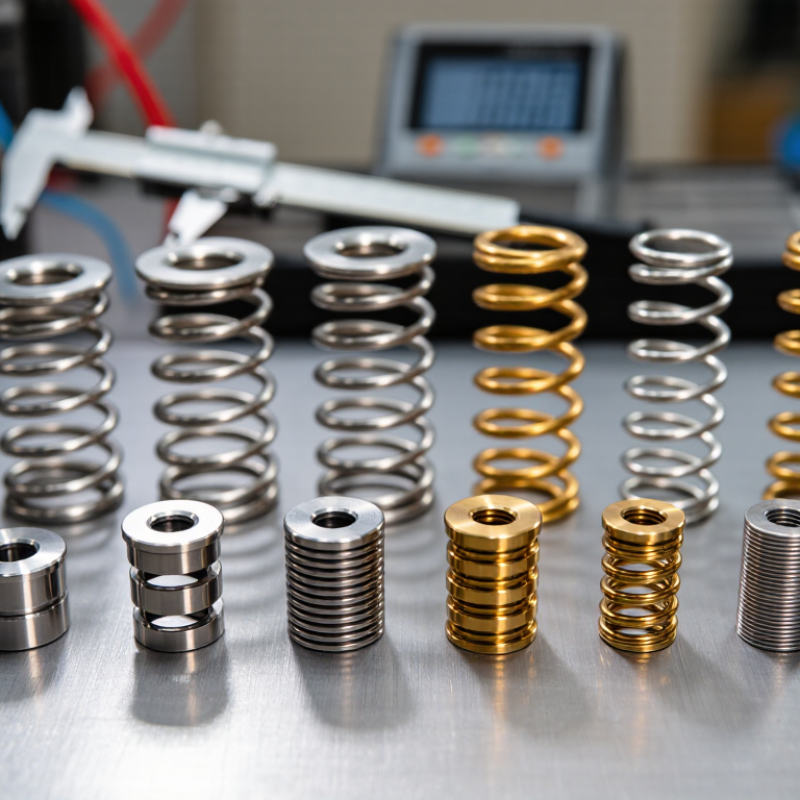
Touch springs are small conductive components that create both tactile feedback and electrical contact. They are commonly called dome springs or snap domes. When pressed, the spring collapses with a clear snap and closes a circuit beneath it. When released, it returns to its original shape. That simple movement supports buttons on remote controls, membrane keyboards, medical handheld devices, vehicle panels, and industrial control units.
Their performance depends on more than diameter. Engineers examine spring force, travel distance, contact resistance, material hardness, and operating life. Stainless steel offers strength and corrosion resistance, while copper alloys can improve conductivity. Surface plating may reduce oxidation, but it does not solve every design problem.
A poorly matched spring can feel weak, sound too sharp, or fail after repeated pressing. Small changes matter.
In practical testing, technicians measure force at several travel points, not only at full compression. They also check alignment, dust exposure, humidity, and temperature changes. A spring that works well in a clean laboratory may behave differently inside a compact enclosure. This is often overlooked. Global buyers should request samples, inspection records, dimensional tolerances, and cycle-test data before placing large orders. They should also confirm packaging, because bent springs can create assembly problems before production even begins. No touch spring is perfect; its reliability depends on the switch structure around it.
Choosing among the 10 best touch spring manufacturers requires more than comparing catalog photos. A reliable evaluation begins with the spring’s working conditions. Define contact travel, operating force, compression height, cycle life, wire diameter, and allowable variation. Samples reveal more.
Request material certificates for stainless steel, carbon steel, or approved alloys. Check surface treatment, corrosion resistance, burr control, and dimensional inspection records. Ask for raw data. Force-displacement curves should match your application, not only a supplier’s standard sample. During supplier audits, I look for calibrated testing equipment, traceable batch numbers, and clear corrective-action records.
Manufacturing capability matters across borders. Review tooling ownership, prototype lead time, monthly capacity, packaging methods, and backup production plans. A manufacturer with excellent samples may still struggle during a demand increase. Confirm inspection points from incoming wire to final assembly. Video meetings help, but an independent sample inspection can expose details that polished presentations miss. Communication quality also matters: technical questions should receive measurable answers, drawings, and revision control. Pricing deserves caution. The lowest quote may exclude tooling, testing, protective packaging, or realistic shipping conditions. I have learned that early assumptions often create later costs. Leave room for design changes, because a spring that passes laboratory testing may behave differently after assembly, vibration, or repeated cleaning. Reliability is built through evidence, not confident promises.
Reference weighting of the key criteria used when comparing touch spring suppliers worldwide
Quality-system certification and dimensional consistency receive the highest weighting because touch springs must deliver stable electrical contact and repeatable mechanical performance. Material traceability, production capacity, lead time, engineering support, and export compliance help buyers assess long-term supply reliability.
The first manufacturer specializes in miniature stainless-steel touch springs for control panels. Its engineers focus on stable contact force and clean, repeatable switching. The second produces custom springs for medical interfaces, using documented material batches and controlled forming. The third serves automotive electronics, where vibration resistance matters more than appearance. Its samples should survive temperature cycling before approval. The fourth offers nickel-plated springs for humid environments. Plating thickness needs independent verification. The fifth combines spring forming with automated inspection. This can reduce variation, although inspection settings require careful calibration.
The sixth manufacturer develops ultra-thin springs for compact consumer devices. It supports rapid prototypes and small production runs. The seventh focuses on high-cycle industrial keypads, testing millions of actuations under defined loads. The eighth supplies copper-alloy touch springs with strong conductivity and flexible design options. Its engineers should explain oxidation controls clearly. The ninth provides large-volume production, with traceable tooling and statistical process records. Delivery capacity looks impressive, but buyers should confirm peak-season performance. The tenth manufacturer builds application-specific assemblies, including springs, membranes, and contact supports. This approach can simplify sourcing, though it may limit future redesign freedom.
During supplier reviews, I would request drawings, force-displacement curves, plating reports, and production samples. A polished sample proves little by itself. Fit, tactile response, corrosion resistance, and long-term consistency must match the actual device. Some suppliers communicate quickly but document poorly. That weakness deserves attention. Others provide excellent reports yet respond slowly to engineering changes. Global buyers should compare evidence, not promises, and record every test condition before placing an order.
Global buyers assessing the 10 best touch spring manufacturers should compare measurable evidence, not polished catalogs. Grand View Research reports continued expansion in the global springs market, driven by electronics, automotive, and industrial applications. That growth increases supplier pressure, but quality still depends on material control, fatigue testing, and stable contact resistance. Request inspection records, dimensional reports, and sample results from production lots.
Customization separates capable manufacturers from simple traders. Ask whether the factory can adjust wire diameter, coil geometry, free height, plating, and operating force. A practical supplier should explain tolerances clearly. ISO 9001 certification supports process consistency, while IATF 16949 may matter for automotive programs. RoHS and REACH documentation also helps buyers verify restricted-substance compliance. Certificates alone are not proof. Audit the process behind them.
Lead time deserves equal attention. Industry purchasing surveys frequently identify delivery reliability as a major supplier-selection factor, while electronics supply-chain reports continue to highlight scheduling volatility. A realistic touch spring program may require two to four weeks for standard samples and longer for tooling or special materials. Get those conditions in writing. Ask about safety stock, requalification after material changes, and corrective-action response times. One overlooked issue is packaging; poorly separated springs can arrive tangled, scratched, or magnetized. Cheap shipping can become expensive inspection work.
10 Best Touch Spring Manufacturers for Global Buyers?
Selecting a touch spring supplier requires more than comparing unit prices. Define force, free height, working stroke, contact resistance, plating, and cycle life before requesting quotations. A 2.0 mm height difference can affect assembly pressure and signal stability. Ask for dimensional reports, material certificates, and test records from the same production lot.
Quality systems matter, but certificates are not enough. The ISO Survey 2022 recorded more than 1.26 million ISO 9001 certificates worldwide. That number shows broad adoption, not guaranteed process control. Review the supplier’s control plan, calibration records, inspection frequency, and nonconformance history. Request samples from ten candidate manufacturers, then test spring force at several compression points. Test after humidity exposure too. Small failures often appear there.
Global sourcing also depends on communication and logistics. The World Bank’s Logistics Performance Index 2023 evaluates customs, infrastructure, shipment arrangement, and delivery timeliness. Use these factors when comparing production locations. Confirm tooling ownership, minimum order quantities, packaging, lead times, and replacement procedures in writing. A supplier should explain how it protects delicate contact surfaces during transport. Do not accept vague answers. I would still keep one qualified backup source, even after a successful audit. Confidence can become expensive when one supplier changes material or misses a plating specification.
The following table is a company-neutral sourcing benchmark for evaluating touch spring manufacturers. Lead times, order quantities, tolerances, and certification requirements vary by design, material, tooling, surface finish, and destination market.
| No. | Supplier Evaluation Dimension | Recommended Benchmark for Global Buyers | Why It Matters for Touch Springs | Evidence to Request | Buyer Decision Signal |
|---|---|---|---|---|---|
| 1 | Material Traceability | Full heat, batch, or coil traceability from raw material to finished parts | Spring performance depends on consistent properties of stainless steel, carbon steel, copper alloy, or other specified materials. | Material certificates, lot records, supplier declarations, and incoming inspection procedures | Prefer documented control |
| 2 | Dimensional Capability | Documented control of wire diameter, outside diameter, free height, pitch, and contact geometry | Small dimensional changes can affect touch force, electrical contact, fatigue life, and assembly fit. | Inspection reports, calibrated equipment list, capability studies, and approved drawings | Require drawing-based inspection |
| 3 | Force and Deflection Testing | Force-deflection testing performed against the buyer’s specified working range | Touch springs must deliver repeatable tactile response without excessive permanent deformation. | Force test curves, test method, sampling plan, and acceptance limits | Best for functional reliability |
| 4 | Electrical Contact Performance | Contact resistance testing where the spring forms part of an electrical switching or grounding system | Stable contact resistance helps prevent intermittent signals, heating, and premature field failure. | Resistance test records, contact-force data, surface-finish specifications, and test conditions | Essential for conductive designs |
| 5 | Fatigue and Cycle Testing | Validation at the specified stroke, load, frequency, and cycle count | Repeated actuation can cause stress relaxation, loss of force, cracking, or permanent set. | Cycle-test reports, fixture details, failure criteria, and post-test measurements | Prioritize for high-use products |
| 6 | Surface Treatment Control | Clearly defined plating, coating, passivation, cleaning, or polishing process when required | Surface treatment influences corrosion resistance, solderability, conductivity, friction, and appearance. | Finish specifications, coating thickness reports, salt-spray data where applicable, and restricted-substance declarations | Match finish to environment |
| 7 | Quality Management System | ISO 9001-based quality controls, documented corrective action, and lot-level inspection records | A controlled quality system reduces variation between production batches and supports corrective action. | Valid certificate, process flow, control plan, nonconformance procedure, and audit access | Use as a minimum filter |
| 8 | Prototype and Tooling Support | Prototype capability before production tooling, with design-for-manufacturing feedback | Early samples help confirm force, fit, contact behavior, and assembly performance before volume production. | Prototype lead time, sample approval process, tooling ownership terms, and revision-control procedure | Reduce development risk |
| 9 | Commercial Lead Time | Typical quotation within 2–5 business days; samples commonly require about 1–4 weeks; production timing must be confirmed per drawing | Actual timing depends on tooling, material availability, order quantity, inspection requirements, and shipping method. | Written quotation, production schedule, capacity statement, and agreed delivery terms | Judge consistency, not promises |
| 10 | Export and Compliance Readiness | Clear Incoterms, commercial documentation, packaging specifications, and destination-market compliance support | Correct documentation and packaging reduce customs delays, transit damage, and compliance uncertainty. | Sample export documents, packing standard, country-of-origin information, and applicable RoHS or REACH declarations | Important for repeat imports |
Recommended selection method: compare at least three qualified suppliers using the same drawing, material specification, test plan, packaging requirement, and delivery term. Approve production only after prototype dimensions, touch force, electrical behavior, surface finish, and fatigue performance meet the agreed acceptance criteria.