Leave Your Message

China Top 10 Touch Sensitive Spring Manufacturers

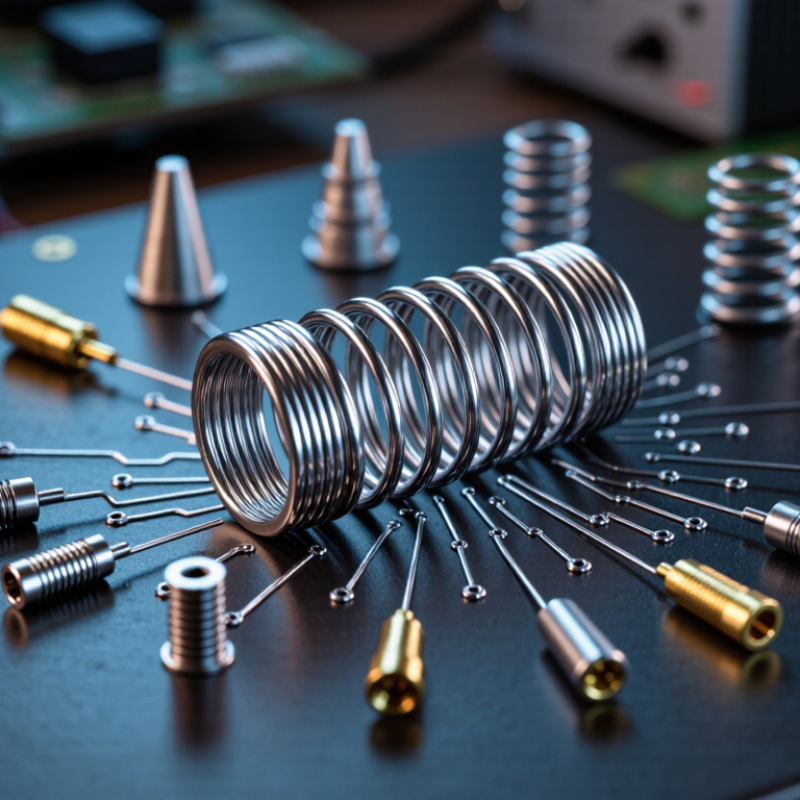
Touch-sensitive spring technology is changing how compact devices detect pressure, movement, and contact. These components combine elastic force with electrical sensing. They appear in control panels, medical interfaces, automotive systems, wearable devices, and industrial equipment. A small spring can carry both mechanical load and signal feedback.

Professor Ravinder Dahiya, a leading tactile-electronics researcher, has said, “Robots need to feel the world, not just see it.” This idea also applies to Touch-Sensitive Spring design. Reliable sensing depends on more than conductivity. Spring geometry, contact stability, surface treatment, fatigue resistance, and signal consistency matter equally. Small differences matter.

China has become a major manufacturing base for precision springs and sensor components. Its suppliers offer varied capabilities, from stamped contacts to custom miniature assemblies. This article introduces ten notable Chinese manufacturers serving the Touch-Sensitive Spring market. The comparison considers engineering experience, material selection, production capacity, quality control, customization, and delivery support.

A ranking is never perfect. Supplier strengths can change with equipment, staffing, and project scale. Some companies publish limited technical information. Buyers should verify test reports, tolerance data, sample performance, and certification status before choosing a partner. Factory visits may also reveal details that brochures hide. That is where careful judgment begins.

The selected manufacturers are not identical. Some focus on high-volume production. Others serve specialized, low-volume applications. Their differences may help engineers match spring design with real operating conditions, rather than selecting only by price.

China Top 10 Touch Sensitive Spring Manufacturers

What Are Touch-Sensitive Springs and How Do They Work?

What Are Touch-Sensitive Springs and How Do They Work?

Touch-sensitive springs are small conductive components used to transfer touch signals between a surface and a circuit board. They often sit beneath a button, display panel, or control cover. When a finger approaches or presses the surface, the spring changes its electrical relationship with the sensor. In capacitive designs, the spring extends the sensing field toward the user. In pressure-based designs, compression changes contact position, force, or resistance.

The spring must remain stable through repeated movement. Engineers commonly select stainless steel or other conductive alloys for strength and electrical performance. Coil diameter, wire thickness, free height, and contact force all affect sensitivity. A spring that is too soft may trigger accidentally. A stiff spring may feel unresponsive. Small manufacturing variations matter.

Testing should include temperature changes, vibration, surface coatings, and thousands of press cycles. Laboratory results can still differ from field behavior. Human touch is inconsistent. Gloves, moisture, and installation gaps may alter the signal. In practical sourcing work, I would compare measured force curves with real user feedback, not rely only on drawings. No design is perfect. A prototype may reveal that a carefully calculated spring feels wrong in daily use. Reliable manufacturers therefore control material batches, inspect dimensions, and document electrical and mechanical test results.

Key Features of China’s Touch-Sensitive Spring Manufacturing Industry

China’s touch-sensitive spring manufacturing industry combines stamped metalwork, conductive coatings, and automated inspection. Grand View Research places Asia-Pacific at the center of global sensor production, supported by dense electronics supply chains and strong component exports. This advantage helps Chinese manufacturers produce miniature springs for control panels, medical devices, appliances, and automotive interfaces.

Key features include tight force tolerance, stable electrical contact, and fast tooling changes. Many factories use progressive stamping, CNC forming, and vision inspection. A spring may need to compress smoothly while preserving conductivity after thousands of cycles. MarketsandMarkets reports continued growth in the global force-sensor market, driven by automation, consumer electronics, and vehicle electrification. That demand is raising expectations for traceability and repeatable testing.

Material selection remains practical. Stainless steel supports corrosion resistance, while copper alloys improve conductivity. Plating thickness must remain even around curved contact points. Small defects can create false touches. ISO 9001-based quality systems, incoming material checks, and cycle testing improve reliability. Yet production is not flawless. Tool wear, inconsistent plating, and rushed sampling can still affect spring response. Buyers should request force-displacement curves, contact-resistance records, and batch samples before approval. A low price may hide expensive rework. Supplier comparison should examine engineering support, not only capacity.

China Top 10 Touch Sensitive Spring Manufacturers - Key Features of China’s Touch-Sensitive Spring Manufacturing Industry

Industry-level comparison of common manufacturing capabilities for tactile, contact, compression, and miniature spring components. The table does not present company names, brand information, or an unverified company ranking.

No. Key Industry Feature Typical Manufacturing Capability in China Relevant Technical Basis Application and Quality Value
01 Product Types Production commonly covers tactile dome springs, contact springs, compression springs, extension springs, torsion springs, and miniature formed-wire components. Spring geometry is selected according to required force, stroke, electrical contact, installation space, and operating cycle. Supports touch panels, keypads, switches, sensors, battery contacts, connectors, and compact electronic assemblies.
02 Material Selection Frequently used materials include stainless spring steel, carbon spring steel, phosphor bronze, and copper-based contact alloys. Material choice depends on conductivity, corrosion resistance, magnetic response, fatigue strength, and forming performance. Enables manufacturers to balance mechanical resilience with reliable electrical contact and environmental durability.
03 Miniature Wire and Strip Forming CNC coiling, precision stamping, progressive dies, micro-forming, and automated wire forming are widely used for small spring parts. Dimensional control is generally managed through tooling accuracy, machine repeatability, in-process inspection, and sample approval. Suitable for compact electronic devices where limited installation space and repeatable tactile response are required.
04 Force and Travel Control Manufacturers can characterize operating force, return force, free height, compressed height, working travel, and load-deflection behavior. Force-displacement testing is used to verify the relationship between spring geometry and user-perceived touch response. Helps maintain consistent button feel, switching action, actuator return, and contact pressure across production batches.
05 Surface Finishing Available treatments may include cleaning, passivation for stainless steel, nickel plating, tin plating, silver plating, and other specified finishes. Finish selection is based on conductivity, solderability, wear resistance, corrosion protection, and compatibility with the mating material. Improves contact stability and helps protect springs used in humid, corrosive, or high-cycle operating environments.
06 Electrical Contact Performance Contact-spring production can include control of contact pressure, contact resistance, surface cleanliness, and mating alignment. Electrical inspection typically uses continuity and resistance measurements under defined load, stroke, and environmental conditions. Reduces intermittent signals, contact bounce risks, and performance variation in switches, sensors, and low-voltage assemblies.
07 Fatigue and Life-Cycle Testing Automated cycling equipment is used to evaluate force retention, permanent deformation, contact reliability, and functional life. Test conditions should specify stroke, speed, load, temperature, humidity, electrical current, and acceptance criteria. Supports reliability validation for products exposed to repeated pressing, vibration, switching, or mechanical movement.
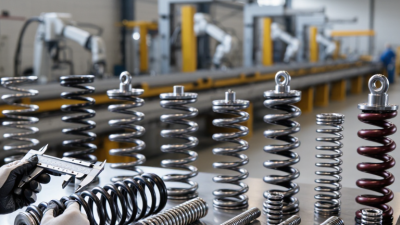
08 Dimensional and Visual Inspection Common inspection methods include optical measurement, gauges, microscopes, calipers, force testers, and automated sorting systems. Typical checks cover wire or strip thickness, outside diameter, free length, angle, burrs, cracks, scratches, and deformation. Improves assembly fit, reduces production-line stoppages, and helps control variation in high-volume electronic components.
09 Customization and Prototyping Engineering services commonly include CAD-based design, sample development, tooling fabrication, prototype approval, and design-for-manufacturing review. Key design inputs include material grade, wire or strip size, force target, travel, mounting structure, contact layout, and operating environment. Allows spring geometry to be adapted to touchscreen modules, membrane interfaces, industrial controls, automotive electronics, and medical devices.
10 Quality and Supply-Chain Management Export-oriented factories commonly use incoming material inspection, process control, lot traceability, final inspection, and protective packaging. Customer requirements may include ISO 9001-based quality systems, RoHS or REACH compliance declarations, material certificates, and inspection reports. Provides more consistent procurement, documentation, batch identification, and compliance support for international OEM and contract-manufacturing programs.
Note: Actual specifications vary by spring design, material grade, tooling, surface treatment, and application requirements. Engineering drawings and approved inspection criteria should be used for final product qualification.

Selection Criteria for the Top 10 Chinese Manufacturers

China Top 10 Touch Sensitive Spring Manufacturers

Selecting China’s top ten touch sensitive spring manufacturers requires more than comparing catalog prices. Market research helps define demand: Grand View Research reported that the global tactile switch market was valued at approximately USD 14.2 billion in 2023. This figure signals strong volume, but it does not prove manufacturing quality. Buyers should examine spring force, contact stability, fatigue life, and dimensional consistency.

A practical evaluation begins with measurable evidence. Request inspection records based on ISO 2859-1 sampling procedures, along with material certificates for stainless steel or copper alloys. Measure force curves at several travel points, not only at the rated stroke. A reliable supplier should provide tolerance data, surface treatment details, and test conditions. In our experience, a spring that feels smooth during ten manual presses may fail after hundreds of thousands of cycles.

Cycle testing matters most.

Mordor Intelligence’s 2024 electronic components analysis identifies miniaturization and higher reliability as continuing market drivers. Therefore, the ranking should assign weight to automated stamping, optical inspection, mold control, and traceable batch records. A useful scoring model can allocate 30% to product consistency, 25% to testing capability, 20% to engineering support, 15% to delivery performance, and 10% to price. Audit sample retention, packaging protection, and response time as well. Reported production capacity can be inflated, and even respected factories may show uneven results between lines. A pilot order remains necessary before final selection.

Profiles of China’s Top 10 Touch-Sensitive Spring Manufacturers

China Top 10 Touch Sensitive Spring Manufacturers

Profiles of China’s Top 10 Touch-Sensitive Spring Manufacturers examine more than production scale. They compare tooling experience, contact stability, material control, and inspection depth. The ten profiles include manufacturers specializing in micro compression springs, conductive contact springs, tactile switch components, and precision stamped parts. Some support prototypes, while others handle millions of pieces.

China’s automation demand strengthens this supply base. The International Federation of Robotics reported 276,288 industrial robot installations in China during 2023, representing about 51% of global installations. This growth increases demand for compact, repeatable spring contacts in control panels, sensors, and human-machine interfaces. Grand View Research also forecasts strong expansion in the global smart sensors market through 2030, supporting wider use of sensitive electromechanical components.

Practical evaluation remains essential. The stronger manufacturers document wire diameter, free height, contact force, plating thickness, and cycle-life results. They should also provide lot traceability and test records aligned with relevant IEC methods.

Small parts, serious risks. A supplier may quote attractive prices but lack stable tooling or environmental testing. The ranking is not absolute; performance depends on the application. Even experienced buyers should inspect samples, review tolerance data, and repeat testing after design changes.

Applications, Quality Standards, and Purchasing Considerations

China’s top ten touch sensitive spring manufacturers serve control panels, automotive interiors, medical devices, appliances, and industrial interfaces. Demand is rising with compact human-machine interfaces. A 2024 MarketsandMarkets report forecasts the global tactile switch market to grow at over 5% annually through 2029. Buyers should confirm whether each supplier produces springs, complete switch assemblies, or both. The distinction affects testing and responsibility.

Quality begins with measurable details. Request force-displacement curves, contact resistance, travel, recovery time, and rated cycle life. For automotive projects, IATF 16949 controls and PPAP documentation provide stronger process evidence. ISO 9001 certification supports consistency, but it does not prove spring performance. Ask for material certificates, plating thickness, temperature cycling results, and corrosion data. IEC 60512 testing can help verify electrical and mechanical behavior. Small samples matter. A spring may feel excellent in a showroom, then weaken after repeated compression.

Purchasing teams should compare tool ownership, minimum order quantities, tolerance capability, lead time, and batch traceability. Request three production samples, not only prototypes. Check packaging carefully; thin metal parts can deform during transport. Compliance files should address applicable RoHS and REACH requirements. Industry reports often group springs with complete switch systems, so market statistics may not reflect the component’s real value. This limitation deserves attention. The cheapest quote can conceal unstable tooling or inconsistent plating. A practical supplier should explain failure limits, testing frequency, and corrective actions in clear records.