Leave Your Message

How to Choose Industrial Springs in 2026?

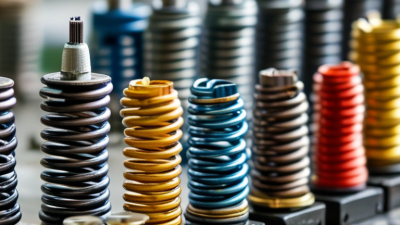
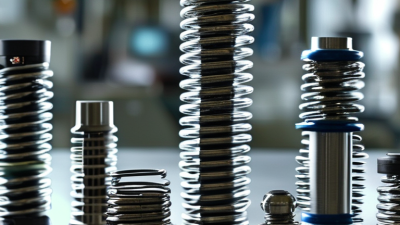
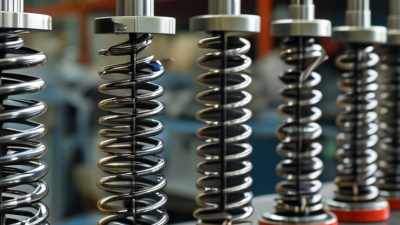
Choosing Industrial Springs in 2026 requires more than comparing prices or browsing catalog dimensions. The correct spring must match the load, travel, cycle rate, temperature, corrosion exposure, and available installation space. A compression spring inside an automated press may complete thousands of cycles daily, while a stainless steel spring near a washdown line faces a very different challenge. Small differences matter.

Begin with the working conditions. Record the minimum and maximum loads, operating length, solid height, wire diameter, and expected fatigue life. Confirm whether the spring needs compression, extension, torsion, or a custom design. Material selection also deserves careful attention. High-carbon steel may suit dry indoor equipment, while stainless steel or coated alloys can perform better in humid environments. However, corrosion resistance alone does not guarantee reliability.

In 2026, engineers are also examining traceability, simulation data, and supplier testing records more closely. Ask for dimensional inspection results, material certificates, fatigue evidence, and a clear quality-control process. A reputable manufacturer should explain tolerances without hiding behind technical language. Field experience remains valuable. A perfect calculation can still fail when alignment is poor, loads are unexpected, or maintenance is neglected. That part is easy to underestimate.

There is no universal “best” spring. The best choice balances performance, service life, manufacturability, and total operating cost. Review the design with a qualified engineer, test representative samples, and document every assumption. Leave room for doubt. A careful decision today can prevent noisy operation, premature fatigue, and costly downtime tomorrow.
How to Choose Industrial Springs in 2026?

Understanding Industrial Spring Types and Their Applications

How to Choose Industrial Springs in 2026?

Understanding spring types starts with the movement they must control. Compression springs resist axial loads, such as those found in valves, clamps, and suspension assemblies. Extension springs pull components together through hooked ends. Torsion springs store energy around an axis, making them suitable for hinges, levers, and counterbalance mechanisms. Disc springs deliver high force in limited space, often inside braking and overload-protection systems. Start with the motion.

Load, stroke, temperature, corrosion, and cycle frequency should guide material selection. Stainless steel suits humid environments, while alloy spring steel supports demanding fatigue cycles. The World Steel Association reported approximately 1.89 billion tonnes of crude steel production in 2023, showing the scale of the material supply chain. However, steel availability does not guarantee spring reliability. Wire diameter, free length, stress concentration, and surface finish still require engineering checks. ISO 10243:2019 provides dimensional guidance for die springs, but application conditions may demand additional testing.

In practical maintenance reviews, premature failures often begin with poor installation. A compression spring may buckle when its guide is too short. A torsion spring can lose capacity when its winding direction is misunderstood. Designers should compare calculated stress with fatigue data, then validate performance through repeated-load testing. Reports from industrial market analysts indicate continued growth in automation and manufacturing equipment, increasing demand for compact, durable springs. Yet market forecasts are not design evidence. A spreadsheet can still mislead. Check the spring in its actual housing, at real temperature, with real debris.


How to Choose Industrial Springs in 2026?

Understanding industrial spring types and their common applications helps engineers match the spring design to the required load direction, available space, operating motion, and service conditions.

The chart shows common application matches for major industrial spring types. A value of 1 means the spring type is commonly used for that application category; 0 means it is not typically the first choice. Actual selection should also consider load, deflection, fatigue life, temperature, corrosion, installation space, and material requirements.

Defining Load, Motion, and Space Requirements

How to Choose Industrial Springs in 2026?

Defining load, motion, and available space should come before selecting spring material. A compression spring may carry 500 N, but its working load is only part of the decision. Record preload, operating load, stroke, cycle rate, and temperature. The Spring Manufacturers Institute’s Spring Design Manual explains that spring rate changes with wire diameter to the fourth power. Small dimensional changes can therefore create large force differences. That detail is easy to underestimate.

Motion needs equal attention. A spring used for 50,000 cycles behaves differently from one used continuously in a vibrating assembly. Check solid height, buckling risk, stress range, and guide clearance. ISO 10243:2017 provides standardized dimensions for die springs, helping engineers compare fit and load data. ASTM A313/A313M-24 also defines requirements for stainless spring wire. These standards improve traceability, but they cannot replace testing. A clean spreadsheet can still describe the wrong application.

Tips: Measure the real envelope, not the drawing alone. Leave room for coils, guides, and installation tools. Ask for load-deflection data at your actual temperature. Confirm fatigue performance with representative cycling. If space is tight, consider nested springs, but verify load sharing and friction. Grand View Research’s 2024 industrial spring market report estimates continued market growth through 2030, reflecting wider demand for compact, repeatable motion components. Yet “compact” should not mean overloaded. A prototype test may expose that mistake early.

Selecting Materials, Coatings, and Operating Temperatures

Choosing an industrial spring in 2026 starts with temperature, not catalog load. Heat reduces strength, accelerates stress relaxation, and can permanently increase spring length. Carbon spring steel suits moderate environments, while stainless spring wire offers better moisture resistance. Nickel-based alloys are safer for sustained high heat, but they cost more and may complicate forming. ASTM A313 and ASTM A228 provide useful material and testing references, yet neither standard replaces application testing.

Coatings must match the failure risk. Zinc or phosphate coatings can improve corrosion resistance, but plating processes may increase hydrogen-embrittlement concerns in high-strength springs. Dry-film coatings can reduce friction and protect sliding surfaces, although poor surface preparation causes early flaking. The AMPP IMPACT study estimated global corrosion costs at about 3.4% of GDP. That figure is broad, not a spring-specific prediction. Still, it shows why a low-cost coating decision can become expensive. For continuous service above roughly 150°C, check relaxation data rather than relying on room-temperature tensile strength. At cryogenic temperatures, confirm toughness and contraction effects.

Tips: Record the real temperature cycle, including short peaks. Specify humidity, salt exposure, stroke rate, and installed stress. Ask for fatigue, relaxation, and coating test results. A clean calculation can still fail in the field; dirt, vibration, and uneven loading are often underestimated. I would prototype under the worst realistic conditions, then inspect coils for permanent set, pitting, and coating damage. Temperature limits should come from tested curves, not optimistic assumptions.

Matching Spring Design to Fatigue Life and Safety Needs

How to Choose Industrial Springs in 2026?

Spring selection should begin with fatigue life, not catalog size. Define the working load, minimum load, stroke, cycle rate, and expected service hours. A spring cycling twice per second faces more than 60 million cycles in one year. That changes the design completely.

Match the material and wire diameter to the actual load spectrum. Compression springs may need suitable stress relief, controlled surface quality, and corrosion protection. Extension springs require careful hook design because stress concentrates sharply at the bends. Torsion springs need correct leg position and safe angular limits. Temperature also matters. Heat can reduce strength and accelerate relaxation.

Safety margins must reflect real operating conditions. Include vibration, shock loads, dirt, moisture, and possible overloads. A design that passes a static calculation may still fail during repeated impact. Ask for traceable material certificates and fatigue test data. Inspect sample springs under representative loads, not only ideal laboratory conditions. Field measurements can reveal unexpected side loads or coil contact.

Some fatigue calculations remain imperfect. Load histories are often estimated, and maintenance may be inconsistent. That uncertainty deserves attention. Use conservative stress limits, planned inspection intervals, and a replacement point before visible failure. A properly chosen spring should not merely fit the assembly. It should keep its force, avoid sudden fracture, and perform predictably throughout its intended life.

How to Choose Industrial Springs in 2026? - Matching Spring Design to Fatigue Life and Safety Needs
Practical selection guide using load, fatigue, material, environment, and safety-factor requirements
Application Requirement Recommended Spring Type Typical Material Choice Typical Load Profile Indicative Fatigue Target Suggested Minimum Safety Factor Operating Temperature Guide Key Design Controls
Occasional actuation or low-cycle movement Compression or extension spring Carbon spring steel for controlled indoor conditions Predominantly static load with fewer than 104 cycles 104 cycles or application-specific life 1.5 to 2.0 against yield or permanent set Approximately −40°C to 120°C, depending on grade and stress Check solid height, permanent set, installation clearance, and end geometry.
General industrial equipment with regular cycling Compression spring with guided travel High-quality carbon or alloy spring steel Repeated load with moderate mean stress 105 to 106 cycles 1.5 or higher against yield; fatigue margin required Approximately −40°C to 150°C, subject to material and coating Control spring index, stress concentration, buckling, and surface condition.
High-cycle machinery and repeated vibration Compression spring designed for fatigue Hardened and tempered alloy spring steel Alternating load with limited stress range 106 to 107 cycles 1.5 to 2.0 on corrected fatigue strength Typically below 150°C unless a high-temperature alloy is specified Use shot peening where suitable, reduce surface defects, and avoid resonance.
Very high-cycle or continuously operating equipment Precision compression, torsion, or wave spring Clean, high-strength spring steel with controlled surface quality Millions of low-amplitude cycles 107 cycles or greater, subject to validation testing At least 1.5 on the fatigue limit, often higher for critical systems Keep temperature stable and within the selected material’s tempering range Perform stress-life analysis, endurance testing, and statistical life verification.
Wet, humid, or mildly corrosive environment Compression, tension, or torsion spring with corrosion protection Corrosion-resistant stainless spring steel or protected carbon steel Static or cyclic load with possible corrosion-assisted fatigue 105 to 106 cycles after environmental assessment 1.5 or higher, with an additional corrosion-life margin Commonly −40°C to 150°C; verify grade-specific limits Specify passivation or coating, prevent galvanic contact, and inspect pits or cracks.
Elevated-temperature service Compression or torsion spring for thermal duty Heat-resistant alloy selected for retained strength Static load, thermal cycling, or reduced-amplitude fatigue Application-specific; validate stress relaxation and fatigue 2.0 or higher against temperature-reduced strength Above 150°C requires temperature-specific material data and testing Account for modulus reduction, stress relaxation, oxidation, and thermal expansion.
Safety-critical load retention Redundant or fail-safe spring arrangement where feasible Certified spring material with traceable heat treatment and inspection Cyclic, shock, or sustained load where failure has serious consequences Defined mission life plus proof-test and inspection requirements Typically 2.0 or higher; set by risk assessment and governing standard Use validated temperature limits, not generic catalog values Use documented calculations, non-destructive inspection, proof testing, and life monitoring.
Limited installation space or short axial travel Die spring, wave spring, or nested spring assembly High-strength spring steel selected for compact geometry High force in a short deflection range 104 to 106 cycles, depending on stress level 1.5 to 2.0; higher if shock loading is possible Confirm material-specific temperature and relaxation data Check coil clash, load variation, guide friction, stress concentration, and heat buildup.
Engineering note: The ranges above are indicative starting points, not final design limits. Actual spring life depends on wire diameter, mean and alternating stress, spring index, surface finish, residual stress, temperature, corrosion, manufacturing quality, load alignment, and required reliability. Final selection should be verified with calculation, material data, prototype testing, and the applicable engineering standard.

Verifying Quality, Standards, Cost, and Supplier Capability

How to Choose Industrial Springs in 2026?

Verifying Quality, Standards, Cost, and Supplier Capability

Industrial spring selection should begin with evidence, not attractive specifications. Request material certificates, dimensional inspection reports, and load test results for the actual production batch. Check wire diameter, free length, spring rate, and end geometry against approved drawings. For demanding applications, fatigue testing can reveal failures that a simple compression test misses. Small details matter. A spring may pass inspection and still fail after repeated cycling.

Standards provide a useful framework, but they do not replace engineering judgment. Confirm which ISO, ASTM, EN, or industry-specific requirements apply to the spring’s material and application. Ask how heat treatment, surface protection, and traceability are controlled. An experienced supplier should explain test methods clearly and identify limits, not promise perfect performance. I have seen projects rely too heavily on certificates while overlooking assembly misalignment. That assumption can fail.

Price comparisons should include tooling, sampling, freight, inspection, rejection risk, and future volume changes. The lowest quotation may hide weak process control or limited testing capacity. Evaluate the supplier’s equipment, production records, quality staff, and corrective-action process. Request a representative sample and inspect it under realistic loads. Confirm lead times with capacity evidence, not confidence alone. A factory visit or remote audit can expose practical gaps, such as manual measurements, crowded storage, or unclear batch labels. Supplier capability is measurable. Trust still requires verification.