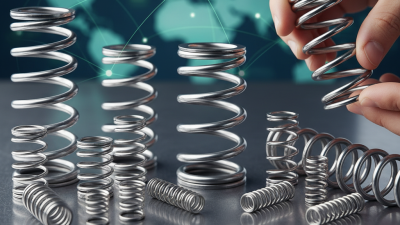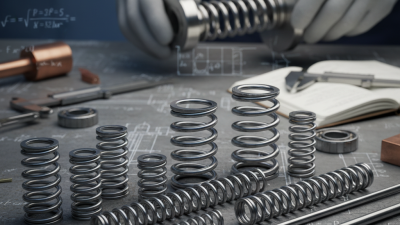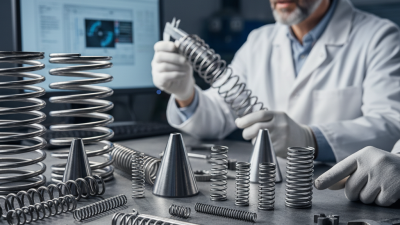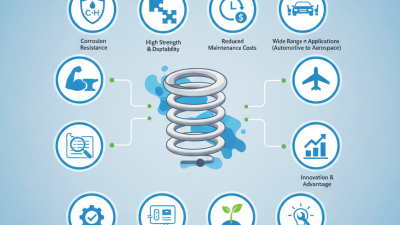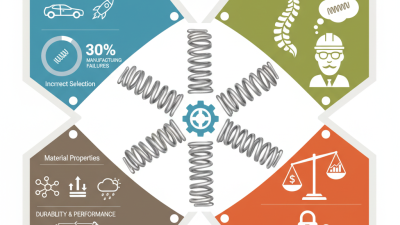
When people ask, “What are Stainless Steel Springs?” they usually want more than a simple definition. These components are elastic mechanical devices made from corrosion-resistant stainless steel wire. They store energy when compressed, stretched, or twisted, then release it in a controlled motion. A compression spring pushes against a load, while an extension spring pulls two parts together. A torsion spring produces rotational force around an axis. Simple shapes. Important functions.
Stainless steel springs are valued for their strength, clean appearance, and resistance to moisture, chemicals, and temperature changes. Common grades include 302, 304, and 316 stainless steel, each offering different performance characteristics. Chromium forms a protective oxide layer on the surface, while nickel can improve durability and flexibility. In a marine latch, medical instrument, or food-processing machine, this protection can extend service life. However, stainless steel is not completely corrosion-proof. Salt exposure, surface damage, and poor cleaning may still cause problems.
Reliable selection requires more than choosing the strongest wire. Engineers consider spring rate, working load, deflection, cycle life, temperature, and available space. Practical testing also matters. A spring may look correct but lose force after repeated cycling. That limitation matters. Experienced manufacturers check wire diameter, coil dimensions, surface condition, and final load measurements. Even careful calculations can miss real-world friction or installation stress. This guide explains how Stainless Steel Springs work, where they are used, and why material grade and manufacturing quality deserve close attention.
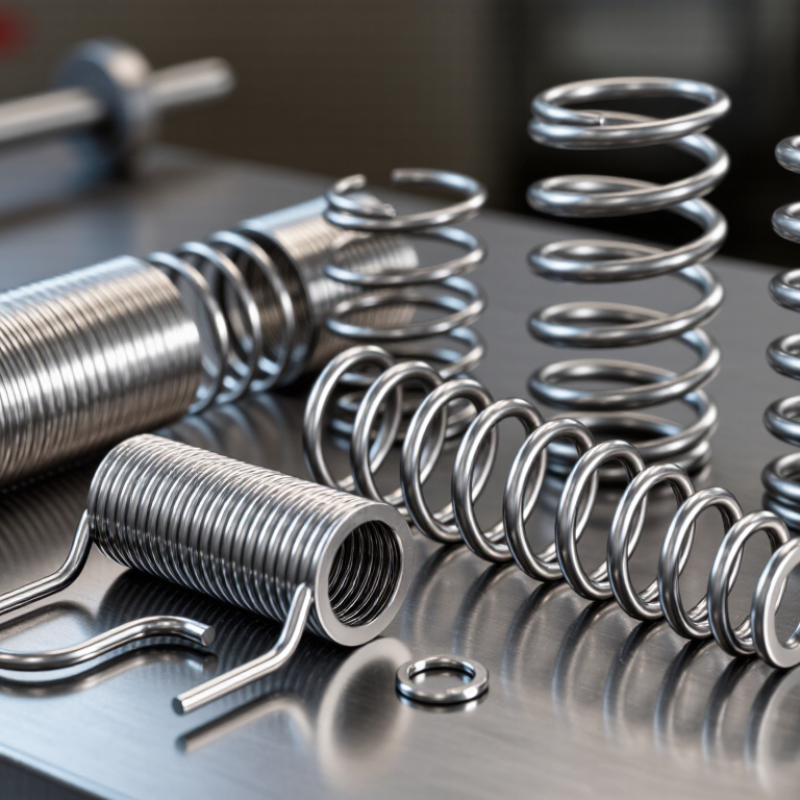
A stainless steel spring is an elastic component that stores mechanical energy when a force changes its shape. Once the force is removed, it tends to return to its original form. The material is an iron-based alloy containing chromium, which helps resist corrosion. Resistance varies with alloy grade and environment. It is not immunity.
Most springs begin as drawn wire, formed into a shape suited to the job. In a compression spring, closely spaced coils shorten under pressure. An extension spring stretches, while a torsion spring twists around its axis. Simple shapes, different tasks. Wire diameter, coil size, and the number of active coils affect stiffness and travel. The ends may be closed, ground, looped, or shaped for mounting. These details are easy to overlook, yet they influence how a spring seats and transfers force.
The spring’s basic structure must match its working conditions. A thin wire spring may flex easily but can reach its travel limit quickly. A thicker wire often needs more force to move. Designers also consider temperature, repeated cycling, moisture, and contact with other parts. Stainless steel can still wear, deform, or corrode in unsuitable conditions. Real assemblies are rarely perfect; small misalignments can change the load on a coil. That is worth checking. Testing the spring in its actual installation helps confirm that its movement and force are appropriate.
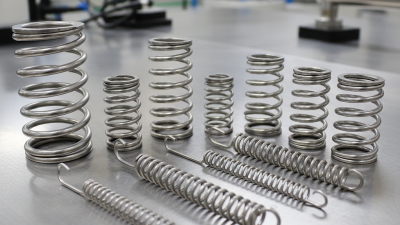
Stainless steel springs store and release mechanical energy under controlled movement. Their corrosion resistance suits damp rooms, outdoor equipment, and food-processing machinery. Common materials include austenitic stainless steel, which balances flexibility and resistance. However, performance depends on design, temperature, load, and surface condition.
Compression springs are the familiar helical type. They shorten when pressed between two surfaces. You may find them inside valves, switches, tools, and suspension components. Extension springs work differently. Their coils stretch under tension, while end hooks transfer the pulling force. Hook shape matters greatly. A weak hook can fail before the coils do.
Torsion springs rotate around an axis and return a lever or hinge. They appear in clamps, lids, and small mechanical controls. Conical compression springs use changing diameters, helping them collapse into a smaller height. Wave springs provide axial force in tight spaces, although their load range can be limited. Stainless steel disc springs offer high force in compact assemblies.
Choosing a spring is rarely as simple as selecting stainless steel. Engineers must check wire diameter, coil count, working travel, and fatigue life. Salt exposure may require better alloy selection and careful cleaning. Overlooking installation friction is a common mistake. The spring may look correct, yet perform poorly. Testing under real temperature and load conditions remains essential.
Stainless steel springs are valued for their balance of strength, corrosion resistance, and dependable movement. These properties come from the alloy’s composition, spring design, and manufacturing process.
“Stainless” does not mean rust-proof in every setting. Salt spray, chemicals, and trapped moisture can still cause problems.
A spring’s performance depends on more than its material. Wire diameter, coil spacing, and operating load affect how far it can compress and how well it returns. For example, a small compression spring inside a damp instrument may resist corrosion better than ordinary carbon steel, but its exact service life depends on the environment. Heat treatment and surface finish matter, too. Details count.
Stainless steel springs are used in medical instruments, food-processing equipment, marine hardware, and outdoor devices. Common grades offer different combinations of formability, strength, and corrosion resistance, so selecting one requires attention to actual conditions. A spring exposed to repeated cycling may fatigue even when it shows little surface corrosion. That part is easy to overlook. Testing under realistic loads and temperatures can reveal weaknesses before installation, though test results may not capture every field condition. A careful choice is useful; it is not a guarantee.
What Are Stainless Steel Springs?
Manufacturing Processes and Material Selection
Stainless steel springs are made by shaping metal wire or strip to store and release mechanical energy. Their performance depends on more than the alloy name. Wire diameter, coil geometry, and heat treatment all affect how a spring behaves under load.
Manufacturing usually begins with drawing wire to a controlled diameter. The wire is then coiled around a tool, either cold or with heat, depending on its thickness and the spring design. Cutting, stress relieving, and finishing follow. Small differences matter. A slight change in coil spacing can alter the force needed to compress a spring. Inspection may include measuring free length, checking surface defects, and testing load at specified positions.
Material selection requires balancing corrosion resistance, strength, temperature, and cost. Common stainless spring alloys vary in work-hardening behavior and suitability for different environments. A spring exposed to salty moisture may need different protection from one operating inside dry machinery. Not every choice is perfect. Higher corrosion resistance can come with trade-offs in formability or price. Engineers should match the material to actual service conditions, rather than relying on a generic label such as “stainless.” Testing representative samples can reveal problems that calculations miss. That step is easy to overlook.
What Are Stainless Steel Springs?
Stainless steel springs are elastic components that store and release mechanical energy. They are made from corrosion-resistant steel wire, shaped into compression, extension, torsion, or specialty springs. Their resistance to moisture makes them useful in demanding environments. However, stainless steel is not completely corrosion-proof.
Applications, Maintenance, and Service Considerations
These springs appear in valves, medical equipment, food-processing machines, electrical enclosures, and outdoor mechanisms. They can tolerate humidity, temperature changes, and repeated movement when properly specified. Engineers should match the spring grade, wire diameter, working load, and operating temperature to the application. A spring that looks suitable may still fatigue quickly under continuous cycling.
Maintenance begins with regular visual inspections. Look for rust spots, surface pitting, cracks, distortion, or a permanent change in free length. Small errors matter. Measure the spring when possible, rather than relying only on appearance. Clean it with a compatible agent and dry it completely. Chloride residue, trapped moisture, and abrasive particles can shorten service life. Lubrication is not always helpful. Some lubricants collect dust or interfere with nearby materials.
During servicing, confirm correct alignment and avoid overstretching or compressing the spring beyond its working range. Replace damaged springs instead of reshaping them. In practice, a spring may pass a visual check yet fail earlier than expected. That limitation deserves attention. Keep inspection records, especially for high-cycle equipment, and ask a qualified engineer to review critical load requirements.
| Spring Type | Common Stainless Steel Choices | Typical Applications | Key Service Considerations | Maintenance Guidance |
|---|---|---|---|---|
| Compression spring | 302 or 304 stainless steel; 17-7 PH for applications requiring higher strength | Valves, switches, fasteners, pumps, and general mechanical assemblies | Check operating load, available travel, solid height, temperature, and the risk of fatigue or corrosion. | Inspect for cracks, permanent shortening, corrosion, and contact damage. Keep the spring free of trapped debris and avoid exceeding its specified travel. |
| Extension spring | 302 or 304 stainless steel; alloy selection depends on load and environment | Hinges, latches, counterbalances, and return mechanisms | Hook geometry can be a stress concentration. Confirm extension limits and inspect attachment points as well as the coil body. | Look for distorted or cracked hooks, coil wear, and loss of tension. Replace a damaged spring rather than reshaping it in service. |
| Torsion spring | 302 or 17-7 PH stainless steel, subject to design and processing requirements | Clips, hinges, levers, and pivoting mechanisms | Performance depends on leg orientation, winding direction, working angle, and the support around the spring. Avoid unintended rubbing or side loading. | Check spring legs and bearing surfaces for wear, corrosion, and deformation. Verify that the assembly moves freely and remains within its specified working angle. |
| Flat or strip spring | 301 stainless steel; 17-7 PH for some higher-strength designs | Electrical contacts, clips, latches, and compact mechanisms | Repeated bending can cause fatigue. Edge condition, bend radius, material temper, and surface damage can affect service life. | Inspect bend areas and edges for cracks, burr-related wear, and permanent set. Avoid sharp tools or abrasive cleaning that could damage the surface. |
| Corrosion-exposed spring | 316 stainless steel may be considered for chloride-bearing or marine environments; suitability must be assessed for the actual exposure | Outdoor equipment, washdown systems, marine hardware, and some chemical-service mechanisms | Stainless steel is corrosion-resistant, not corrosion-proof. Chlorides, deposits, crevices, temperature, and contact with dissimilar metals can affect performance. | Rinse off salt and process residues when appropriate, dry where practical, and inspect crevices and contact areas. Confirm compatibility with the specific chemical and cleaning method. |
| High-strength spring | 17-7 PH stainless steel, with properties dependent on its condition and heat treatment | Precision mechanisms, aerospace-related hardware, and compact high-load assemblies | Verify the specified material condition, heat treatment, design stress, and temperature range. Do not assume that all stainless spring grades have the same strength. | Use the approved inspection and replacement limits for the assembly. Avoid unauthorized heating, bending, or surface treatment that could change spring properties. |
Material selection and service life depend on the spring design, material condition, manufacturing process, load cycle, temperature, and exposure. Confirm requirements with the applicable design specification before selecting or replacing a spring.