How to Source Small Touch Springs Globally?
Sourcing Small Touch Springs globally requires more than comparing catalog prices. These tiny components influence tactile feedback, switch life, and product consistency. A spring may look simple. It is not. Wire diameter, free length, load, material, and surface treatment can change the user experience. Buyers should define these parameters before contacting factories. A clear drawing prevents expensive misunderstandings. Still, drawings can miss real assembly conditions.
This guide follows a practical sourcing path, from supplier discovery to sample approval and production control. Experienced buyers usually request material certificates, dimensional reports, and force-deflection data. They also inspect packaging, corrosion protection, and batch identification. Small details matter. A supplier’s response speed can reveal process discipline, but it cannot prove manufacturing capability. Factory audits, video inspections, and independent testing provide stronger evidence. Samples should be tested in the actual mechanism, not only on a workbench. That lesson is easy to overlook.
Global sourcing adds communication gaps, changing lead times, freight risks, and differing quality expectations. Regional production may reduce delivery risk, while overseas production may offer broader tooling experience or lower unit costs. Neither option is automatically better. Compare total landed cost, backup capacity, traceability, and corrective-action practice. Ask what happens when a batch fails. A reliable partner answers clearly. No sourcing plan is perfect. Review assumptions after every sample round, and document each decision before scaling Small Touch Springs into regular production.
Define the Specifications and Applications of Small Touch Springs
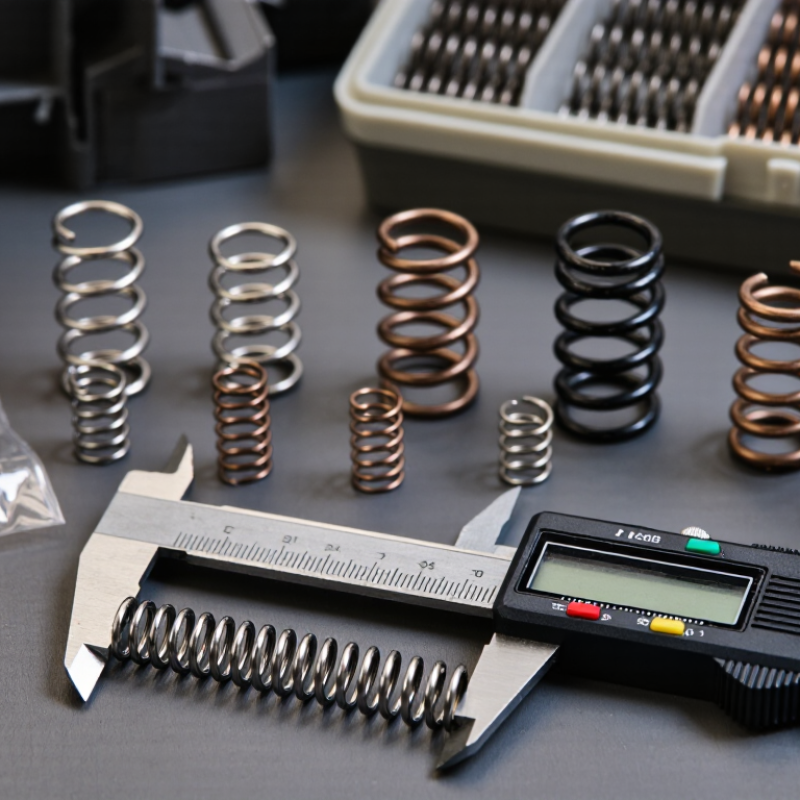
Sourcing small touch springs globally starts with a precise specification, not a supplier search. These miniature parts may sit beneath a keypad, inside a tactile switch, or against a battery contact. Define free height, compressed height, outside diameter, wire diameter, operating force, travel, contact resistance, and cycle life. Material and surface finish also matter. Stainless steel supports corrosion resistance, while plated spring steel may provide sharper tactile feedback.
Market evidence supports careful planning. Grand View Research reported that the global springs market was valued at approximately USD 18 billion in 2023, with electronics remaining a significant application area. The report also identified customization and miniaturization as important growth factors. For a touch spring, request force-deflection curves rather than a single force value. A neat specification can still be wrong. Tolerance, fixture design, temperature, and assembly pressure can change the user’s actual touch experience. Applications should guide testing. Wearables need compact geometry and skin-safe enclosure materials. Industrial controls may need stronger cycling and vibration resistance. Consumer keypads often prioritize consistent snap feel.
Tips: Send a 2D drawing, 3D model, material requirement, and application description. Request samples from at least two production locations. Test ten pieces first, then expand the sample size. Record force, travel, resistance, and appearance. Check RoHS and REACH documentation where applicable. Do not accept a supplier’s “standard” part without verifying fit. IPC reliability guidance emphasizes controlled test conditions, yet real assemblies still deserve review. That step is often missed.
How to Source Small Touch Springs Globally? - Define the Specifications and Applications of Small Touch Springs
| Spring Type |
Typical Application |
Common Material |
Wire Diameter |
Outside Diameter |
Free Length |
Typical Working Stroke |
Typical Load Range |
Key Sourcing Requirements |
| Compression touch spring |
Push buttons, miniature switches, battery contacts and sensor assemblies |
Stainless spring steel or carbon spring steel |
0.08–0.50 mm |
0.8–8.0 mm |
2–25 mm |
0.2–5.0 mm |
0.05–15 N |
Specify solid height, coil direction, end configuration, force at working height and electrical-contact requirements |
| Conical compression touch spring |
Compact control panels, tactile key assemblies and space-limited electronic devices |
Stainless spring steel |
0.10–0.45 mm |
0.9–7.0 mm |
2–20 mm |
0.3–4.0 mm |
0.05–12 N |
Define minimum inside diameter, maximum outside diameter, nesting behavior and stability during compression |
| Torsion touch spring |
Miniature latches, hinged covers, buttons and return mechanisms |
Hardened carbon spring steel or stainless spring steel |
0.15–0.80 mm |
1.5–10 mm |
3–30 mm |
10–90° angular movement |
0.002–0.30 N·m |
Provide leg orientation, leg length, body diameter, torque angle and mounting constraints |
| Extension touch spring |
Small covers, return mechanisms, latches and light tension contacts |
Carbon spring steel or stainless spring steel |
0.15–0.60 mm |
1.5–8.0 mm |
5–35 mm |
1–15 mm extension |
0.10–10 N |
Confirm initial tension, hook or loop geometry, maximum extension and fatigue-cycle target |
| Wave touch spring |
Preload compensation, vibration control, electrical grounding and axial contact |
Stainless spring steel |
0.10–0.50 mm |
2–20 mm |
1–10 mm |
0.1–2.0 mm |
0.20–20 N |
Define wave count, contact surface, preload, allowable deflection and resistance or grounding target |
| Battery contact spring |
Battery holders, portable instruments, toys and low-voltage electronic equipment |
Nickel-plated or tin-plated carbon spring steel; stainless steel where corrosion resistance is required |
0.20–0.80 mm |
2–12 mm |
5–40 mm |
1–8 mm |
0.30–15 N |
Specify current level, contact resistance, plating thickness, battery size, polarity and corrosion environment |
| Probe or test-contact spring |
Test fixtures, charging contacts, inspection equipment and temporary electrical interfaces |
Stainless spring steel or copper alloy for high conductivity |
0.10–0.60 mm |
1–6 mm |
3–25 mm |
0.5–4.0 mm |
0.05–8 N |
Define mating surface, electrical current, contact force, travel, cycle life and allowable resistance |
| Medical or laboratory touch spring |
Reusable instruments, fluid-handling equipment and compact diagnostic mechanisms |
Corrosion-resistant stainless spring steel |
0.15–0.60 mm |
1.5–8.0 mm |
3–30 mm |
0.2–5.0 mm |
0.05–15 N |
Request material traceability, cleaning compatibility, burr control, surface finish and documented inspection results |
Global sourcing checklist:
Confirm material standard, wire diameter, coil diameter, free length, active coils, end style, spring rate, load at working height, solid height, tolerance, surface treatment, corrosion conditions, operating temperature, fatigue life, packaging and inspection method before requesting quotations or samples.
Identify Global Suppliers and Reliable Sourcing Channels
Small touch springs demand more than a low unit price. Their force, travel, wire diameter, and surface finish must match the assembly. I recommend building a supplier shortlist from industrial directories, verified manufacturer websites, engineering forums, and regional trade fairs. A sourcing agent can support language needs and factory visits, but technical screening still requires your attention. Ask whether the supplier produces springs in-house or outsources forming, heat treatment, and plating. That answer affects traceability.
Reliable sourcing channels should provide measurable evidence. Request material certificates, dimensional inspection reports, sample approvals, and production photographs. Confirm minimum order quantities, tooling charges, lead times, packaging methods, and export documents before negotiation. For global shipments, clarify delivery terms and import responsibilities in writing. Contact at least three suppliers with the same drawing and tolerance requirements. Compare their questions, not only their quotations. Strong suppliers usually identify design risks early. I once accepted a polished sample as proof of production capability. That was a mistake. A sample can be carefully selected.
Tips: Test samples under repeated compression and electrical contact conditions. Check spring force after storage and temperature changes. Use video calls to inspect equipment and labeling. Request a small pilot batch before full production. Keep approval records, revisions, and inspection results together. No channel is perfect. Suppliers may also change subcontractors without clear notice, so periodic verification remains worthwhile.
Evaluate Spring Materials, Performance, and Manufacturing Quality
How to Source Small Touch Springs Globally?
Sourcing small touch springs starts with material selection, not price comparison. Stainless steel offers corrosion resistance and stable electrical contact. Copper alloys provide better conductivity and easier forming. Plated surfaces may improve contact reliability, but plating thickness requires strict control. Ask suppliers for material certificates, hardness data, and surface-treatment records. A spring measuring only a few millimeters can still suffer from fatigue, distortion, or unstable contact force.
Tips: Define the working stroke, contact force, free height, wire diameter, and expected cycle life. Test samples at actual temperature and humidity. Do not trust appearance alone. A bright surface can hide weak forming quality. I have seen samples pass visual checks but fail after repeated compression. That experience makes lifecycle testing essential.
Manufacturing quality depends on tooling accuracy, heat treatment, cleaning, and inspection discipline. Request dimensional reports from multiple production batches. Check force curves, not just single force values. Automated inspection helps, but it cannot replace practical sampling. Supplier audits should review traceability, storage conditions, and corrective-action records. Global sourcing also requires clear packaging rules, because tiny springs can tangle or deform during transport. My own judgment is not always perfect, especially when data is incomplete. A second technical review often reveals overlooked tolerances or unrealistic cycle targets. Reliable sourcing comes from measurable performance, transparent records, and honest discussion of design limits.
How to Source Small Touch Springs Globally?
Evaluating Spring Materials, Performance, and Manufacturing Quality
The chart compares representative ultimate tensile strength values for common spring-wire materials used in compact mechanical and electrical applications. High-strength carbon steel generally provides the greatest force capacity, while copper-based alloys offer better electrical conductivity and corrosion resistance. Actual performance depends on wire diameter, heat treatment, forming accuracy, surface finish, and stress-relief processing.
Values are approximate midpoints of commonly published engineering ranges and should be confirmed against the supplier’s material certificate, dimensional inspection report, load-deflection test, and fatigue test results.
Compare Quotes, Minimum Orders, Lead Times, and Shipping Terms
Sourcing small touch springs globally requires more than finding the lowest unit price. I compare quotes against the same drawing and test requirements. Wire diameter, free length, contact force, surface finish, and cycle life must be clearly stated. A cheap quote means little when its tolerance is unclear. I also request samples before approving production. They reveal issues that spreadsheets often miss.
Minimum order quantities deserve careful attention.
Some suppliers offer low MOQs but charge separate tooling or setup fees. Others require large batches, creating storage pressure and cash-flow risk. I calculate the real cost per usable spring, including inspection and rejected parts. A practical quote should separate sample prices, tooling charges, production prices, and replacement policies. Keep it simple.
Lead time should show each stage, not one attractive number.
Sample preparation may take seven days, while production needs four weeks. Shipping terms also change the final cost. Under EXW, the buyer usually manages pickup and export arrangements. Under DAP, delivery is easier to estimate, but import charges may remain with the buyer. I compare freight, insurance, customs responsibility, and carton dimensions. My own comparison sheets are not always perfect. Suppliers sometimes revise dates after material confirmation. Therefore, I ask for written milestones and a realistic buffer, especially before seasonal factory closures.
Verify Samples, Compliance, and Long-Term Supply Capabilities
How to Source Small Touch Springs Globally?
Small touch springs demand precise sourcing, not just low prices. Start with a controlled sample plan. Specify wire diameter, free height, contact force, travel, resistance, plating, and burr limits. Request samples from at least two production lots. Measure force at several travel points, then repeat after cycling. A clean sample can still mislead.
Compliance needs evidence. Ask for material declarations, restricted-substance test reports, and batch traceability. Requirements may include RoHS, REACH, and conflict-mineral reporting, depending on the application and destination. The ISO Survey 2022 recorded 1,265,216 ISO 9001 certificates across 177 countries. Certification helps, but it does not replace process audits. Check calibration records, incoming inspection, and change-control procedures. Small parts deserve serious controls.
Long-term supply depends on more than factory capacity. Review tooling ownership, monthly output, minimum order quantities, lead times, and backup equipment. Require written notice before material, coating, or process changes. McKinsey’s 2020 supply-chain survey found that 93% of leaders planned to improve resilience. That finding remains practical for spring sourcing. Build a second-source option early. It may cost more. Yet one supplier failure can stop an entire assembly line. I have seen sourcing teams over-trust documents and under-test fatigue life. That is an avoidable weakness. A better review combines laboratory data, production samples, worker-process observations, and a realistic replenishment trial.