How to Identify Circuit Board Components Easily?
Identifying circuit board components can seem challenging. However, it is crucial for anyone working with electronics. Circuit board components include resistors, capacitors, and microcontrollers. Each piece plays a vital role in the circuit's function. Understanding these components will enhance your skills in troubleshooting and designing circuits.
One way to simplify this task is by using diagrams and labels. Visual aids provide a clear representation of where each component is located. Furthermore, familiarizing yourself with the symbols representing these components can help too. For example, a resistor is often depicted by a zigzag line. It helps to memorize these symbols for faster identification.
Mistakes in identifying circuit board components can lead to errors in assembly. This highlights the need for careful observation and knowledge. Sometimes you might miss an overlooked component. Reflecting on your approach can improve your technique and understanding. By enhancing your identification skills, you gain confidence in working with electronics.

Understanding the Basics of Circuit Board Components
Understanding the Basics of Circuit Board Components is crucial for anyone looking to work with electronics. Circuit boards are made up of various components, each serving specific functions. Common components include resistors, capacitors, diodes, and transistors. Recognizing these parts can be challenging, especially for beginners.
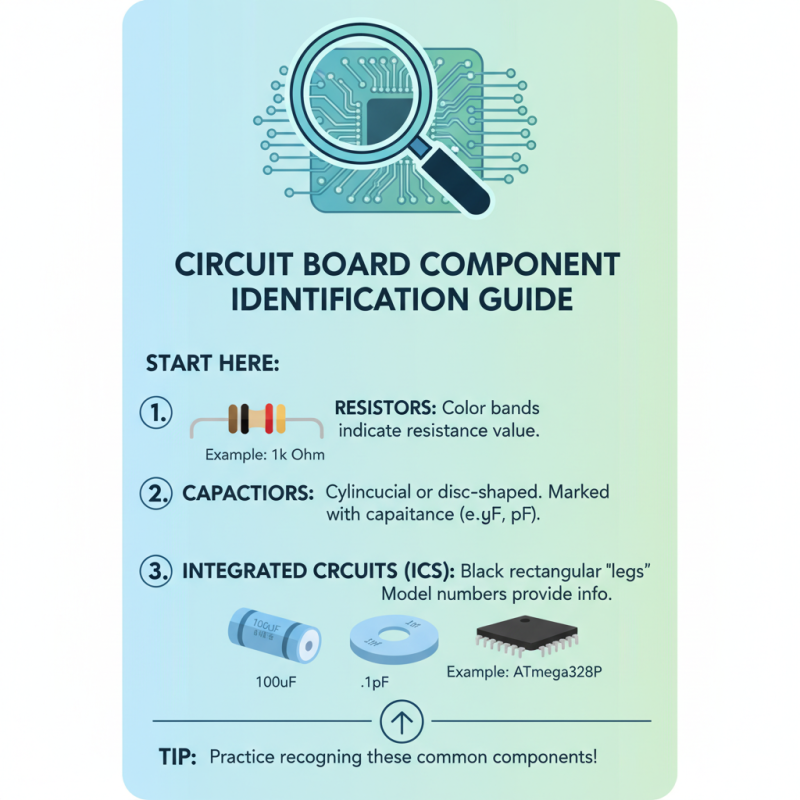
Tips: Start by familiarizing yourself with the layout of the circuit board. Look for standardized symbols and markings. Resistors usually have color bands that indicate their values. Capacitors may have size variations, often cylindrical. Keep a magnifying glass handy; it can help with small print.
Each component has its own role in the circuit's functionality. For example, resistors limit current flow, while capacitors store electrical energy. Identifying these parts requires practice and patience. Don't be discouraged by initial confusion. Mistakes can happen, and that's part of learning.
Tips: Use a multimeter to test components. This can provide insights into their functionality and condition. Additionally, consider keeping a reference chart of symbols and values. It can save time and help reinforce your learning. Regular hands-on practice will deepen your understanding.
How to Identify Circuit Board Components Easily?
This bar chart represents the common types of components found on a circuit board and their approximate frequency of occurrence in an average design.
Common Types of Circuit Board Components and Their Functions
Identifying circuit board components can be challenging. Understanding common types is crucial.
Resistors, capacitors, and diodes are fundamental in most circuits.
Resistors limit current flow while capacitors store energy. Diodes allow current to flow in one direction only.
For instance, according to industry reports, components like capacitors account for over 30% of circuit board designs.
This highlights their importance in various applications. Additionally, inductors are used for managing oscillations or filtering signals.
Awareness of these components can enhance troubleshooting skills.
It's worth noting that not all components are easily identifiable. Some packages can be very small or have unique shapes.
Mistaking a resistor for a capacitor happens regularly, especially for beginners. Understanding a component’s markings and orientation is essential for effective identification.
A closer look reveals that small details can lead to significant differences in functionality. Hence, continual learning in component identification is necessary.
Tools and Techniques for Identifying Components
Identifying circuit board components can be a challenge for hobbyists and professionals alike. However, with the right tools and techniques, this task becomes much more manageable. A multimeter is essential for measuring resistance and voltage. It helps you verify if a component is functioning properly or if it needs replacement.
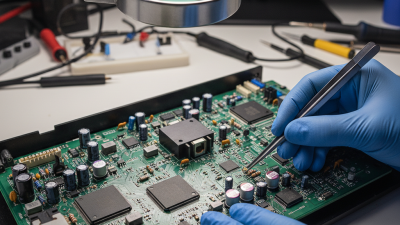
A component tester can quickly identify various parts. These devices can check capacitors, diodes, and transistors efficiently. They often provide information on pin configurations too. Keeping a magnifying glass handy can help you read small labels on components that may be difficult to see. The clearer you understand the components, the better decisions you can make.
Tips:
1. Take a photo of the circuit board before disassembly. This will help reconstruct the original layout later.
2. Organize components in labeled containers. It saves time when reassembling the circuit.
Sometimes, the schematic might not be clear. It can lead to misidentifying components. In such cases, cross-referencing can become vital. Sometimes the labels are smudged or hard to read. Patience is key when dealing with difficult components. Use proper lighting and avoid rush decisions.
Reading Circuit Board Schematics and Symbols
Reading circuit board schematics and symbols can be challenging, yet rewarding. Familiarizing yourself with common symbols, like resistors and capacitors, is essential. A resistor is typically represented by a zigzag line. This simple symbol can help you understand its function in a circuit. It limits the current flow. Likewise, a capacitor is often depicted as two parallel lines. Recognizing these shapes helps in the assembly and troubleshooting of electronics.
Pay attention to the layout of the schematic. Lines represent connections, while junctions indicate where multiple paths converge. Overlapping lines often show different layers of a circuit board. This detail can confuse newcomers, as it is not always clear which paths are connected. Take your time to analyze each section carefully. Mistakes can occur if you rush.
Additionally, understanding the voltage and current ratings indicated on these diagrams is critical. A small oversight might lead to malfunction, requiring significant rework. Reliability in reading schematics develops with practice. Keep studying them regularly, even if you find it frustrating at first.
Practice Tips for Easily Recognizing Components
Identifying circuit board components can seem overwhelming at first. However, with practice, anyone can become proficient. Begin by familiarizing yourself with common components. These include resistors, capacitors, and integrated circuits. For example, resistors typically have a color code that indicates their resistance value. Learning these codes can make identification easier and faster.
One useful tip is to use a magnifying glass. This tool can help you see small prints and markings on components. According to industry reports, over 70% of beginners find visual aids beneficial. They enhance understanding and retention of information. Online resources and tutorials provide excellent guides on component identification. Engaging with community forums can also yield practical advice.
Practice regularly to build confidence. Try disassembling old electronics. This hands-on experience is invaluable. You might encounter components that don't match typical descriptions. Take notes and reflect on these encounters. Understanding that not all components fit neatly into categories is crucial. Flexibility in your learning approach is essential for growth in this field.