In the ever-evolving world of electronics, understanding Circuit Board Components is crucial for buyers. Renowned industry expert Dr. Emily Carter once stated, “Choosing the right components is fundamental for successful circuit board design.” This highlights the importance of informed decision-making in this field.
Circuit Board Components serve as the backbone of electronic devices. Each component plays a specific role, from resistors to capacitors. Buyers often overlook the implications of their choices, leading to inefficiencies. Mistakes in selection can result in poor performance or higher costs in the long run.
A solid grasp of these components fosters innovation and efficiency. Understanding their functionality not only enhances design but also improves project outcomes. As technology progresses, the demand for better circuit board solutions grows. Buyers must be proactive in their knowledge to stay competitive in this dynamic industry.

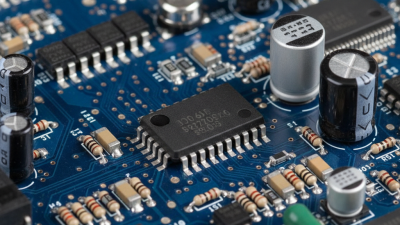
Understanding circuit board components is crucial in electronics. Each component plays a specific role that ensures devices function correctly. Resistors, for example, regulate current flow. Capacitors store and release electrical energy. These components dictate how power is distributed and filtered.
Diodes serve as one-way valves for current. They protect circuits by preventing reverse flow. Inductors store energy in a magnetic field, playing a key role in voltage regulation. It’s common for beginners to overlook the significance of each piece. Knowledge gaps often lead to malfunctioning prototypes.
Quality circuit design requires attention to detail. Each component needs to be selected based on its specifications. Compatibility issues arise if components are mismatched. Understanding their function can help avoid costly mistakes. Developing expertise takes time and effort, but it's essential in electronics.
| Component | Key Function | Typical Use Cases | Material |
|---|---|---|---|
| Resistor | Limits current flow | Voltage Dividers, Signal Attenuation | Carbon Film, Metal Film |
| Capacitor | Stores electrical energy | Power Supply Filters, Timing Circuits | Ceramic, Electrolytic |
| Inductor | Stores energy in a magnetic field | Power Supply Filtering, RF Applications | Copper Wire, Ferrite Core |
| Diode | Allows current to flow in one direction | Rectification, Signal Demodulation | Silicon, Gallium Nitride |
| Transistor | Amplifies or switches electronic signals | Signal Processing, Logic Gates | Silicon, Germanium |
| Microcontroller | Controls other components in a circuit | Embedded Systems, Robotics | Silicon |
| Connector | Establishes a physical connection between components | Device Interfaces, Power Connections | Plastic, Metal |
| PCB (Printed Circuit Board) | Supports and connects electronic components | Consumer Electronics, Automotive | Fiberglass, Copper |
| Crystal Oscillator | Provides a stable clock signal | Frequency Generation, Timing Circuits | Quartz |
| Fuse | Protects circuits from overload | Safety in Appliances, Automotive | Metal, Glass |
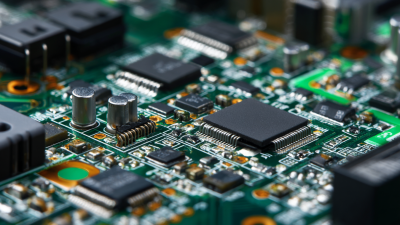
When discussing circuit boards, understanding the types of components is crucial. Each component serves a specific function, contributing to the overall performance of the board. Common types include resistors, capacitors, and diodes. Resistors limit the flow of current, while capacitors store and release energy. Diodes ensure current flows in one direction only. These basic components are essential for any circuit board design.
Beyond these, there are more specialized components. Inductors, for instance, store energy in a magnetic field and are vital for filtering applications. Integrated circuits are another key aspect, combining multiple functions into one package. They allow for compact designs. However, selecting the right component can be challenging. Misunderstanding their specifications can lead to circuit failures or inefficiencies.
It’s important to review and verify specifications thoroughly. Personal experience shows that not all components perform as expected in different environments. Testing is vital. While you may select components based on their datasheets, real-world conditions can differ. Observations indicate that even small variations can impact performance significantly. Engaging with experienced professionals can provide deeper insights into component selection and integration challenges.
When selecting essential circuit board components, buyers must consider several key criteria. Quality and reliability are paramount. Research from the IPC (Association Connecting Electronics Industries) indicates that 70% of circuit board failures can be traced back to component issues. Choosing reliable parts can prevent costly production delays.
Next, compatibility is crucial. Not all components work seamlessly together. Misalignment in specifications can lead to malfunctions. A study by TechMonitor suggests that 40% of design revisions stem from compatibility issues. Buyers should ensure all components meet the specifications of their intended application.
Cost is also a significant factor. While it's tempting to opt for the lowest-priced components, this can compromise quality. The average cost of high-quality components is often justified by their lifespan and performance. Balancing cost and quality is a reflection of strategic purchasing. Component selections require a nuanced approach, and overlooking these criteria can lead to regret down the line. Engaging with expert resources can guide buyers, but personal experience remains invaluable.
Circuit board components are crucial for effective electronic designs. However, various issues can arise, affecting performance and reliability. One common problem is solder joint failure. Poor soldering techniques can lead to cold joints, which are prone to failure. Ensuring proper heating and cooling during soldering can mitigate this issue.
Another frequent issue is component overheating. High temperatures can damage sensitive components, leading to malfunction. Implementing proper heat dissipation methods, such as heat sinks or thermal pads, can help manage this risk. Additionally, mismatched components can cause instability. Careful selection according to specifications is vital. It’s essential to double-check the component ratings before installation.
Unexpected electromagnetic interference (EMI) can disrupt circuit performance too. Shielding and filtering techniques can reduce these effects. Regular testing is necessary to identify potential sources of interference. These challenges require attention and experience to solve effectively. Ignoring them can lead to project delays and increased costs. Focusing on these areas will enhance component reliability in circuit board design.
The future of circuit board component technology is evolving rapidly. Emerging trends highlight the increasing demand for miniaturization. Components are becoming smaller yet more efficient. According to a recent industry report, the global demand for compact circuit boards is expected to grow by 8% annually through 2025. This shift is primarily driven by the rise of IoT devices and wearable technology.
Another significant trend is the integration of advanced materials. Manufacturers are exploring materials like graphene and conductive polymers. These materials promise improved thermal and electrical performance. Research indicates that the use of these innovative materials can enhance circuit board longevity. However, the transition can be challenging, with many companies facing supply chain complexities and higher costs.
Sustainability in component technology is also at the forefront. As environmental concerns rise, the industry is pushed towards eco-friendly solutions. A recent survey revealed that 70% of manufacturers are seeking sustainable sourcing options for components. This shift, while promising, requires ongoing adaptation and re-evaluation of existing practices. The journey towards sustainability is still fraught with challenges, reflecting the industry's need for continuous reflection and innovation.