How to Choose the Right Plastic Carrier Tape for Your Needs?
Choosing the right Plastic Carrier Tape is crucial in various industries. According to a recent market report by Smithers Pira, the demand for packaging materials, including carrier tapes, is projected to reach $1.2 billion by 2025. The right choice can enhance efficiency and reduce waste in production lines.
Plastic Carrier Tape plays a significant role in component packaging, particularly in electronics and automotive sectors. The rise of automated processes has increased reliance on high-quality carrier tapes. For instance, imperfections can lead to machine jams or product damage, affecting overall productivity. Not all tapes are created equal; factors such as material type and adhesive strength matter.
However, many businesses still struggle with selecting the best option. They often overlook specific requirements, leading to costly mistakes. Buyers should consider their unique needs and conduct thorough research. A poorly chosen tape can disrupt operations and hinder growth. Understanding these details is vital for making an informed decision in a competitive market.
Understanding the Basics of Plastic Carrier Tape and Its Applications
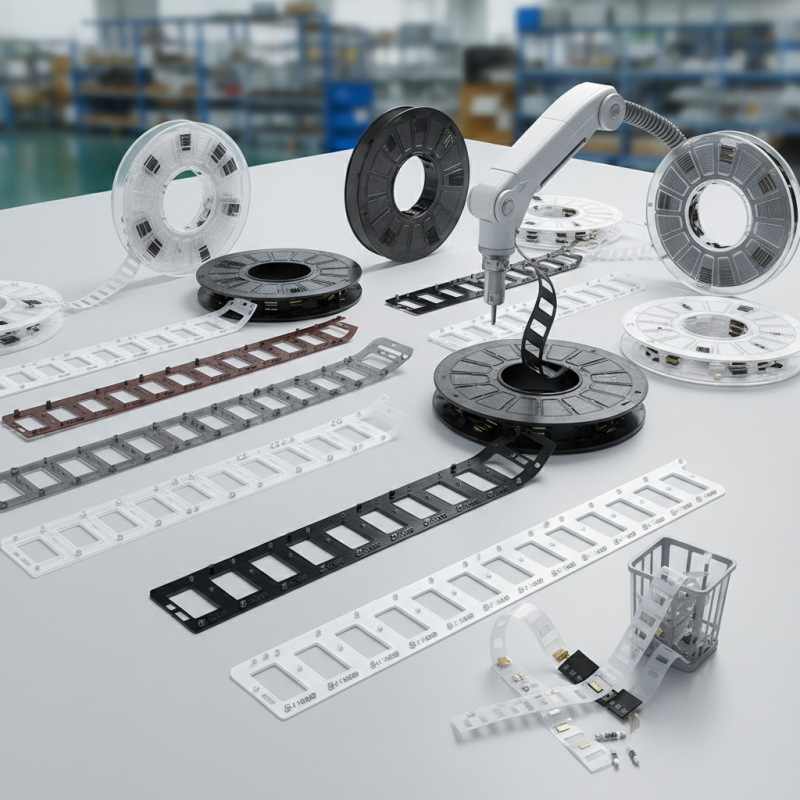
Plastic carrier tape plays a crucial role in various industries. It is primarily used for the packaging and transport of electronic components. Understanding its construction is essential. Typically, it comprises a flexible polymer substrate that holds components securely in place. The design can vary based on the component shape and size. Selecting the right tape affects the efficiency of your assembly line.
Applications extend beyond electronics. This tape aids in automated processes, reducing manual handling. It also ensures durability during shipping. Additionally, using the wrong tape can lead to product damage. It’s vital to assess your product requirements. Consider factors like
temperature resistance and tensile strength. Often, the specifics of your project can guide you.
Choosing the correct carrier tape isn't always straightforward. You might end up with a product that's not perfectly suited for your needs. It's important to consult with industry experts. They can provide insights on the technical aspects. Also, remember that experimentation can be necessary. You may need to try different options before finding the ideal fit.
Assessing Your Packaging Requirements for Plastic Carrier Tape
When choosing plastic carrier tape, it's crucial to assess your specific packaging requirements. The right tape not only affects production efficiency but also impacts material handling and inventory costs. According to a recent industry report, companies can save up to 15% on packaging costs by selecting appropriate carrier tapes. Understanding your application will guide you in making the best choice.
Consider factors such as tape size, composition, and adhesion properties. The dimensions of the carrier tape should match your products closely. Additionally, the material needs to withstand environmental conditions during transport. Data shows that 35% of businesses experience packaging failures due to inappropriate tape selection. Such failures can lead to damaged products and decreased customer satisfaction.
Evaluate the specifics of your operations. For instance, if you are packaging lightweight items, a strong yet flexible tape may be required. The thickness and width of the tape play a significant role in this. Also, testing different tapes can yield revealing insights. Sometimes, the tape that seems perfect in theory may not perform well in real situations. Adaptability is key in making an informed choice.
How to Choose the Right Plastic Carrier Tape for Your Needs?
| Criteria |
Description |
Recommendation |
Common Applications |
| Thickness |
The gauge of the tape, typically measured in microns. |
Choose thickness based on strength requirements. |
Electronics packaging, general industrial uses |
| Adhesive Type |
Type of adhesive used, such as permanent or removable. |
Select based on whether tape will be removed after use. |
Component assembly, product protection |
| Material |
Material composition, such as polyester or polycarbonate. |
Choose based on durability and environmental factors. |
High-temperature applications, moisture-sensitive areas |
| Width |
Width of the tape, impacting the size of components you can package. |
Match width to the size of the items being secured. |
Automated dispensing systems, manual insertion processes |
| Printability |
The capability of the tape to accept printing for labeling. |
Select if branding or instructions are important. |
Consumer electronics, packaging marks |
Evaluating Different Materials and Thicknesses for Carrier Tape
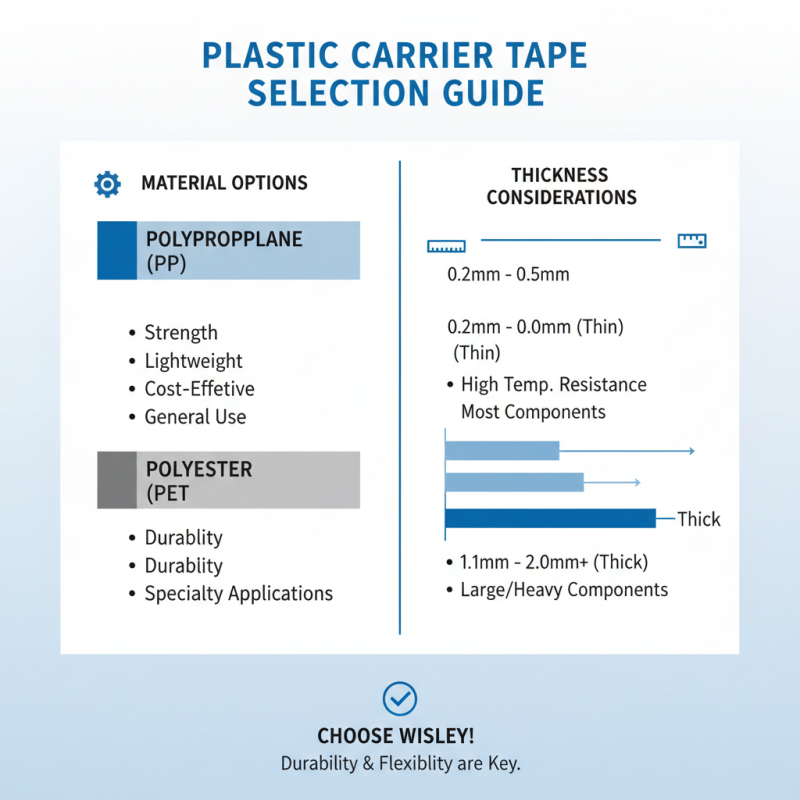
Choosing the right plastic carrier tape involves careful evaluation of materials and thicknesses. The material affects durability and flexibility. Polypropylene is popular for its strength and lightweight properties. In contrast, polyester offers superior temperature resistance. These variations cater to different applications, highlighting the importance of material selection.
Thickness is another crucial factor. Typical carrier tape thicknesses range from 0.15 mm to 0.30 mm. Thicker tapes provide better support for heavy components. However, they may reduce flexibility in intricate designs. A study conducted by industry experts showed that 75% of companies prefer tapes between 0.20 mm and 0.25 mm for general use. This range balances strength and usability effectively.
It's important to consider the end application when making a choice. Some designs require both strong support and precision. Others may prioritize lightness and ease of handling. Occasionally, the selected tape fails under specific conditions. Thus, testing under real-world scenarios is essential. Don't overlook this step, as it could reveal unforeseen challenges. Always reflect on the performance of your choices.
Choosing the Right Adhesive Type for Your Plastic Carrier Tape
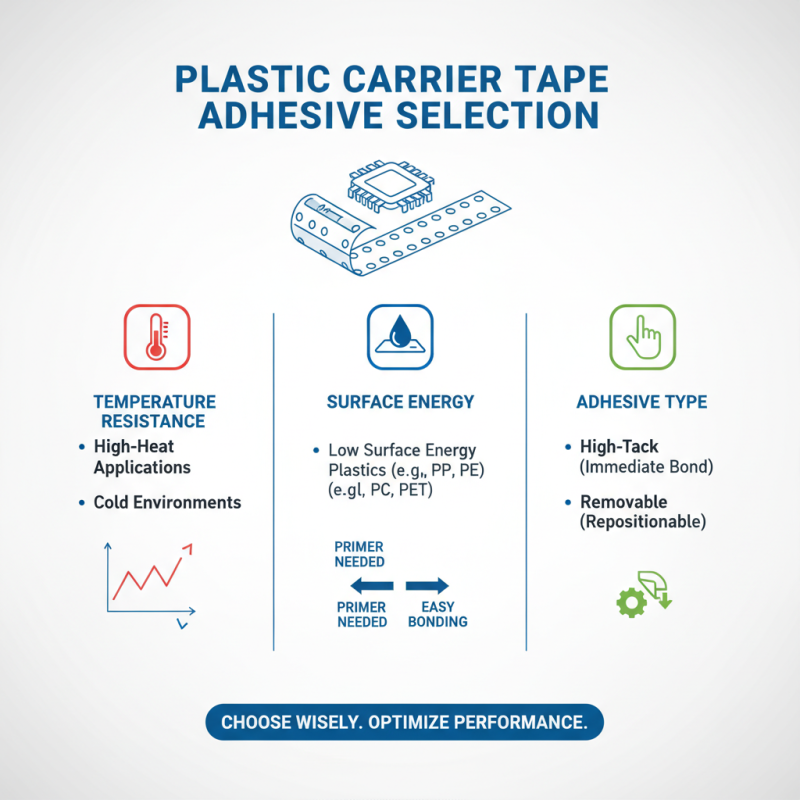
When selecting the right adhesive for plastic carrier tape, understanding your needs is crucial. Different applications require specific adhesive properties. Consider factors like temperature resistance, surface energy, and the type of materials you are bonding. Sometimes, a high-tack adhesive is necessary for immediate adhesion. Other tasks may require a removable adhesive for easy repositioning.
Additionally, think about the environment where the tape will be used. Will it face moisture or extreme temperatures? Not all adhesives perform well under these conditions. A certain adhesive may fail in cold temperatures but work perfectly in warm conditions. Testing the adhesive on actual materials before finalizing your choice is essential. You might find that your initial choice is not as effective as anticipated.
Be aware of the potential for misapplication. In some cases, users select adhesives based solely on the material type, overlooking other important factors. This can lead to adhesion failures or damage to surfaces. Assess your application frequently and refine your approach if necessary. It's a process that often requires adjustment and reflection.
Ensuring Compatibility with Your Machinery and Production Process
Choosing the right plastic carrier tape is crucial. It should match your machinery and production workflow. A mismatch can lead to inefficiency. Consider the specifications of your equipment carefully. Understand the type of components you are handling. The thickness of the tape matters. It can affect feeding rates and placement accuracy.
Examine the material properties of the tape. Different plastics have varying levels of durability and flexibility. Test the tape under your specific conditions. What works for one process might fail in another. Pay attention to the temperature and humidity levels of your environment. These factors can impact adhesion and performance.
Sometimes, a tape that seems perfect might not work as intended. It's essential to run production trials. Gather feedback from operators. Make adjustments based on their input. Don’t overlook minor issues. Small discrepancies can lead to larger problems down the line. It's a complex balancing act to ensure every component works harmoniously. Stay open to reevaluating your choices.
Plastic Carrier Tape Types Comparison
This chart illustrates the compatibility of different types of plastic carrier tapes with various machinery and production processes based on their applications. The data reflects commonly used tape types and their suitability ratings on a scale of 1 to 10.