How to Choose Circuit Components for Your Electronics Projects?
In the world of electronics, selecting the right circuit components is crucial. According to a recent industry report by MarketsandMarkets, the global electronic components market is projected to reach $1 trillion by 2026. This highlights the growing importance of quality components in successful projects. However, many enthusiasts often overlook this critical step.
Choosing circuit components requires a deep understanding of requirements. Factors such as voltage ratings, current capacity, and thermal stability must be considered. A mismatch can lead to project failure. For instance, using a capacitor with inadequate voltage ratings can result in failure during operation. Reports indicate that about 30% of electronics projects face issues due to improper component selection.
Moreover, reliability is a key aspect. Components chosen might not always be the best fit for a specific application. A meticulous evaluation of specifications is essential. Failing to do so can impact performance and longevity. By reflecting on these challenges, one can make more informed decisions when selecting circuit components for their next project.
Understanding Circuit Components and Their Functions
When undertaking electronics projects, understanding the components is vital. Each part has a specific role in a circuit.
Resistors limit current flow.
Capacitors store electrical energy. Understanding these functions can help in making informed decisions.
Tips: Always consider the specifications of components. Check voltage ratings and tolerance levels.
Small mistakes can lead to project failure.
Transistors drive signals and amplify current. They are essential for switching applications.
Sometimes, using the wrong type can lead to overheating. A detailed understanding of each component will help avoid such pitfalls.
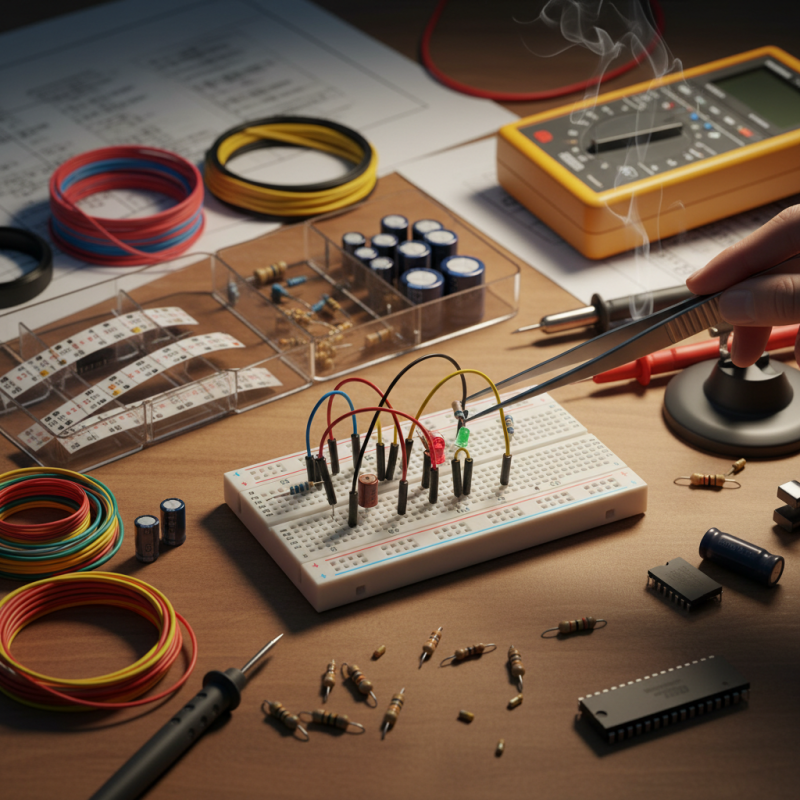
Tips: Prototype your circuit on breadboards before finalizing. This helps identify potential issues early.
Don’t assume your design is perfect on the first try.
Capacitors, on the other hand, handle fluctuations in voltage. The wrong capacitance can affect performance.
Monitoring how components interact is crucial. Adjustments may be needed as you progress. Balancing component values ensures a stable circuit.
Identifying Project Requirements and Specifications
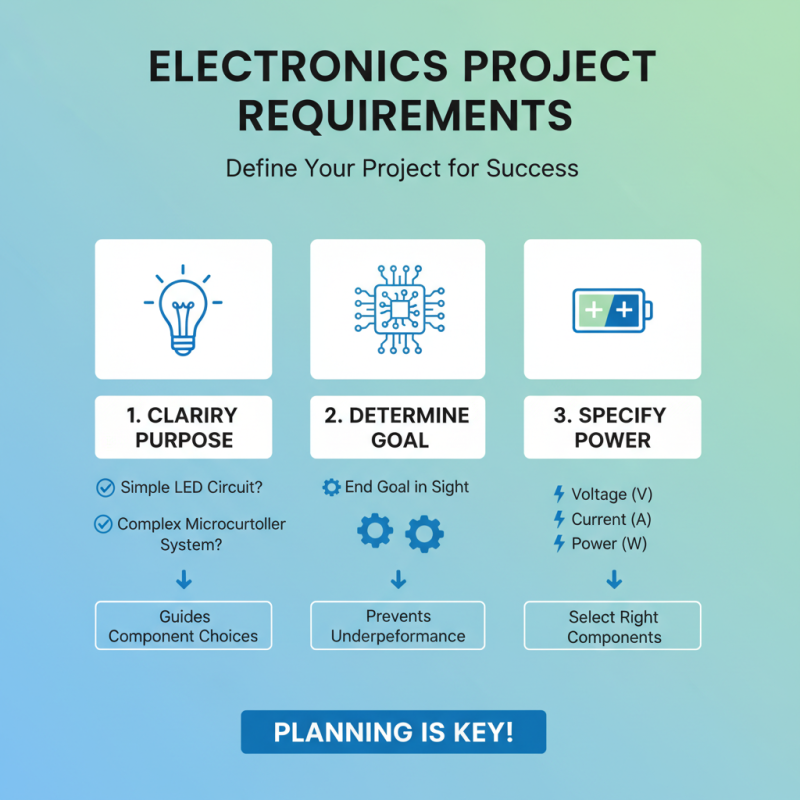
When undertaking an electronics project, defining the project requirements is essential. Begin by clarifying the purpose of your project. Are you building a simple LED circuit, or a more complex microcontroller-based system? Knowing the end goal will guide your component choices. Consider the voltage, current, and power needs. These specifications will help you select components that won’t underperform.
Once you have your basics, think about the environment. Will the circuit be indoors or outdoors? Exposure to moisture or temperature changes can impact your component durability. Additionally, reflect on how much space you have. Complicated designs with limited space often lead to frustration. Simplifying the design can also clarify which components are necessary.
Finally, remember to allow for some flexibility. Projects rarely go as planned. You might choose a resistor that doesn’t quite fit or a capacitor that’s too large. Learning to adapt is part of the process. Embrace these challenges. They can lead to innovation and improvement in your circuit design skills.
Selecting Resistors, Capacitors, and Inductors Appropriately
Selecting the right resistors, capacitors, and inductors is crucial for successful electronics projects.
Resistors manage current flow. Their value affects power dissipation.
According to a recent industry report, 70% of circuit failures are linked to incorrect resistor values.
This stat highlights the importance of precision in selection. Choose resistors with appropriate wattage ratings. Avoid underestimating power specifications.
Capacitors store and release energy. Various types exist, such as electrolytic and ceramic. Each type has distinct advantages.
For example, electrolytic capacitors offer high capacitance in small packages. Yet, they are sensitive to voltage spikes. Recent studies indicate that 45% of component failures stem from poorly chosen capacitors.
Always check voltage ratings and temperature coefficients.
Inductors play a vital role in filtering and energy storage. Selecting the right inductor size ensures efficiency.
Errors in value can lead to signal loss. Interestingly, 30% of engineers overlook the impact of inductor resistance.
This oversight can hinder performance. Take time to analyze specifications carefully. Consider application needs and environment.
Making informed choices avoids potential circuit problems.
Choosing Integrated Circuits and Microcontrollers for Projects
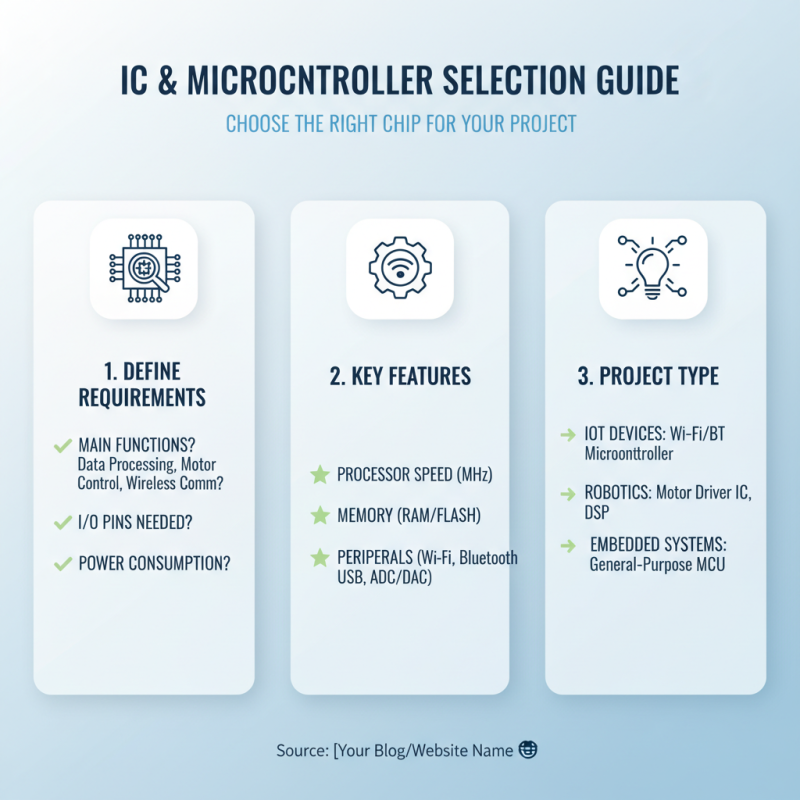
When selecting integrated circuits and microcontrollers for electronics projects, it's crucial to understand your project's requirements. Define the main functions you need from the component. Will it process data, control motors, or communicate wirelessly? Each application demands specific features. For instance, a microcontroller with built-in Wi-Fi is essential for IoT projects.
Consider the available alternatives. Sometimes, options may seem overwhelming. It’s easy to overlook compatibility issues. Ensure the voltage levels match between components. You might think you can solve this later, but mismatched components can lead to frustration. Keep connections simple to avoid complexity.
Check the support and resources available. Some components come with extensive documentation and community support. Others may lack tutorials, leaving you stranded. Reflect on past projects. Did you struggle because you chose a component without enough resources? Learning from those experiences will guide your selections. Aim for reliability and ease of use, but don't ignore new technologies that could simplify your work. Embrace the challenge, test your choices, and learn along the way.
Evaluating Power Sources and Connectivity Options for Circuits
When designing circuits, selecting a power source is crucial. You might choose batteries for portability or a wall adapter for constant power. Each option has specific characteristics. Batteries can be limited in lifespan. Wall adapters can be bulky. Consider your project's needs to make the right choice.
Connectivity is another key element in circuit design. Wires must be appropriately sized for current flow. Thinner wires can lead to overheating. Think about the connectors too. Loose connections can disrupt your circuit. Quality matters, but affordability should also be a factor.
Choosing these aspects requires experimentation. Sometimes, you won’t get it right on the first try. That’s okay. You will learn from each attempt. Analyze what works and what doesn’t. Keep refining your approach until you find the best solutions.
Power Source Options for Electronics Projects
This chart displays various power source options commonly used in electronics projects along with their corresponding voltage levels. Assessing these options is crucial in selecting the right power solutions for your circuit designs.