How to Choose the Best Circuit Board Components for Your Projects?
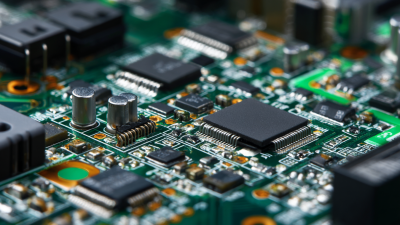
Choosing the right Circuit Board Components is essential for any electronics project. Quality components ensure optimal performance and reliability. Each project has unique requirements, making component selection crucial. An unsuitable part can lead to failures, affecting the entire design.
Experience is vital when selecting components. Knowledge of different materials and manufacturers can guide decisions. Some components are well-known for their durability. Others might be cheaper but less reliable. A balance between cost and quality is often necessary.
It's important to consider future accessibility. Some components may become obsolete quickly. This makes it hard to repair or scale a project later. Inexperienced designers may overlook this aspect. Therefore, learning to select the right Circuit Board Components is a journey. It takes practice and reflection. Engaging with experienced engineers can offer valuable insights. Over time, you’ll develop the skills to make informed choices.
Understanding the Role of Circuit Board Components in Electronics Projects
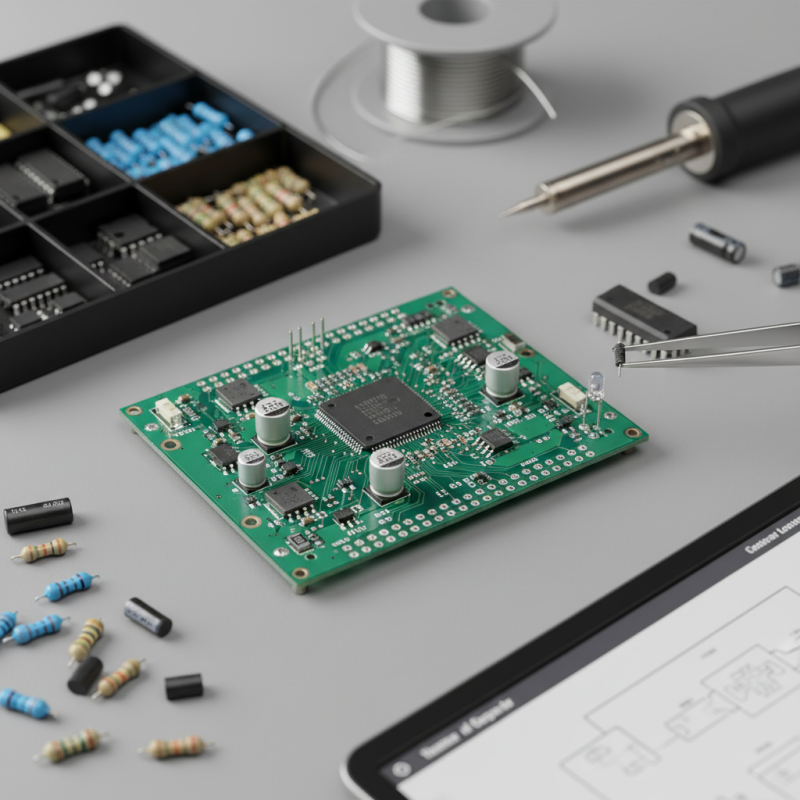
Choosing the right circuit board components is crucial for the success of your electronics projects. Understanding their roles can significantly enhance your design. Each component has a specific function, whether it's a resistor limiting current, a capacitor storing energy, or a diode directing current flow. Knowing these roles will enable you to select the best components for your needs.
Tips: Identify the purpose of your project. This will guide your component choices. For instance, if you're developing a power supply, focus on components like voltage regulators and capacitors that can handle higher loads.
Component selection often involves trade-offs. For example, using surface-mount devices might save space but can complicate soldering. Consider your skills and tools. Reflect on past projects to assess what worked and what didn't.
Tips: Don't overlook compatibility. Ensure components work well together. Test different combinations before finalizing your selection. Design iterations often reveal unexpected challenges, but these lessons can lead to better outcomes in future projects.
How to Choose the Best Circuit Board Components for Your Projects?
| Component Type |
Function |
Key Specifications |
Common Applications |
| Resistor |
Limits current flow |
Resistance value, power rating |
Voltage dividers, biasing circuits |
| Capacitor |
Stores electrical energy |
Capacitance, voltage rating |
Filtering, timing circuits |
| Transistor |
Acts as a switch or amplifier |
Current gain, voltage rating |
Signal amplification, switching |
| Diode |
Allows current to flow in one direction |
Forward voltage drop, current rating |
Rectification, signal demodulation |
| Microcontroller |
Process data and control devices |
Clock speed, memory size |
Embedded systems, robotics |
Evaluating Specifications: Key Features of Resistors, Capacitors, and Inductors
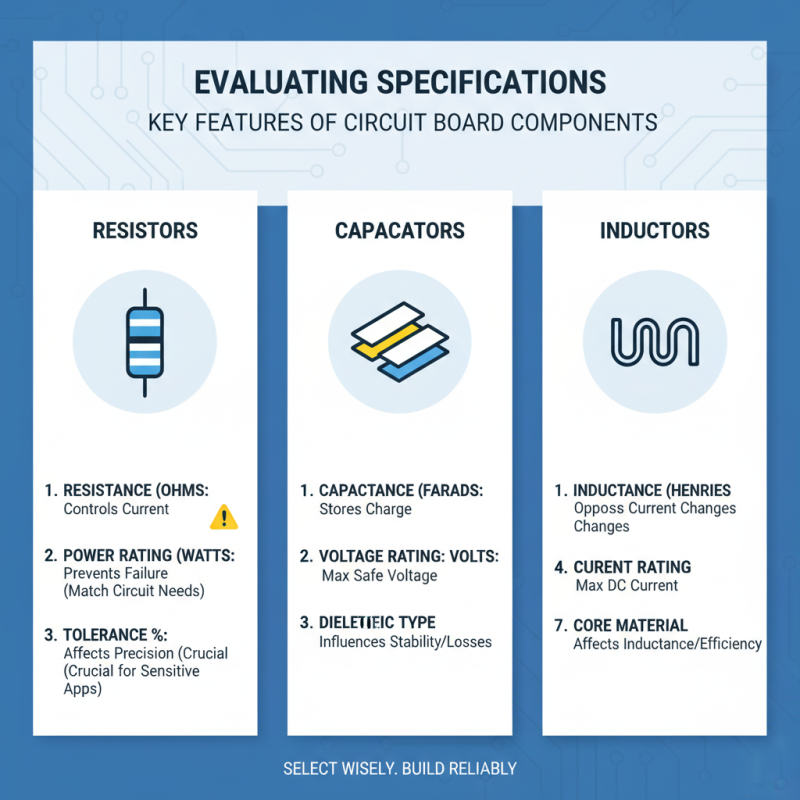
When selecting circuit board components, understanding the specifications of resistors, capacitors, and inductors is crucial. Resistors control current flow. Their resistance values, measured in ohms, directly influence how components interact. A common pitfall is not accounting for power ratings. Exceeding these ratings can lead to failure. Furthermore, the tolerance of a resistor affects precision. High tolerance is not always necessary, but it can significantly impact sensitive applications.
Capacitors store and release energy. They come in various types such as ceramic and electrolytic. Their capacitance, measured in farads, determines how much charge they can hold. Some designers overlook the voltage rating of capacitors. Using a capacitor with a lower voltage rating than required can cause catastrophic failure. Also, the Equivalent Series Resistance (ESR) is vital. Low ESR values are preferred for high-frequency applications, but they can be hard to find.
Inductors, on the other hand, store energy in a magnetic field. Their inductance value, typically in henries, determines their performance in filters and oscillators. Some might forget the importance of core material. Ferrite cores offer high efficiency but can be costlier. Understanding these nuances in specifications helps build more reliable circuits. Each component has its role, and misjudgments can lead to issues. Balancing performance and cost is a universal challenge.
Selecting Microcontrollers and Processors: Considerations for Performance Needs
When selecting microcontrollers and processors for your projects, understanding performance requirements is key. According to a recent study by the Semiconductor Industry Association, microcontroller demand is projected to grow by 7.7% annually through 2026. This growth emphasizes the need to choose components wisely.
Begin by assessing the complexities of your application. For tasks requiring rapid data processing, opt for microcontrollers with higher clock speeds and multiple cores. In contrast, simpler applications may not need such specifications.
Consider the trade-offs. A more powerful processor often consumes more power, impacting battery life in portable devices. This dynamic necessitates a careful balance between performance and energy efficiency.
Moreover, pay attention to the memory requirements. For instance, embedded systems with extensive functionality often require larger memory capacities. A study published by Gartner indicates that energy-efficient designs can reduce power consumption by up to 30%. Properly managing these specifications can enhance both performance and reliability. Reflect on your project goals and the required capabilities to ensure you make an informed decision.
Assessing PCB Design: How Layout Influences Component Selection
When designing a PCB, the layout significantly affects component selection. A well-organized layout ensures optimal performance. It also impacts power distribution and signal integrity. According to the IPC-2221 standards, a proper layout can reduce electromagnetic interference (EMI) by up to 50%. This demonstrates how crucial the design process is to the overall success of the project.
Selecting components starts with understanding the desired functionality. Considerations such as dimensions, tolerances, and power ratings must align with the layout design. For instance, larger components may require more spacing. This can complicate a compact design. A 2021 report by Grand View Research highlighted that efficient design could enhance thermal management, which is essential for high-performance applications.
Additionally, designers often face challenges in achieving a balance between size and durability. Components need to manage heat without compromising the compactness of the board. Innovative materials can help, but they may increase costs. Designers must assess trade-offs carefully. Reflecting on these factors can lead to better decisions, ultimately improving the project's outcome.
Balancing Cost and Quality: Finding Reliable Suppliers for Electronic Parts
When sourcing electronic components, balancing cost and quality is essential. A recent industry report by IHS Markit highlights that about 70% of product failures relate to poor component selection. Finding reliable suppliers can help mitigate such risks. Conduct thorough research to identify suppliers with positive reputations. Look for those that have been in the industry for a while and have demonstrated consistent quality.
It's also important to consider not just price but the overall value offered. A component that is cheaper upfront may result in higher costs later due to failures or inefficiencies. Many engineers find that suppliers who focus on quality often provide better support and faster delivery—critical factors for project timelines. Collect feedback from peers and industry forums to gauge the experiences others have had.
Sometimes, established suppliers might not offer the best new technologies. Emerging suppliers may provide innovative solutions at competitive prices. However, this comes with risk. New suppliers might lack a proven track record. Balancing these choices can be challenging, but diligent evaluation of both cost and reliability is crucial for long-term success.