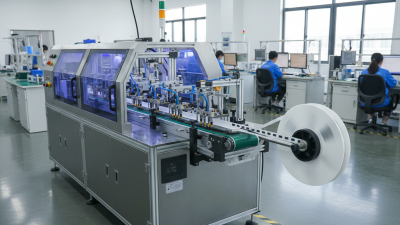
A Carrier Tape Packaging Machine forms, loads, and seals electronic components inside protective carrier tape. The tape advances through a controlled path, while pockets hold parts in consistent positions for later handling. A cover tape is then sealed over the pockets. The process may look simple, but small errors matter. A misplaced component or uneven seal can disrupt downstream assembly.
Packaging educator Walter Soroka is often credited with the phrase, “Packaging is the silent salesman.” For carrier tape, that idea also means protection and precision. The package must present each component clearly while limiting movement, contamination, and handling damage. A well-adjusted machine helps maintain pocket spacing, seal consistency, and repeatable indexing. It does not fix every upstream problem.
Details matter. Operators may check tape width, pocket dimensions, feed alignment, and sealing temperature during setup. They also need to match the machine to the component size, production speed, and required inspection process. There is no universal setting. A setup that works for one part may fail with another. This guide explains the machine’s main components, operating sequence, applications, and selection factors. It also considers common limitations, because reliable packaging depends on more than the machine alone.
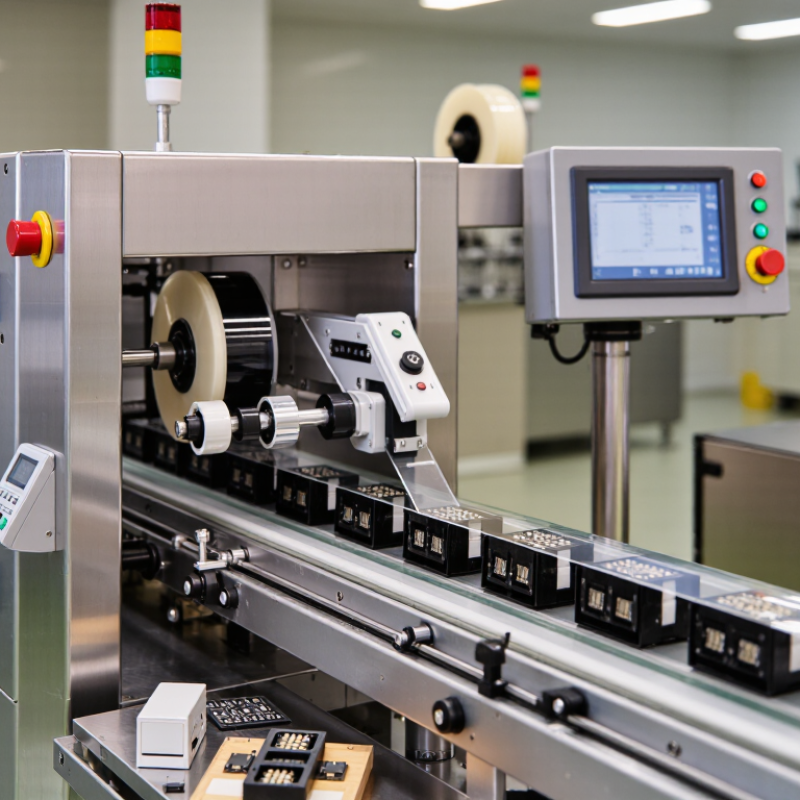
A carrier tape packaging machine prepares surface-mount components for controlled feeding into an SMT assembly line. It guides a formed tape beneath a placement head, seats each component in a pocket, applies cover tape, and winds the finished strip onto a reel. The pockets protect small parts from shifting or touching during handling. Small details matter. A poorly seated component or uneven seal can interrupt pickup at the feeder.
The dimensions are not arbitrary: IEC 60286-3:2019 specifies packaging formats for surface-mount components on continuous tape. Common tape widths include 8, 12, and 16 millimeters, while pocket pitches vary with component size. The machine must match the tape layout to the feeder’s indexing step; even a slight mismatch can leave a component off-center when the nozzle arrives. Sensors may check position, tape movement, and sealing, but setup still depends on the component and material. A seal that looks acceptable may not behave well after winding. Operators should verify sample pockets and cover-tape adhesion before a full run, then review rejects and feeder jams. There is no single setting that fits every part.
What Is a Carrier Tape Packaging Machine?
How Feeding, Pocket Forming, Cover-Tape Sealing, and Reeling Work
A carrier tape packaging machine places small components into evenly spaced pockets for storage and automated placement. Feeding starts with a bowl, tray, or reel that presents parts in a consistent orientation. Sensors and guide rails help detect gaps or misaligned components. One tilted part can interrupt the line.
The tape passes through a forming station. Embossed tape is shaped using heat and a forming tool; punched paper tape uses a different process. Pocket depth and pitch must suit the component. Too little clearance can pinch a part, while too much lets it shift. Real materials vary slightly, so a drawing alone may not reveal every fit problem.
A cover tape is placed over the pockets and sealed, often with controlled heat and pressure. Operators check bond strength and peel behavior, not just appearance. The sealed tape advances under measured tension onto a reel, keeping the pockets aligned. Excessive tension may distort the tape; too little can leave loose layers. Settings need periodic checks against actual components and tape samples. A tidy setup can still drift.
| Machine Stage | What Happens | How It Works | Important Settings or Checks | Typical Result |
|---|---|---|---|---|
| 1. Carrier-tape feeding | Feeds a continuous strip of carrier material through the machine. | A feed mechanism advances the tape in measured increments. Guide rails keep it aligned, while sprocket holes commonly support indexing on compatible tape formats. | Tape width, feed pitch, lateral alignment, tension, and correct threading through the guides. | A steadily positioned tape web ready for pocket forming. |
| 2. Pocket forming | Creates regularly spaced cavities that hold individual components. | Depending on the tape material and equipment, pockets are formed by heating and vacuum forming, or by mechanical punching. Tooling defines the pocket shape and spacing. | Pocket length, width, depth, pitch, material temperature where applicable, and forming-tool condition. | Uniform cavities with dimensions suited to the component and packaging specification. |
| 3. Component loading | Places one component into each pocket. | A loading system, such as a pick-and-place unit or a product-specific feeder, synchronizes placement with the tape’s indexing movement. | Placement position, component orientation, pocket-to-feed synchronization, and detection of empty or misloaded pockets. | Components seated in the pockets in the required orientation. |
| 4. Cover-tape application and sealing | Covers the loaded pockets and secures the cover tape to the carrier tape. | The cover tape is guided over the pocket row and sealed along designated areas. Heat sealing is commonly used with compatible materials; other material systems may use pressure-sensitive sealing. | Cover-tape alignment, sealing temperature and pressure where applicable, dwell time, seal continuity, and compatibility of the tape materials. | A closed strip that helps retain components during handling and transport. |
| 5. Inspection and counting | Checks the packaged strip and tracks its pocket or component count. | Sensors or visual inspection can monitor tape movement, pocket presence, component loading, cover-tape position, and other configured quality points. | Inspection criteria, count accuracy, alarm limits, and traceability requirements. | Detected issues can be flagged before the finished tape is collected. |
| 6. Reeling | Winds the finished carrier tape onto a reel. | A take-up spindle collects the tape while controlled tension and synchronized rotation help maintain an even winding pattern. | Reel size, winding direction, tape tension, alignment, and target length or count. | A wound package ready for labeling, storage, or downstream component placement. |
Note: Exact tape dimensions, materials, sealing conditions, and inspection requirements depend on the component, packaging specification, and machine configuration.
What Is a Carrier Tape Packaging Machine?
A carrier tape packaging machine forms pockets, loads components, and seals the tape for handling and shipment. Tape width is a key setup dimension. EIA-481, the industry standard for embossed carrier tape, specifies dimensional requirements across multiple widths. Common formats from 8 to 56 mm include 8, 12, 16, 24, 32, 44, and 56 mm. These figures describe the tape width, not the component size. Small distinction, big effect.
An 8 mm tape may suit compact parts, while wider formats provide room for larger components or pocket layouts. The machine’s guides, forming tools, and sealing area must match the selected width. A mismatch can shift pockets or leave the cover tape poorly sealed. When changing from 8 to 56 mm, operators should check the tape path and sealing alignment using an actual tape sample. EIA-481’s dimensional tables offer a reliable reference, but they do not replace setup checks on the production line. In practice, this check is easy to rush. Record the chosen width and confirm it against the component and feeder requirements before running a full reel.
The chart shows common nominal carrier tape widths. The appropriate width depends on the component size and pocket design; confirm dimensions and tolerances against the applicable EIA-481 requirements.
A carrier-tape packaging machine seals components into pockets and winds the tape for transport. During feeding, sprocket holes give the machine a mechanical reference. The EIA-481 carrier-tape specification sets a nominal 4.0 mm pitch between these holes. That measurement is distinct from pocket pitch, which varies with component size and tape design.
Small spacing. Big consequences. A feeder’s sprocket engages successive holes, while its motor advances the tape by the required pocket spacing. If engagement slips by one hole, the tape can shift 4 mm—enough to move a component outside the pickup window. In practice, the result also depends on hole condition, tape tension, and feeder setup. A clean specification cannot prevent every real-world misfeed; dust or a slightly warped strip can still interfere.
Tips: Confirm the tape’s EIA-481 dimensions and match the feeder guide to its width. Check sprocket engagement during setup, then watch the first few indexing cycles. If pickup positions drift, inspect the tape path before changing machine settings.
A carrier tape packaging machine forms pockets, loads components, and seals the tape onto a reel. Compare output using sustained good parts per minute, not just the rated speed. A line running at 12,000 parts per minute may slow when pocket pitch changes or a splice needs attention. Ask suppliers to run your actual component, tape width, and inspection settings. Record stoppages and rejected pockets during the trial. That matters.
Reel size affects how long a line runs unattended. Check maximum reel diameter, width, and core size against your current winding and storage setup. SEMI’s 2024 World Fab Forecast projected 300 mm fab capacity to grow 6% in 2025, reaching 9.1 million wafers per month. This is broad industry context, not a direct forecast for carrier tape demand. Still, it signals why packaging capacity deserves careful planning. Not just speed.
For changeover time, measure from the last good part on one job to the first verified part on the next. Include tooling swaps, recipe loading, and seal checks. A machine may advertise quick setup, yet operators can lose time locating guides or confirming pocket alignment. Request a timed changeover using two of your real product formats. I would also leave room for human error; setup estimates often look cleaner on paper.