Leave Your Message

7 Best Special Spring Loaded Buttons for Global Buyers

Choosing the right Special Spring-Loaded Button can improve control, durability, and user safety in demanding equipment. Global buyers often compare appearance first, but performance depends on deeper details. Spring force, actuator travel, contact arrangement, mounting style, and operating temperature can change the final result. A button that feels firm in a laboratory may feel uncomfortable after thousands of daily presses.

This guide reviews seven strong options for international purchasing teams, equipment designers, and maintenance specialists. Each choice should be judged against its actual working environment. Outdoor panels may need sealed construction and corrosion-resistant materials. Factory controls may require clear tactile feedback and stable electrical ratings. Compact devices often need short travel, reliable reset action, and careful panel spacing. Small differences matter.

Practical evaluation remains essential. Request technical drawings, current datasheets, sample units, and tested cycle-life information before placing a large order. Check whether the supplier identifies materials, tolerances, certifications, and quality-control procedures clearly. A neat catalog image is not enough. It can hide important limitations.

The seven selections in this overview are not universal winners. That would be an unsafe assumption. Their value depends on load, frequency, installation method, and regional compliance requirements. Buyers should also confirm packaging quality, traceability, warranty terms, and communication standards. Real experience shows that early sample testing prevents expensive redesigns later. Careful comparison creates better purchasing decisions, even when the final choice feels less obvious.

7 Best Special Spring Loaded Buttons for Global Buyers

What Are Special Spring-Loaded Buttons?

Special spring-loaded buttons are mechanical controls that return to their original position after being pressed. A small spring creates this restoring force. Unlike ordinary fixed switches, they usually work only while pressure is applied. Release the button, and the circuit or mechanism resets. Simple, but useful.

Common designs include push-to-make buttons, push-to-break buttons, momentary reset buttons, guarded buttons, illuminated buttons, panel buttons, and sealed buttons. Their housings may use metal, engineered plastic, or rubber seals.

Each choice affects strength, touch, temperature tolerance, and moisture resistance. A sealed button can suit outdoor equipment, while a compact panel button may fit testing instruments or control cabinets.

Selection should begin with the application, not appearance. Check voltage, current, contact arrangement, mounting size, travel distance, and expected operating cycles. The button should also match the operator’s gloves and available hand space. In practical evaluations, tactile feedback often reveals problems earlier than a specification sheet. A button may look robust yet feel vague after repeated use. That matters.

Do not ignore dust, vibration, or accidental impact. These details can shorten service life. Spring force is another overlooked factor. Too little force may cause uncertain operation; too much may tire the user. Specifications are helpful, but real testing remains necessary. No design is perfect.

Seven Spring-Loaded Button Types for Different Applications

7 Best Special Spring Loaded Buttons for Global Buyers

Spring-loaded buttons suit different control tasks, and the right type depends on force, visibility, sealing, and reset behavior. A flush momentary button fits compact panels and ordinary start commands. An extended-head button is easier to press with gloves. Mushroom-head designs support rapid stop actions, but they must match the machine’s safety circuit and applicable standards.

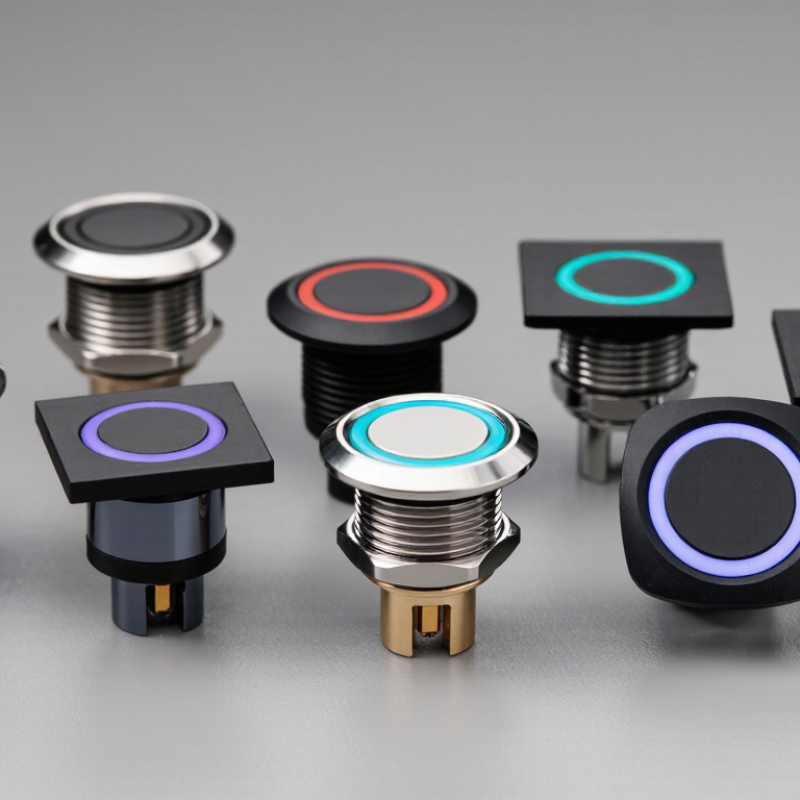
Illuminated buttons improve status visibility on dim production lines. Guarded buttons reduce accidental activation near moving equipment. Waterproof, IP-rated buttons protect controls in washdown rooms, outdoor cabinets, and dusty workshops. Anti-vandal metal buttons handle public kiosks and high-use enclosures. A seventh option is the raised emergency button, which gives operators a larger target during stressful events. It needs careful risk assessment, not just a larger cap.

Deloitte’s 2024 Smart Manufacturing and Operations Survey found that 92% of manufacturers view smart manufacturing as a major competitiveness driver within three years. That shift increases demand for clear human-machine interfaces. IEC 60529 ratings help verify enclosure protection, while ISO 13850 guides emergency-stop function design. Field selection should also consider contact rating, actuation force, panel thickness, and expected cycles. I have seen specifications overlook gloves and cold hands. That small mistake can delay operation. Datasheets are useful, but real operators should test the button before purchasing in volume.

How to Compare Materials, Mechanisms, and Performance

Selecting the seven best special spring loaded buttons starts with the application, not appearance. Stainless steel suits outdoor panels and repeated cleaning. Brass offers smooth movement and good conductivity. Zinc alloy lowers cost but needs protective plating. Engineering polymers reduce weight and electrical risk. NACE’s IMPACT study estimates corrosion costs about 3.4% of global GDP annually. That figure makes material selection more than a cosmetic decision.

Mechanisms deserve equal attention. A short-travel button responds quickly, while a longer-travel design gives clearer tactile feedback. Choose latching action for status control, momentary action for commands, and guarded action where accidental presses matter. Sealed versions should be checked against IEC 60529 ingress ratings, not vague “waterproof” claims. The International Federation of Robotics reported 541,302 industrial robot installations in 2023. More automation means more buttons face vibration, dust, and frequent human contact.

Performance testing should include cycle life, contact resistance, operating force, and temperature range. Request test conditions, because a million cycles means little without load details. Salt-spray results also need exposure hours and evaluation criteria. IP67 may protect against dust and temporary immersion, but it does not prove chemical resistance. A practical comparison should weigh stainless steel sealed buttons, plated brass models, polymer switches, low-profile designs, high-cycle mechanisms, guarded controls, and illuminated variants. The ranking is not absolute. A bright illuminated button can improve visibility, yet its electronics may create another failure point. That trade-off is easy to overlook.

Global Compliance, Customization, and Supplier Requirements

7 Best Special Spring Loaded Buttons for Global Buyers

Spring-loaded buttons differ in return force, travel, contact structure, and mounting style. Global buyers should compare momentary, latching, illuminated, waterproof, miniature, high-current, and panel-sealed designs. Each option suits a different control task. A crisp return action matters when operators wear gloves. Short travel helps compact equipment, but it can reduce tactile feedback.

Compliance needs documented evidence, not attractive claims. Ask for material declarations, electrical test reports, batch traceability, and applicable market certifications. RoHS and REACH support material screening, while CE requirements depend on the finished product. In North American projects, verify whether the complete assembly needs recognized component evidence. Check voltage, current, insulation, temperature range, IP rating, and mechanical life. Ratings change under direct-current loads.

Customization may include cap shape, actuator color, laser marking, wire length, connector type, spring force, and contact configuration. Provide a technical drawing with tolerances. A sample that fits perfectly can still fail after vibration testing. That detail is easy to miss. Suppliers should state minimum order quantities, tooling fees, sample lead times, and production capacity. Require incoming inspection records and a corrective-action process. Ask how failed lots are isolated. A cheaper button may create higher replacement costs. Also, do not accept a generic compliance file without checking its model number, test date, and factory address.

7 Best Special Spring Loaded Buttons for Global Buyers - Global Compliance, Customization, and Supplier Requirements

No. Button Type Typical Applications Typical Construction & Dimensions Performance Characteristics Relevant Global Compliance Customization Options Supplier Requirements
1 Panel-Mount Momentary Push Button Industrial control panels, instrumentation, automation equipment, and operator interfaces. Nickel-plated brass or stainless-steel body; common mounting diameters of 12 mm, 16 mm, 19 mm, and 22 mm; spring-return actuator. Normally open or normally closed contact; typical mechanical life of 100,000–1,000,000 operations depending on construction; tactile or low-force actuation available. Verify suitability against IEC 60947-5-1, IEC 61058-1 where applicable, RoHS, REACH, and the destination-market electrical safety rules. LED color and voltage, actuator shape, bezel finish, terminal style, contact arrangement, wire length, symbols, and laser marking. Request datasheets, contact ratings for AC and DC loads, dielectric-strength data, torque limits, mounting-hole tolerances, and sample approval before mass production.
2 Water-Resistant Sealed Push Button Outdoor control boxes, agricultural machinery, washdown equipment, marine equipment, and public-use devices. Sealed polymer or metal housing with silicone or EPDM gasket; typical panel sizes of 16–22 mm; short or long-stroke spring-loaded actuator. Common protection targets include IP65, IP67, or IP68 when correctly installed; typical operating range is approximately −25°C to +85°C, subject to the selected seal and materials. IP claims should be tested under IEC 60529; materials should be checked for RoHS and REACH requirements; outdoor products may also require UV, corrosion, and chemical-resistance evidence. Seal material, ingress rating, cable exit, connector, anti-rotation tab, actuator cap, panel thickness, and salt-spray protection. Require an IP test report for the complete installed assembly, gasket drawings, compression specifications, water-jet test conditions, and corrosion-test results where relevant.
3 Emergency-Stop Spring-Return Button Machinery, conveyor systems, packaging lines, laboratory equipment, and safety-control stations. Large red actuator, normally closed safety contacts, positive opening mechanism, and twist-release or pull-release design; common mounting sizes are 22 mm and 30 mm. Designed for rapid manual emergency intervention; contact blocks may support redundant circuits; operating force, travel, and reset method must be specified for the machine risk assessment. Assess against ISO 13850, IEC 60947-5-5, IEC 60947-5-1, and applicable machinery-safety legislation. Certification and validation depend on the complete safety system. Actuator diameter, release mechanism, contact modules, key release, shroud, illumination, nameplate language, and mounting orientation. Demand safety-function documentation, positive-opening evidence, B10d or reliability data where available, electrical diagrams, functional test procedures, and traceability of safety-critical parts.
4 Anti-Vandal Metal Spring Button Elevators, access-control panels, ticketing equipment, kiosks, charging stations, and public infrastructure. Stainless-steel or anodized-aluminum face; typical diameters of 12, 16, 19, 22, and 25 mm; flush, raised, or ring-illuminated actuator. High resistance to impact and tampering; common ratings range from low-voltage signal switching to approximately 3 A at 250 VAC, but the exact load rating must be confirmed. Check IEC 61058-1 or IEC 60947-5-1 applicability, IEC 60529 for ingress protection, RoHS, REACH, and local accessibility requirements for public equipment. Faceplate finish, engraving, illumination voltage, icon or text, vandal-resistance level, connector, switching circuit, and anti-rotation features. Request impact-test method, surface-finish specification, rated-load derating curves, mounting torque, anti-rotation design, and artwork approval for markings.
5 Illuminated LED Spring-Loaded Button Human-machine interfaces, medical and laboratory equipment, test instruments, and control consoles. Polycarbonate or metal actuator with integrated LED; common panel diameters of 16–22 mm; momentary or latching electrical configurations. Available with common DC illumination options such as 5 V, 12 V, or 24 V; LED color, brightness, viewing angle, and current consumption vary by circuit design. Evaluate EMC under the applicable product standard; verify low-voltage safety, RoHS, REACH, and photobiological-safety considerations when high-intensity LEDs are used. LED color, voltage, resistor or constant-current circuit, translucent cap, symbol, brightness, two-color indication, and connector type. Require LED electrical curves, polarity information, current-limiting details, color binning method, EMC test data, luminance consistency, and end-of-line illumination checks.
6 Micro or Subminiature Tactile Spring Button Handheld electronics, remote controls, compact instruments, consumer devices, and embedded circuit boards. PCB-mount construction with a metal dome or conductive elastomer; common footprints range from approximately 3 × 3 mm to 12 × 12 mm; short travel is typical. Low profile, fast response, and low operating current; typical tactile force may range from about 100 gf to 500 gf, with life commonly specified from 100,000 to 1,000,000 cycles. Confirm RoHS, REACH, halogen requirements, flammability of polymer materials, and any applicable component or end-product safety standard. Footprint, actuator height, operating force, travel, terminal plating, tape-and-reel packaging, dust protection, and custom keycap geometry. Request dimensional drawings, PCB land patterns, force-travel curves, soldering limits, reflow compatibility, contact-resistance data, and packaging controls for automated assembly.
7 High-Temperature or Heavy-Duty Spring Button Automotive interiors, engine-adjacent equipment, industrial ovens, energy systems, and high-cycle machinery. Heat-resistant polymer, ceramic, stainless steel, or nickel-plated metal components; panel or PCB mounting; temperature capability commonly specified around −40°C to +125°C, with higher ranges requiring special materials. Enhanced resistance to vibration, thermal cycling, oil, dust, and repeated operation; actual endurance depends on contact system, load, sealing, and installation conditions. Automotive or industrial projects may require ISO 16750, IEC 60068 environmental testing, ISO 9227 corrosion testing, RoHS, REACH, and customer-specific qualification standards. Temperature range, vibration profile, sealing level, contact material, cable insulation, locking method, connector, plating, and resistance to oil or cleaning chemicals. Require thermal-cycling, vibration, shock, corrosion, chemical-resistance, and electrical-life reports; suppliers should provide material declarations, process controls, and lot-level traceability.

Note: Dimensions, ratings, protection levels, operating forces, and service lives are representative industry ranges rather than universal specifications. Final values should be confirmed through the supplier’s current datasheet, qualification report, and destination-market compliance review.

How to Select the Best Button for Your Target Market

7 Best Special Spring Loaded Buttons for Global Buyers

How to Select the Best Button for Your Target Market

Choosing a spring loaded button starts with the machine, not the catalog. Define the force, travel distance, panel thickness, and expected operating cycles. A button for a handheld controller may need a short, light press. A control cabinet may require stronger feedback and a larger actuator.

Target conditions matter just as much. In dusty workshops, sealed construction can reduce maintenance problems. Near outdoor equipment, check moisture resistance and temperature limits. For operators wearing gloves, a raised or textured cap often works better than a small, smooth surface. Color also affects usability, but local expectations can differ. Test samples with real users before placing a large order.

Electrical details deserve careful review. Confirm the switching rating, terminal style, contact configuration, and compatibility with the control circuit. Ask for test reports and production inspection records when reliability is critical. Suppliers should provide clear drawings, material information, and traceable specifications. I once focused too heavily on appearance and underestimated mounting depth. That mistake forced a panel redesign. Small oversight, costly delay.

Compare at least three button types under the same conditions. Record pressing force, response feel, noise, and installation time. Do not select the cheapest option automatically. A lower unit price may hide faster wear or difficult replacement. Verify the requirements of your destination market and industry before approval. Real testing beats confident assumptions.