2026 Best Industrial Carrier Tapes for Global Buyers?
The demand for Industrial Carrier Tapes is on the rise. According to recent market research, the global market for these tapes is projected to grow by 5.7% annually through 2026. This growth reflects increased usage across various sectors, such as electronics and packaging. Accurate and reliable tape solutions are crucial in these industries, ensuring product integrity and performance.
Industry experts emphasize that choosing the right Industrial Carrier Tapes can significantly impact operational efficiency. Factors such as adhesion strength, temperature resistance, and substrate compatibility play vital roles in this selection process. Yet, many buyers struggle to navigate this technical landscape and often overlook critical specifications.
In an evolving market, staying informed about the latest trends is essential. Buyers should be aware of potential pitfalls, including the tendency to prioritize cost over quality. With the satisfaction of demands in mind, a comprehensive understanding of Industrial Carrier Tapes will empower global buyers to make informed decisions and enhance their operational workflows.
2026 Overview of the Industrial Carrier Tape Market Trends and Projections
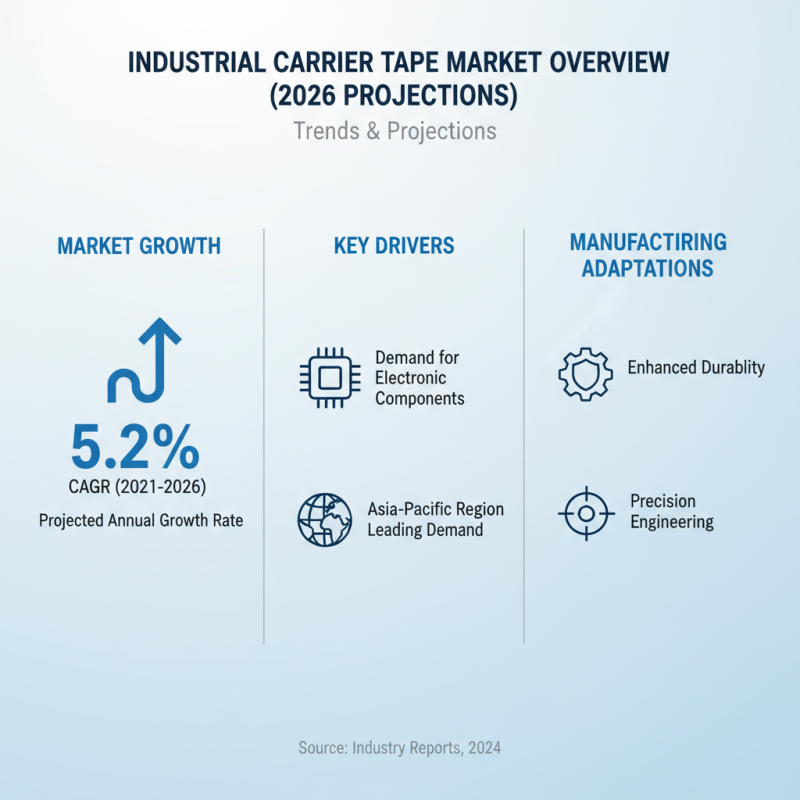
The industrial carrier tape market is experiencing notable shifts as we approach 2026. Recent studies indicate a projected growth rate of 5.2% CAGR from 2021 to 2026. This rise is attributed to the increasing demand for electronic components, particularly in the Asia-Pacific region. Manufacturers are adapting by developing tapes that offer enhanced durability and precision.
Innovations in material technology are critical. As companies seek to minimize production downtime, advanced carrier tapes made from polycarbonate and other resilient materials are gaining traction. However, not all manufacturers have kept pace with these advancements. Some products still lag in quality, which can lead to compatibility issues with automated systems.
Furthermore, sustainability is emerging as a significant consumer concern. The push for eco-friendly material alternatives is reshaping the market dynamics. Unfortunately, many manufacturers have not fully embraced sustainable practices. This gap presents both a challenge and an opportunity for those willing to innovate. Addressing these issues effectively will be crucial for businesses looking to thrive in this evolving landscape.
Key Specifications for Selecting the Best Industrial Carrier Tapes in 2026
When selecting the best industrial carrier tapes in 2026, buyers should consider several key specifications. Material composition is crucial. Most carrier tapes are made of polycarbonate or polyester. The choice impacts durability and flexibility. According to a market analysis by Research and Markets, the material quality can influence performance by up to 30%.
Moreover, tape thickness is another essential factor. Standard thickness typically ranges from 0.3 mm to 1.5 mm. Thicker tapes offer better protection but may affect compatibility. Companies need to balance protection with cost. In an analysis by TechSci Research, optimal tape thickness can enhance the reliability of components by nearly 20%.
The surface finish is equally important. A smooth surface helps reduce friction, enhancing efficiency during handling. An industry report from MarketsandMarkets noted that a high-quality finish improves component placement accuracy by approximately 15%. Ignoring these specifications can lead to higher operational costs and inefficiency. Selecting the right industrial carrier tape requires careful consideration of these aspects.
Top 5 Manufacturers Leading the Industrial Carrier Tape Industry Globally
The industrial carrier tape industry has seen remarkable growth. A few key manufacturers dominate the market landscape. Their innovations set the trends for the future.
Leading producers focus on quality and reliability. They understand the needs of diverse sectors. Each company offers unique strengths. Some excel in precision design. Others prioritize sustainable materials. These differences create a competitive edge.
While the industry thrives, challenges remain. Producers strive for efficiency amid rising costs. Balancing innovation with affordability can be difficult. The evolving regulations also impact manufacturing processes. Companies must adapt while maintaining high standards.
Comparative Analysis of Materials Used in 2026 Carrier Tapes
When exploring the materials used in industrial carrier tapes for 2026, several key factors come into play. The selection of materials greatly influences the efficiency of packaging and handling components in manufacturing. Polypropylene is commonly used due to its lightweight properties. This makes it an attractive option for global buyers seeking to reduce shipping costs. However, the flexibility of polypropylene may not always provide the necessary rigidity for delicate parts.
Another material gaining traction is polyethylene. It offers excellent moisture resistance. This quality is essential in protecting sensitive electronic components during transport. Despite its benefits, polyethylene can suffer from static issues. Buyers need to weigh the pros and cons of each material based on their specific needs and applications. It’s worth noting that many manufacturers are still experimenting with new composites. These could potentially enhance the performance of carrier tapes in the future.
In addition to traditional materials, some suppliers are exploring biodegradable options. This aligns with growing environmental concerns. However, the durability of these new materials remains a question. Buyers should consider the trade-offs between sustainability and performance. As the market evolves, staying informed about emerging materials will be crucial for making the best choices in carrier tapes.
2026 Best Industrial Carrier Tapes Comparative Analysis
Impact of Automation on the Development of Industrial Carrier Tapes in 2026
Automation is reshaping various industries, and the production of industrial carrier tapes is no exception. By 2026, automation technologies are expected to streamline the design and manufacturing processes significantly. This shift will likely lead to higher efficiency and reduced costs in tape production. Manufacturers will be able to produce specialized tapes to meet specific industry needs swiftly.
However, reliance on automation presents challenges. While machines can increase speed, they risk diminishing the human touch in quality control. Automated systems may lack the flexibility to respond to unique situations. As a result, companies must find a balance between machine efficiency and human oversight to maintain reliability. The industry will need experts to oversee these automated processes to ensure consistency and quality.
Additionally, as automation continues to evolve, it will be essential to invest in training programs. Workers must adapt to new technology while retaining core manufacturing knowledge. The complexity of automated systems can lead to uncertainties that organizations must address. Only by combining technology with skilled labor can the full potential of industrial carrier tapes be realized in 2026.
2026 Best Industrial Carrier Tapes for Global Buyers
| Tape Type |
Adhesive Strength (N/cm) |
Temperature Resistance (°C) |
Backing Material |
Applications |
| Polypropylene Tape |
5.0 |
80 |
Polypropylene |
Packaging, Masking |
| Polyester Tape |
6.5 |
120 |
Polyester Film |
Electronics, Automotive |
| PVC Tape |
4.8 |
90 |
PVC |
General Purpose, Electrical Insulation |
| Acrylic Tape |
7.0 |
150 |
Acrylic |
Construction, HVAC |
| Silicone Tape |
5.5 |
200 |
Silicone |
High-Temperature Applications |